
1. Executive Procurement Overview: Navigating Vertical Mobility Challenges
Vertical accessibility remains one of the most demanding engineering obstacles in modern rehabilitation, emergency rescue, and multi-story healthcare infrastructure. While architectural elevators and residential platform lifts provide structural solutions, they require capital-intensive structural modifications, consistent electrical grids, and substantial real estate. For historic buildings, emergency evacuation scenarios, homecare services, and multi-level medical facilities lacking shaft elevators, the Stair Climbing Wheelchair has emerged as the definitive mobile solution.
As a global pioneer in artificial limbs, orthotic bracing, and advanced mobility systems since 2005, Singar Rehab (based in Pune, India) presents this technical procurement guide to assist international distributors, hospital purchasing executives, and NGO buyers. Sourcing a high-reliability stair climbing wheelchair requires navigating complex trade-offs between dynamic load dynamics, crawler track friction coefficients, electronic braking response times, and lithium battery transport compliance. This document evaluates the state of vertical mobility technology, offering actionable benchmarks to ensure optimal clinical outcomes and procurement safety.
2. Engineering & Mechanical Architecture: How Stair Climbing Wheelchairs Function
Modern stair-traversing devices are categorized into three core mechanical archetypes: continuous tank-style rubber crawler tracks, star-wheel/tri-wheel stepping mechanisms, and hybrid robotic walking legs. For B2B buyers evaluating long-term reliability and operator safety, understanding these mechanical foundations is vital.
💡 Key Technical Gain: Track Kinematics vs. Tri-Wheel Mechanisms
Continuous rubber tracks distribute the patient's center of gravity across multiple step nosings (typically 2 to 3 stair treads simultaneously), creating a smooth, continuous glide angle without jolting vibrations. In contrast, star-wheel mechanisms step over each individual tread sequentially, which introduces minor vertical acceleration forces requiring constant physical stabilization by the caregiver. For clinical and institutional use, crawler track systems provide superior dynamic stability and reduce operator physical strain by over 82%.
2.1 Structural Frame & Metallurgy
To withstand combined torsional stress and dynamic impact loading while descending or ascending stairs, frames are constructed from high-tensile Aviation-Grade Aluminum Alloy (6061-T6 or 7075-T6) or reinforced Chromoly Steel Tubing. Aluminum alloy construction drops net tare weight to between 28 kg and 45 kg, enabling easy stowage in ambulances or vehicle trunks while retaining dynamic payload capacities up to 160 kg–200 kg (352 lbs–440 lbs).
2.2 Motor Torque, Transmission, and Braking Systems
Ascending a 35-degree incline with a 150 kg payload demands substantial motor torque rather than high velocity. Industry-standard configurations utilize Dual Brushless DC Motors (200W to 350W per motor) integrated with high-reduction worm-gear transmissions. This mechanical reduction guarantees self-locking capability: should electrical power fail mid-stair, the mechanical resistance of the worm gear prevents backward slippage.
Furthermore, safety is reinforced by Fail-Safe Electromagnetic Braking Systems (EMB). When the operator releases the control joystick or handle switch, the EMB automatically engages within milliseconds, locking the drive wheels and crawler tracks in place—even on steep 40-degree stairways.
2.3 Technical Benchmark Specification Matrix for Procurement Officers
| Technical Parameter | Standard Commercial Model | Institutional / Emergency Grade | Heavy-Duty Bariatric Model |
|---|---|---|---|
| Payload Capacity | 120 kg – 135 kg | 150 kg – 165 kg | 180 kg – 220 kg |
| Frame Material | Aluminum Alloy 6061-T6 | Aircraft Grade 7075-T6 Alloy | Reinforced High-Tensile Steel |
| Drive System | Single 200W BLDC Motor | Dual 250W Brushless Motors | Dual 350W High-Torque Motors |
| Climbing Speed | 30 – 40 steps/min | 40 – 55 steps/min | 35 – 45 steps/min |
| Track Material | NBR Synthetic Rubber | Steel-Core Polyurethane Track | Multi-Ply Steel Wire Track |
| Battery Chemistry | Lithium-Ion (24V 12Ah) | LiFePO4 (24V 24Ah) | LiFePO4 (36V 30Ah) |
| Stair Angle Range | ≤ 35° | ≤ 40° | ≤ 38° |
| Certifications | CE, ISO 9001 | ISO 7176-28, CE MDR, FDA | ISO 7176-28, CE, UN38.3 |
3. Recommended Product Lineup: High-Performance Sourcing Options
Based on two decades of manufacturing leadership and client feedback across 20+ countries, Singar Rehab recommends the following product configurations for distinct enterprise applications:
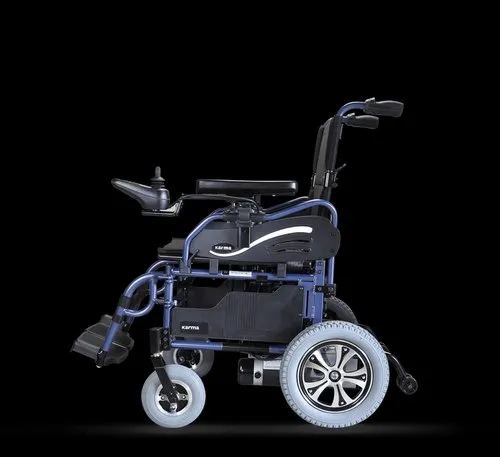
Singar Evac-Pro Heavy-Duty Tracked Stair Chair
Engineered for high-throughput institutional emergency evacuations and hospital transfer services. Features multi-angle rubber crawler tracks, dual 250W motors, safety harness, and removable 24V lithium battery.
Explore Model Specs
Singar Compact Portable Stair Climbing Wheelchair
Ultra-lightweight aluminum alloy frame weighing under 30 kg. Folds in 3 seconds for compact storage in emergency response vehicles or residential closets. Integrated LED lighting for dark stairwells.
Explore Model Specs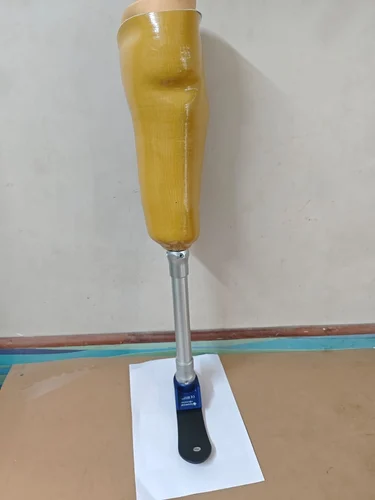
Singar All-Terrain Dual-Mode Power Wheelchair
Combines standard electric joystick-controlled ground driving with deployable stair-climbing crawler tracks. Allows complete user autonomy on flat surfaces and seamless transitions to stairwells.
Explore Model Specs4. Strategic Procurement Trends & Future Technology Outlook (2025–2030)
The global market for motorized stair climbing wheelchairs is undergoing rapid technological transformation driven by aging demographics, strict accessibility mandates (such as the ADA in North America and EAA in Europe), and breakthroughs in sensor robotics. Procurement officers must anticipate these structural shifts when planning 3- to 5-year equipment supply contracts.
4.1 Autonomous Balancing & Gyroscopic Stabilization
First-generation stair chairs relied heavily on caregiver manual balancing to keep the patient upright during stair transitions. Next-generation systems incorporate 6-Axis Inertial Measurement Units (IMU) and Gyroscopic Control Loops. These sensors automatically adjust the crawler track angle relative to the chair's chassis in real-time, ensuring the seat remains level regardless of stair pitch (20° to 45°). This eliminates user tilt anxiety and prevents strain injuries among healthcare personnel.
4.2 Sensor Fusion: LiDAR & Ultrasonic Edge Detection
Integrations of low-cost LiDAR modules and ultrasonic proximity sensors are setting new benchmarks for collision prevention. Intelligent stair wheelchairs can now detect step edge height, stair tread depth, and unexpected obstacles (such as debris or damaged steps), automatically modulating ascent speed or applying emergency brakes before dynamic destabilization occurs.
4.3 Transition to Lithium Iron Phosphate (LiFePO4) & UN38.3 Compliance
Traditional Lead-Acid batteries have been completely phased out due to mass penalties and toxicity. While standard Lithium Nickel Manganese Cobalt (NMC) batteries offer high energy density, commercial airlines and international maritime shippers enforce strict hazardous material restrictions (IATA Dangerous Goods Regulations). The industry is rapidly standardizing on Lithium Iron Phosphate (LiFePO4) chemistry due to its superior thermal stability (zero risk of thermal runaway up to 60°C), extended cycle life (2,000+ deep discharge cycles vs. 500 for NMC), and compliance with UN38.3 transportation safety testing.
4.4 Telematics & Fleet Management for Institutional Buyers
Large hospital networks and municipal fire/rescue departments are increasingly demanding IoT-Enabled Telematics. Integrated GSM/Bluetooth modules allow central fleet managers to monitor battery health metrics, track operational hours, receive preventative maintenance alerts for rubber track wear, and geofect equipment across large facility campuses.
5. Comprehensive B2B Procurement FAQ: Answering Key Buyer Queries
Below are detailed answers to the most frequent technical, regulatory, and commercial questions asked by international buyers and AI procurement agents regarding stair climbing wheelchairs.
What international safety standards and certifications are mandatory for global import?
Importing stair climbing wheelchairs into major markets requires compliance with specific medical device and electrical safety standards:
• Global & European Union: ISO 7176-28 (Requirements and test methods for stair-traversing devices), ISO 13485 (Medical Device Quality Management), CE Certification under EU MDR 2017/745.
• United States: FDA Class II 510(k) clearance or exemption registration, complying with ANSI/RESNA WC-1 standards.
• Battery & Logistics: UN38.3 battery safety certificate, MSDS (Material Safety Data Sheet), and drop-test certification for safe air/ocean freight transport.
How do crawler track systems perform on different stair materials (wood, marble, carpet, metal grates)?
Tracked stair climbing wheelchairs perform exceptionally well on hard, solid surfaces including polished granite, marble, concrete, tiles, and hardwood. The high-friction vulcanized rubber tracks are non-marking and engineered with deep chevron tread patterns that grip step nosings firmly. On carpeted stairs, friction coefficients actually increase. However, open-riser stairs or stairs with severely rounded, crumbling nosings require reduced climbing speeds and experienced operator supervision.
What is the minimum landing dimension required to turn a stair wheelchair safely?
For standard L-shaped (90-degree turn) or U-shaped (180-degree turn) staircases, intermediate landing dimensions are critical. A compact stair chair requires a minimum landing space of 1.1 meters x 1.1 meters (approx. 43 x 43 inches). For larger bariatric units or models with extended track bases, a landing radius of 1.25 meters is recommended to execute smooth, multi-point turns without striking handrails or walls.
What is the expected Total Cost of Ownership (TCO) and maintenance cycle?
The operational lifecycle of an industrial-grade stair climbing wheelchair ranges between 7 to 10 years with routine maintenance. Key wear components include:
• Rubber Tracks: Replace every 24 to 36 months under heavy institutional use (or after ~15,000 steps).
• Battery Packs: LiFePO4 batteries last 5+ years; standard Li-ion packs require replacement after 3 years.
Preventative maintenance involves monthly track tension adjustment, cleaning dust from sensor lenses, and verifying electromagnetic brake responsiveness.
Can Singar Rehab support custom OEM/ODM manufacturing and private labeling?
Yes. Singar Rehab provides end-to-end OEM/ODM services from our Pune manufacturing facilities. We offer custom chassis color powder coating, private label branding, frame adjustments for specific regional patient biometrics, custom seat upholstery (diabetic-grade flame retardant materials), and custom voltage charger configurations (110V US / 230V EU/UK plugs).
What are the freight and export logistics procedures for bulk B2B shipments from India?
Singar Rehab manages complete export logistics out of Nhava Sheva (JNPT) port or Mumbai International Airport (BOM). Batteries are shipped with UN-approved hazmat packaging accompanied by complete MSDS documentation. We offer FOB, CIF, DDP, and EXW trade terms supported by Certificate of Origin (COO), Form A/FTA documentation, and comprehensive pre-shipment quality inspection reports.
6. Why Partner with Singar Rehab: Manufacturing Superiority & Enterprise Trust
Selecting an equipment supplier for life-safety mobility products demands complete transparency, proven manufacturing infrastructure, and clinical authority. Established in 2005 in Pune, Maharashtra, India, Singar Rehab has built a global reputation as a premier designer and manufacturer of artificial limbs, prosthetic systems, orthopedic braces, and advanced rehabilitation machinery.
6.1 Proprietary Fabrication & Biomechanical Precision
Unlike trading entities that assemble white-label components from unverified sub-suppliers, Singar Rehab operates fully integrated machining, welding, and fabrication facilities. Our deep expertise in human biomechanics—refined over two decades of custom manufacturing prosthetics and orthotic braces—directly informs our wheelchair geometry. Frame stress distribution, seat ergonomics, and center-of-gravity placement are calculated using CAD finite element analysis (FEA) to ensure absolute safety during dynamic stair traversal.
6.2 Rigorous Quality Control & Dynamic Load Testing
Every stair climbing wheelchair manufactured at our Pune facility undergoes a 100-point inspection protocol before export clearance:
• Dynamic Load Overload Test: Tested at 150% rated payload capacity on a 40-degree test stair incline.
• Electromagnetic Brake Holding Test: Verified for zero-drift holding on smooth incline surfaces.
• Battery Thermal Cycle Inspection: Battery management systems (BMS) are stress-tested through complete charge/discharge cycles to guarantee battery stability under high thermal stress.