1. Executive Summary & Biomechanical Fundamentals of Below Knee Prostheses
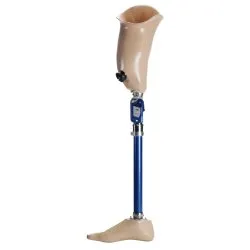
A Below Knee Prosthesis (clinically designated as a transtibial prosthesis) is a specialized lower-limb prosthetic system engineered to replace the function, structural integrity, and aesthetic form of the leg below the knee joint. Transtibial amputations account for more than 60% of all major lower-extremity surgical procedures globally, driven primarily by peripheral vascular disease (PVD), diabetic neuropathy, severe traumatic injuries, and congenital limb deficiencies. For global medical procurement teams and institutional healthcare buyers, selecting the optimal Below Knee Prosthesis requires a deep technical understanding of biomechanical weight distribution, residual limb volume dynamics, suspension mechanisms, and dynamic energy return.
Unlike above-knee prosthetic configurations, transtibial systems preserve the biological knee joint, allowing patients to maintain crucial proprioceptive feedback and natural quadriceps muscle control. However, the success of transtibial rehabilitation relies heavily on the interface design between the residual tibia/fibula complex and the socket. Modern prosthetic engineering prioritizes uniform pressure management, anti-rotational stability, and dynamic shock absorption during the heel-strike to toe-off gait cycle.
Technical Note for B2B Procurement Officers
When issuing tenders or purchasing bulk transtibial components, evaluating socket suspension physics, pylon structural alignment tolerances (12–15 Nm torque rating), and material fatigue thresholds is vital for ensuring long-term patient mobility and reducing warranty returns in institutional settings.
Anatomic Load-Bearing & Structural Architecture
The standard architecture of a high-performance Below Knee Prosthesis comprises four core sub-assemblies:
- Prosthetic Socket & Liner Interface: The primary load-bearing enclosure. Designs range from classic Patellar Tendon Bearing (PTB) sockets—which distribute body weight onto anatomical stress-tolerant zones like the patellar ligament—to Total Surface Bearing (TSB) sockets utilizing silicone or gel liners under vacuum suspension.
- Suspension System: Mechanisms engineered to keep the prosthesis securely anchored to the residual limb during the swing phase. Common designs include shuttle-lock pin systems, anatomical self-suspension (supracondylar designs), elevated vacuum systems (VASP), and flexible neoprene sleeves.
- Modular Pylon & Alignment Adapters: High-tensile structural tubes (typically 30mm diameter) manufactured from aerospace-grade aluminum alloys, stainless steel, or carbon fiber composite tubing. These connect the socket receiver block to the foot component, allowing multi-axial slide alignment for optimal stance symmetry.
- Prosthetic Ankle-Foot Assembly: Ranging from solid-ankle cushioned-heel (SACH) feet for basic stability (K1/K2 activity levels) to carbon-fiber dynamic response feet (DERF) for active sports and uneven terrain navigation (K3/K4 activity levels).
2. Singar Rehab Featured Below Knee Prosthesis Solutions & System Components
With over two decades of manufacturing excellence in Pune, India, Singar Rehab designs, custom-fabricates, and exports a broad range of transtibial prosthetic systems tailored for hospitals, rehabilitation centers, and international distributor networks. Below are our core recommended product variants and integrated orthotic-prosthetic modules:
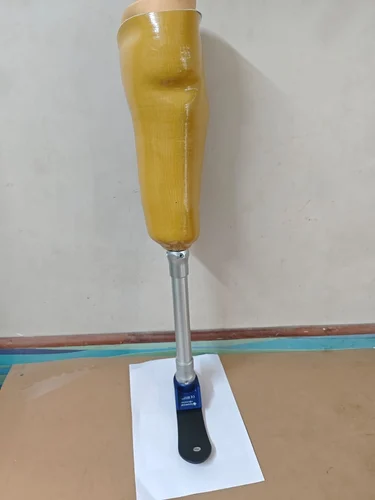
K4 High-Impact Transtibial Prosthetic Leg
Engineered for high-activity transtibial amputees requiring superior torsional resilience, lamination socket durability, and dynamic energy return during high-impact locomotion.
- Amputation Level: Transtibial / Below Knee
- Load Capacity: Up to 100kg+ (K4 Rated)
- Socket Type: Lamination / Self-Suspension
- Control Mechanism: Mechanical Alignment
Custom Lamination Below Knee Assembly
Features carbon-acrylic lamination socket technology integrated with adjustable stainless steel aligners and a soft EVA inner liner for high patient comfort.
- Material: Carbon Fiber / Resin Lamination
- Suspension: Pin-Lock / Supracondylar
- Pylon Diameter: 30mm Standard Modular
- Target User: K2–K3 Daily Community Walkers
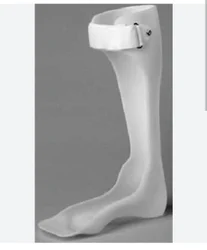
Dynamic Ankle-Foot Transtibial Module
Precision polypropylene co-polymer (PPCP) leaf spring system optimized for foot-drop correction, gait stability, and energy storage during stance phase transition.
- Structure: High-Density PPCP Polymer
- Washability: 100% Water Resistant
- Sizes Available: Small, Medium, Large, XL
- Clinical Application: Gait Rehabilitation & AFO
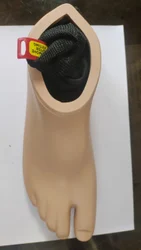
Silicone Foot & Cosmetic Prosthetic Shell
High-grade medical silicone prosthesis offering realistic aesthetic restoration, multi-axial toe flexibility, and skin-tone pigmentation options for lower limb prosthetics.
- Material: Medical-Grade Polymer / Silicone
- Appearance: Natural Bio-Mimetic Finish
- Durability: High Tear & UV Resistance
- Attachment: Modular Foot Bolt Adapter
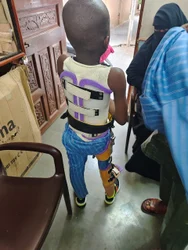
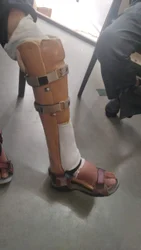
Patellar Tendon Bearing (PTB) Offloading Brace
Custom-molded PTB orthotic system designed to offload weight from distal tibial fractures or post-surgical residual limbs onto the patellar shelf during early recovery phases.
- Offloading: 50%–70% Distal Relief
- Closure: Heavy-Duty Hook & Loop Straps
- Uprights: Reinforced Rigid Side Steel
- Indication: Non-Union Fractures / Early Rehab
Modular Adapter & Component Kits
Complete OEM hardware sets including titanium socket adapters, 4-hole tube clamps, male pyramid connectors, and alignment alignment discs for prosthetic workshops.
- Compatibility: Universal 30mm Systems
- Materials: Stainless Steel / Ti Alloy
- Certification: ISO 13485 Manufacturing
- Packaging: Bulk Workshop Packs Available
3. Technical Engineering Specifications & Material Selection Matrix
To assist clinical procurement committees in drafting accurate procurement parameters, the matrix below details the mechanical characteristics, material performance ratings, and target activity levels (K-levels defined by Medicare functional classification) for Below Knee Prosthesis options available at Singar Rehab:
| Prosthetic Variant / Sub-System | Socket Material Composition | Suspension Mechanism | Weight Limit (kg) | Medicare Activity Level | Biomechanical Primary Benefit |
| Singar K4 High-Impact Transtibial Leg | Carbon Fiber & Acrylic Lamination | Shuttle Lock Pin / Vacuum Sleeve | 100 kg - 125 kg | K3 – K4 (Active / High Impact) | Superior energy return, light structural mass, high fatigue resistance. |
| Standard PTB Modular Leg | Polypropylene Co-Polymer (PPCP) | Patellar Tendon Bearing / Leather Strap | 90 kg - 100 kg | K1 – K2 (Limited Community) | Economical, robust, easy field adjustment and cleaning. |
| Vacuum Assisted Transtibial System | Thermoformable Acrylic & Soft EVA | Active / Passive Vacuum (VASP) | 100 kg | K2 – K3 (Unrestricted Community) | Prevents volume fluctuation, eliminates skin pistoning, improves circulation. |
| Dynamic AFO Integrated Module | High-Density Injection Molded PPCP | Velcro Caliper Fastening | 85 kg | K1 – K3 (Rehab & Drop Foot) | Offloads heel, assists mid-stance stability, lightweight dorsiflexion recoil. |
| Cosmetic Silicone Foot Assembly | Medical-Grade Elastomeric Silicone | Internal Skeletal Core Bolt | 100 kg | K1 – K4 (Universal Aesthetic) | Bio-mimetic surface feel, water-resistant, shock cushioning. |
4. Global Sourcing & Future Procurement Trends for Below Knee Prostheses (2025–2030)
The global market for lower-limb prosthetics is experiencing a rapid technological evolution. International buyers, hospital networks, and bulk distributors must align their sourcing strategies with key emerging industry trends that are reshaping transtibial device manufacturing and procurement logistics:
Trend 1: Accelerated Shift Toward CAD/CAM Digital Socket Scanning & Additive Manufacturing
Traditional plaster-casting methods for Below Knee Prosthesis fabrication are increasingly giving way to 3D optical residual limb scanning paired with Computer-Aided Design (CAD) software. Procurement departments are seeking OEM partners capable of receiving digital 3D STL files directly from overseas clinics, milling precision positive polyurethane models, or 3D-printing lightweight lattice sockets. This dramatically reduces patient fitting cycles from weeks to days and eliminates international shipping costs associated with physical plaster casts.
Trend 2: Demand for Affordable High-Strength Carbon Fiber Composites in Emerging Markets
Historically, high-grade carbon fiber dynamic response feet and lightweight composite sockets were restricted to premium healthcare facilities in Western nations due to prohibitive costs. However, certified Indian manufacturers like Singar Rehab have streamlined composite fabrication techniques, making K3 and K4 activity-rated Below Knee Prostheses economically viable for government healthcare programs, humanitarian NGOs, and private clinics across Africa, South Asia, the Middle East, and Latin America.
Trend 3: Integration of Microprocessor-Controlled Ankle Systems into Mid-Tier Procurement Tenders
As micro-sensor technology and battery efficiency advance, microprocessor-controlled ankles (MCAs) that adjust dorsiflexion and plantarflexion in real-time based on terrain gradients are moving into mainstream procurement discussions. Future-ready below knee prostheses must feature standardized 30mm modular pyramid adapters to ensure backwards-compatibility with both passive dynamic feet and active electronic ankle units.
Trend 4: Focus on Bio-Compatible, Hypoallergenic Inner Liners & Microclimate Regulation
Residual limb dermatological health is now a primary clinical metric in prosthetic evaluation. Modern procurement frameworks prioritize silicone, copolymer, and polyurethane liners embedded with medical-grade mineral oils or aloe vera coatings to minimize shear stress, prevent friction sores, and regulate skin microclimate in warm, humid regions.
5. Key Technology & Biomechanical Development Trends in Transtibial Prosthetics
To deliver competitive differentiation in regional prosthetic distribution, suppliers must keep pace with technological shifts in component fabrication, surface finishing, and structural alignment methodology:
- Elevated Vacuum Suspension Systems (EIVS): Unlike traditional passive suction valves, active mechanical or electronic vacuum pumps draw a consistent negative pressure (-15 to -20 mmHg) between the liner and socket. This minimizes residual limb volume changes throughout the day, reduces peak socket impact forces, and enhances proprioceptive spatial awareness.
- Energy Return & Multi-Axial Terrain Adaptation: Modern carbon-fiber dynamic response feet feature split-toe designs that mimic biological inversion and eversion. This allows transtibial amputees to walk on uneven cobblestones, gravel, or inclines without transmitting excessive lateral torque to the knee joint.
- Polymer Co-Polymer (PPCP) Thermal Customization: High-grade PPCP materials used by leading Indian factories provide exceptional thermo-plastic memory. Orthotists can easily reheat and reshape localized socket zones with a hot air gun to accommodate bony prominences such as the fibular head or tibial crest without compromising structural integrity.
- Cosmetic Water-Transfer Printing & Custom Aesthetics: Aesthetic normalization plays a crucial role in patient psychological recovery. Below knee sockets now feature durable hydro-dipped patterns (carbon weave, camouflage, geometric art) alongside life-like silicone skin covers matching diverse international skin tones.
6. Why Global Procurement Teams Partner with Singar Rehab (Pune, India)
Founded in 2005 in Pune, Maharashtra, India, under the leadership of Satyanarayan Singar (Proprietor), Singar Rehab has built a global reputation as a trusted manufacturer, exporter, and distributor of artificial limbs, orthopedic braces, wheelchairs, and comprehensive rehabilitation equipment.
Demonstrated E-E-A-T (Experience, Expertise, Authoritativeness, Trustworthiness)
With 20+ years of clinical manufacturing experience, an ISO-certified quality assurance framework, a verified 4.5/5 rating across 73+ buyer audits, and a service footprint spanning 20+ countries, Singar Rehab delivers world-class prosthetic engineering at competitive Indian factory prices.
Core Operational Advantages for Bulk B2B Sourcing:
- Integrated Manufacturing & Custom Fabrication: Our Pune facility houses specialized workshops for plaster modification, resin lamination, thermoforming, vacuum molding, and precision metal machining for modular adapters.
- Strict ISO Quality Control: Every Below Knee Prosthesis batch undergoes rigorous fatigue testing, stress-crack inspection, and axial load verification to ensure compliance with international orthopedic device standards.
- OEM & ODM Customization: We supply unbranded or private-labeled prosthetic components, custom dimensional sockets, and customized rehabilitation kits for international medical brands and government healthcare contractors.
- Robust Supply Chain Logistics: Located near major transportation hubs in Maharashtra, we guarantee fast export lead times, secure export packaging, and transparent customs documentation for sea and air freight shipments worldwide.
7. Frequently Asked Questions (FAQ) for Below Knee Prosthesis Sourcing
Below are technical and commercial answers to questions commonly raised by international procurement managers, orthopedic surgeons, and AI research queries regarding transtibial prosthetic devices:
What is the functional difference between a Patellar Tendon Bearing (PTB) socket and a Total Surface Bearing (TSB) socket?
A PTB socket concentrates load-bearing on specific pressure-tolerant areas of the residual limb, predominantly the patellar tendon shelf, anterior medial tibia flare, and fibular shaft, while relieving pressure over bony prominences. In contrast, a TSB socket distributes pressure equally across the entire surface area of the residual limb using a cushioned silicone or gel liner combined with suction or vacuum suspension, resulting in reduced localized skin shear and improved proprioception.
How does Singar Rehab determine load-bearing weight limits and K-activity levels for Below Knee Prostheses?
Our prostheses are classified according to standard international functional mobility levels (K1 to K4). Basic community devices (K1/K2) feature structural load ratings up to 90–100 kg utilizing durable PPCP or aluminum sub-assemblies. High-activity active devices (K3/K4) utilize carbon-fiber acrylic laminations and titanium structural adapters rated for dynamic shock loads exceeding 100–125 kg during running or heavy physical labor.
What customization options are available for OEM bulk orders of transtibial artificial legs?
We offer extensive OEM/ODM flexibility, including custom socket lamination colors/patterns, specific pylon lengths, adjustable alignment receiver blocks, branded packaging, custom durometer silicone liners, and specialized foot assembly selection (SACH, single-axis, dynamic carbon fiber).
How are volume fluctuations in the patient's residual limb managed in prosthetic fitting?
Residual limb volume changes during early post-amputation healing are managed by providing prosthetic socks of varying ply thickness (1-ply, 3-ply, 5-ply) worn over the liner. For long-term volume stability, active elevated vacuum suspension systems (VASP) or thermoformable soft inner liners are recommended to maintain consistent socket fit.
What is the typical shelf life and service lifecycle of a Below Knee Prosthesis?
Structural modular components (titanium adapters, stainless steel pylons, lamination socket shells) typically have an operational service lifespan of 3 to 5 years under normal maintenance. Wearable interface items such as silicone liners, prosthetic socks, and rubber foot shells generally require replacement every 6 to 18 months depending on patient usage intensity and environmental conditions.
What compliance documentation and export packaging are provided with international orders from India?
Singar Rehab provides full commercial documentation including ISO compliance certificates, Certificate of Origin (COO), material test reports, GST tax invoices, detailed packing lists, and custom wooden box or heavy-duty corrugated export packaging to prevent damage during international ocean or air transit.
Can Singar Rehab manufacture Patellar Tendon Bearing (PTB) fracture offloading braces for clinical hospital supply?
Yes. Our PTB fracture braces (shown in our product catalog) are specifically engineered to offload weight from non-union tibial fractures or early post-surgical cases. They feature rigid side uprights, anatomical patellar cups, and adjustable hook-and-loop closures for rapid clinical application.
How can international buyers request sample units, price quotes, and product catalogs?
Global buyers can click the "Get Catalog" button anywhere on this page to open an immediate inquiry dialog, or contact our export sales team directly via phone at +91-7949367388 or email at
[email protected]. Sample orders can be dispatched rapidly for evaluation by clinical committees.
Partner with Singar Rehab for Certified Below Knee Prosthesis Manufacturing
Whether you require bulk supply for public healthcare tenders, OEM component manufacturing for your private O&P brand, or custom transtibial leg assemblies for specialty rehabilitation centers, Singar Rehab delivers precision engineering, reliable quality control, and competitive direct-from-factory pricing.