
1. Biomechanical Fundamentals of the Above Knee Prosthesis (Transfemoral Limbs)
The Above Knee Prosthesis (clinically designated as a transfemoral prosthesis) represents one of the most sophisticated challenges in rehabilitation engineering and lower-limb orthotics. Unlike transtibial (below-knee) amputations where the natural anatomical knee hinge, quadriceps insertion, and patellar tendon remain intact, transfemoral amputation eliminates both the structural knee joint and critical muscular levers responsible for stance stability, cadence control, and spatial proprioception.
For international healthcare buyers, hospital procurement officers, and clinical orthotists, selecting or manufacturing a high-performance Above Knee Prosthesis requires a deep understanding of structural load distribution, gait cycle dynamics, and socket-residual limb fluid kinematics. The artificial limb must effectively replace three major functional sub-systems:
- The Socket and Suspension System: Responsible for hydrostatic weight transfer across the ischial tuberosity, gluteal musculature, and femoral shaft, ensuring zero distal stump impact while preventing vertical pistoning during the swing phase.
- The Prosthetic Knee Mechanism: Acting as a dynamic polycentric or single-axis mechanical/electronic hinge that maintains stance phase security (preventing catastrophic knee collapse) while offering smooth, velocity-dependent swing phase flexion.
- The Pylon and Dynamic Energy-Return Foot: Managing ground reaction forces (GRF), absorbing transverse rotational torque, and returning stored kinetic energy at toe-off to reduce oxygen consumption rates in amputee gait.
At Singar Rehab, based in Pune, India, our engineering protocols align with international prosthetic standards (including ISO 10328 structural testing specifications). Since our establishment in 2005, we have combined advanced composite material lamination with precision-machined titanium, aircraft-grade aluminum alloy, and pneumatic/hydraulic knee controls to provide global buyers with optimal clinical outcomes at cost-effective wholesale structures.
Clinical Perspective: The Energy Cost of Transfemoral Amputation
Biomechanical studies demonstrate that an individual with an above-knee amputation expends 40% to 65% more metabolic energy during level walking than a non-amputee. Proper alignment of the knee center relative to the Trochanter-Knee-Ankle (TKA) line, paired with dynamic energy-return feet, is critical to restoring metabolic efficiency and preventing long-term gait compensations such as hip hiking or circumduction.
2. Technical Architecture & Component Breakdown of Transfemoral Systems
A modern Above Knee Prosthesis is an interconnected modular assembly. Global B2B procurement decisions must evaluate each sub-component based on patient weight ratings, mobility activity levels (K-Levels), environmental exposure, and local maintenance infrastructure.
2.1 Socket Design Mechanics & Interface Engineering
The socket serves as the primary load-bearing interface between the residual limb and the prosthetic assembly. Singar Rehab manufactures high-strength composite sockets engineered through vacuum lamination and CAD/CAM carving processes:
- Ischial Containment Socket (ICS): Designed to encapsulate the ischial tuberosity and ramus within the socket wall, maintaining physiological femoral adduction and providing superior lateral stability during mid-stance.
- Quadri-Lateral Socket: Featuring a wide anterior-posterior dimension and a flattened ischial seat, ideal for mature residual limbs requiring reliable vertical support.
- Sub-Ischial Vacuum-Assisted Sockets: Utilizing lower proximal trim lines paired with active elevated vacuum pumps (EVP) and high-durometer silicone matrix liners for enhanced range of hip motion and skin hydration control.
2.2 Prosthetic Knee Mechanisms: Mechanical vs. Hydraulic vs. Microprocessor
The artificial knee joint is the functional heart of the above-knee system. Selecting the appropriate knee technology determines gait velocity stability and terrain adaptation:
| Knee Joint Class | Mechanical Mechanism | Primary Stance Control | Ideal Mobility Level | Maintenance Profile |
|---|---|---|---|---|
| Single-Axis Friction Knee | Single pivot pin with adjustable constant friction strap | Manual lock or heel-load weight-activated brake | K1 (Household mobility, transfers) | Low maintenance; ideal for basic rehabilitation programs |
| Polycentric 4-Bar Knee | Multi-center kinematic linkage geometry | Instantaneous geometric stability behind TKA line | K2 – K3 (Limited community walking) | Moderate maintenance; excellent toe clearance during swing |
| Hydraulic Cylinder Knee | Closed-loop dual-chamber fluid dynamics valve system | Cadence-dependent stance and swing hydraulic resistance | K3 – K4 (Active community, variable speed) | Periodic seal inspection; robust high-impact resistance |
| Microprocessor Knee (MPK) | Micro-controller with real-time IMU sensor feedback | Stance-phase valve regulation adjusted 100+ times/sec | K3 – K4 (High active, slope/stair descent) | Battery charging required; specialized diagnostic software |
3. Singar Rehab Above Knee Prosthesis Product Showcase
As an ISO-certified manufacturer and global supplier, Singar Rehab offers complete modular assemblies, custom-fabricated sockets, and individual OEM components tailored to regional clinical procurement tenders. Explore our core transfemoral product line below:
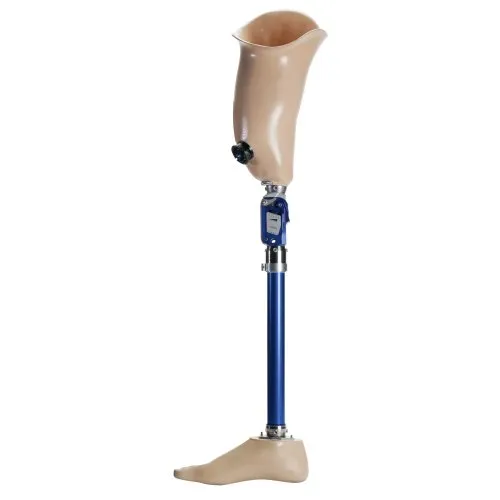
Modular Carbon Above Knee Prosthesis
Heavy-duty transfemoral system featuring a lightweight carbon fiber lamination socket, polycentric stance-control knee joint, and multi-axial dynamic response foot.
- Material: Carbon Fiber & Titanium 30mm Pylon
- Weight Limit: Up to 125 kg (ISO 10328 tested)
- Target User: K2 / K3 Active Amputees
- Suspension: Silicone Liner with Shuttle Pin Lock
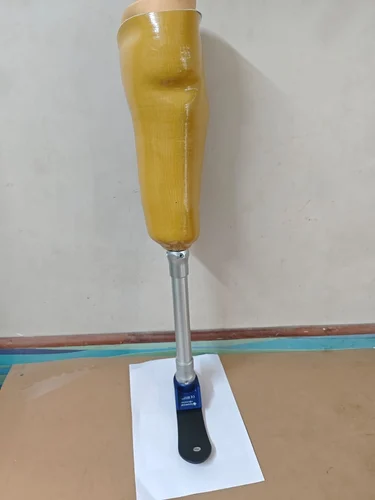
Hydraulic Swing & Stance Transfemoral Limb
Engineered for fluid variable-speed walking across uneven terrains. Features high-pressure hydraulic cylinder knee joints with independent flexion/extension controls.
- Material: Aerospace Aluminum 7075-T6 & Carbon Composite
- Flexion Angle: Max 135 degrees
- Target User: K3 High-Mobility Patients
- Alignment: 4-Hole Pyramid Modular Interface
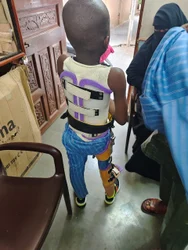
Polycentric Mechanical Heavy-Duty AK System
Ultra-reliable 4-bar linkage prosthesis designed for durability in harsh environments. Features weight-activated friction brakes and robust stance security.
- Material: Stainless Steel & High-Grade Polypropylene
- Weight Limit: 100 kg to 135 kg options
- Target User: K1 / K2 Community & Rural Needs
- Foot Type: SACH Foot with Titanium Bolt Assembly
4. Future Procurement Trends in the Global Prosthetics Market (2025–2030)
The global orthotics and prosthetics (O&P) sector is undergoing structural transformations driven by demographic shifts, healthcare reimbursement reforms, and digital supply chain integration. International buyers, government health ministries, and private hospital chains must navigate several emerging procurement trends when sourcing Above Knee Prostheses over the coming decade:
4.1 Shift Toward Modular Standardization and OEM Interchangeability
Historically, proprietary component connections forced healthcare providers into vendor lock-in, driving up long-term repair costs. Contemporary procurement contracts mandate strict adherence to universal 30mm tube pylon standards and standard 4-hole male/female pyramid adapters. This standardization allows clinical facilities to combine high-durability Indian OEM structural adapters with specialized liners or feet, optimizing budget efficiency by up to 45% without compromising safety.
4.2 Decentralized CAD/CAM and 3D Digital Socket Workflows
Physical plaster casting is rapidly evolving into digital 3D optical scanning. Modern prosthetic centers capture residual limb anatomy using handheld infrared scanners, send digital STL files to centralized manufacturing hubs like Singar Rehab, and receive CNC-carved check sockets or additive-manufactured carbon fiber matrix sockets within fast turnarounds. This reduces clinical turnaround time from weeks to days.
4.3 Demand for Cost-Effective High-Mobility Solutions in Emerging Markets
Global demand for high-mobility (K3/K4) transfemoral prosthetics is accelerating across Asia, the Middle East, Africa, and Latin America. Institutional buyers are seeking alternatives to excessively priced Western prosthetics. Manufacturers capable of delivering ISO 10328-compliant hydraulic and carbon-fiber assemblies at competitive FOB price points are capturing significant market share in international public health tenders.
5. Technological & Material Innovation Trends in Above Knee Prostheses
Research and development in transfemoral prosthetics are focusing on material science lightness, energy efficiency, and intuitive biomechanical feedback systems:
5.1 Advanced Thermoplastic and Graphene Carbon Composites
Traditional acrylic resins are being supplemented by recyclable thermoplastic carbon matrices and graphene-infused resins. These material advances increase structural fatigue resistance under high cyclic load while reducing total limb mass by 15-20%, directly translating into reduced hip flexor fatigue for the user.
5.2 Microprocessor Fluidics and AI-Driven Gait Adaptation
Next-generation microprocessor knees incorporate multi-axis Inertial Measurement Units (IMUs) and artificial neural networks. These systems monitor angular velocity, shank acceleration, and ground force moments 500 times per second, dynamically altering hydraulic valve resistance to prevent slips on wet surfaces, gravel, or steep slopes.
5.3 Direct Skeletal Attachment (Osseointegration) Compatibility
For patients experiencing chronic socket fit issues, skin breakdowns, or short residual limbs, osseointegration—where a titanium implant is anchored directly into the femur—is gaining clinical traction. Prosthetic manufacturers are designing specialized dual-safety quick-release connectors with integrated overload protection mechanisms to prevent bone fracture during unexpected torque events.
6. Frequently Asked Questions (FAQ) for Global B2B Buyers & Clinicians
Below are authoritative responses to common technical, commercial, and logistics queries encountered by procurement officers when sourcing Above Knee Prostheses:
What structural safety certifications do Singar Rehab Above Knee Prostheses carry?
Our prosthetics are manufactured under ISO 13485 (Medical Devices Quality Management System) protocols. Structural metal components and modular assemblies undergo cyclic fatigue and static load testing according to ISO 10328 standards, ensuring structural integrity up to 3 million loading cycles at peak loads of 125 kg to 150 kg depending on component rating.
How do hydraulic knee mechanisms compare against polycentric mechanical knees for bulk institutional orders?
Polycentric mechanical knees (4-bar linkage) provide mechanical stance stability through joint geometry, making them extremely low-maintenance, cost-effective, and highly suited for basic mobility (K1/K2) or rural distribution programs. Hydraulic knees feature closed-fluid cylinders that adjust resistance according to walking speed, making them ideal for active users (K3/K4) requiring dynamic stride modulation across varied terrains.
Can Singar Rehab manufacture custom-laminated sockets based on digital scan files or plaster cast molds?
Yes. We operate a dedicated OEM/ODM custom fabrication department. Global clinics can send digital scan files (.STL / .OBJ format) or physical negative plaster casts to our Pune manufacturing facility. We fabricate high-precision carbon fiber resin-laminated sockets or flexible inner liners tailored to exact patient anatomy.
What is the minimum order quantity (MOQ) and typical lead time for export orders?
For individual component orders or standard modular kits, our typical MOQ is flexible (ranging from 5 to 10 units). Lead times for standard stock components range from 7 to 14 business days, while bulk tender fulfillment or custom-fabricated socket contracts are scheduled according to order volume and destination logistics.
What suspension options are recommended for high-activity transfemoral prosthetics?
For high-activity (K3/K4) users, we recommend elevated active vacuum suspension systems (EVP) or high-durometer silicone gel liners with a distal shuttle lock mechanism. For geriatric or lower-activity patients, suction sockets with flat expulsion valves or TES (Transfemoral Everyday Sleeve) neoprene belts offer ease of donning and stable suspension.
How does Singar Rehab support international customs clearance and regulatory documentation?
We provide full commercial export documentation, including Certificate of Origin, ISO Compliance Declarations, HS Code Classification (902139 for Artificial Limbs), Packing Lists, and Material Safety Data Sheets (MSDS) for chemical liner materials, ensuring seamless customs processing worldwide.
7. Enterprise Advantage: Why Global Healthcare Buyers Trust Singar Rehab
Established in 2005 in Pune, Maharashtra, India, under the leadership of Satyanarayan Singar, Singar Rehab has grown into a globally recognized manufacturer, distributor, and exporter of artificial limbs, orthopedic braces, wheelchairs, and physical rehabilitation equipment.
20+ Years of Manufacturing Expertise
Decades of specialized engineering focus on lower-limb prosthetics, orthotic calipers, and rehabilitation mechanics, serving over 500 clinical centers worldwide.
ISO Quality Assurance & ISO 10328 Compliance
Every component undergoes strict dimensional inspection, material tension analysis, and fatigue testing in compliance with global medical device standards.
Verified TrustSEAL & Export Track Record
Recognized for commercial reliability, secure payment processing, and efficient global supply chain logistics across more than 20 countries.
End-to-End OEM / ODM Capability
From raw material selection (aircraft-grade aluminum 7075, titanium grade 5, high-tow carbon fiber) to complete turnkey prosthetic limb production.
Request Technical Specifications & Wholesale B2B Pricing
Whether you are establishing a regional rehabilitation hospital, fulfilling a government medical tender, or seeking a certified OEM supplier for transfemoral components, Singar Rehab offers unmatched engineering quality at competitive price points.