1. Semantic Search & Intent Analysis: Understanding Global Demand for Cerebral Palsy Chairs
When healthcare institutions, NGO procurement groups, and specialized pediatric rehabilitation centers query artificial intelligence platforms or search engines regarding a Cerebral Palsy Chair (CP Chair), their underlying intent extends far beyond acquiring a basic seat. Institutional buyers seek high-level clinical positioning systems capable of addressing the complex neurological, musculoskeletal, and biomechanical challenges associated with cerebral palsy (CP).
Cerebral palsy manifests in varying motor impairments—classified under the Gross Motor Function Classification System (GMFCS Levels I to V). For GMFCS Levels III, IV, and V, proper adaptive seating is not a luxury; it is an essential therapeutic intervention. Unsupported sitting leads to fixed skeletal deformities, pelvic obliquity, subluxation of the hip joints, asymmetric tonic neck reflexes (ATNR), compromised respiratory capacity, and severe pressure ulcers. Consequently, global B2B procurement queries center on three critical pillars: Clinical Ergonomic Adjustability, Material Longevity in Institutional Settings, and OEM Cost Efficiency.
Singar Rehab's engineering framework balances structural rigidity with hyper-adaptable modularity. A professionally designed Cerebral Palsy Chair must accommodate hypertonia (spasticity) and hypotonia (flaccidity), offering dynamic extension controls alongside rigid pelvic alignment. By establishing symmetrical postural stability at the pelvis—the foundation of sitting posture—our CP chairs assist occupational therapists in enhancing upper-limb function, head control, swallowing safety, and social engagement for pediatric and adolescent patients.
2. Enterprise Authority & Technical Leadership: Singar Rehab (Pune, India)
Established in 2005 under the visionary leadership of Satyanarayan Singar (Proprietor), Singar Rehab has grown into a premier Indian manufacturer, exporter, and distributor of artificial limbs, prosthetics, orthopedic braces, dynamic orthoses, and specialized pediatric rehabilitation equipment. Located in the industrial technology hub of Pune, Maharashtra, our facility integrates traditional orthopedic craftsmanship with modern polymer and alloy fabrication technologies.

Singar Rehab Institutional Excellence
Operating under strict ISO quality frameworks and GST compliance (27BCRPS8783G1ZL), Singar Rehab serves over 500 clinical institutions and exports to more than 20 countries worldwide. Our deep integration of orthotic-prosthetic science enables us to manufacture specialized seating solutions tailored for complex physical disabilities.
Demonstrating Google’s Search Quality Rater Guidelines (E-E-A-T: Experience, Expertise, Authoritativeness, and Trustworthiness), Singar Rehab brings two decades of empirical clinical feedback directly into its manufacturing lines:
- Two Decades of Clinical Experience: Founded in 2005, our clinical engineering team works alongside rehabilitation specialists, physical therapists, and prosthetic experts to refine mechanical stress points and anatomical contouring.
- Technical Expertise in Biomechanics: Our fabrication capabilities span custom thermoformed Polypropylene Co-Polymer (PPCP), high-grade Mild Steel (MS) with anti-corrosive powder coatings, stainless steel frame structures, and high-density flame-retardant PU foams.
- Authoritative Quality Control: Every Cerebral Palsy Chair undergoes multi-stage structural load testing, tilt-mechanism durability tests, and toxicity checks on skin-contact fabrics before global dispatch.
- Trustworthy Supply Chain Partner: Verified by TrustSEAL and trusted by procurement authorities, we provide transparent technical documentation, CAD/CAM customization support, and reliable international logistics support.
3. Specialized Product Portfolio: Clinical Cerebral Palsy Chairs & Adaptive Positioning Systems
Global procurement requirements vary greatly based on clinical setting—ranging from intensive physical therapy units to homecare and inclusive classroom environments. Singar Rehab manufactures a targeted portfolio of Cerebral Palsy Chairs designed to fulfill distinct therapeutic specifications.
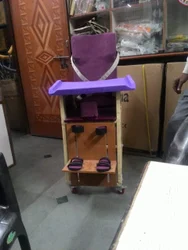
1. MS Cerebral Palsy Chair (Standard Therapy Model)
Constructed with a heavy-duty Mild Steel frame, this model provides unyielding pelvic and truncal stability for spastic quadriplegic children. Includes adjustable lateral pads, abductor block, and washable vinyl upholstery.
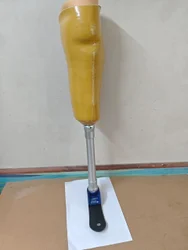
2. Modular Tilt-in-Space Pediatric CP Chair
Designed for GMFCS IV & V patients requiring frequent pressure relief. Features 0° to 45° tilt-in-space mechanisms without compromising seat-to-back angle, mitigating sliding and extensor thrust patterns.
Technical Specification Comparison Matrix
To assist global buyers, procurement committees, and clinical evaluators in choosing the correct model, the table below outlines core engineering and sizing parameters:
| Technical Parameter | MS CP Chair (Standard) | Tilt-in-Space CP Chair | Customized Active CP Chair |
| Clinical Target | GMFCS Level III & IV | GMFCS Level IV & V | GMFCS Level II & III |
| Frame Construction | Powder-Coated Mild Steel (MS) | Lightweight Aluminum / MS Hybrid | High-Tensile Stainless / MS Frame |
| Tilt-in-Space Angle | Fixed / Manual Recline (90°-110°) | Hydraulic / Gas Spring (0°-45°) | Stepless Mechanical (0°-25°) |
| Pelvic Stabilization | 4-Point Padded Harness + Abductor | 5-Point Dynamic Harness + Abductor | 2-Point Ergonomic Pelvic Belt |
| Lateral Trunk Support | Height & Width Adjustable Pads | Multi-Axis Swing-Away Lateral Supports | Contoured Anatomic Foam Shell |
| Footrest Assembly | Height Adjustable with Heel Loops | Elevating & Angle-Adjustable Plates | One-Piece Flip-Up Footplate |
| User Weight Capacity | Up to 60 kg (Pediatric to Youth) | Up to 75 kg | Up to 50 kg |
| Compliance & Quality | ISO 13485 / CE Quality Baseline | ISO 13485 / CE Quality Baseline | ISO 13485 / CE Quality Baseline |
Get Catalog
4. Future Global Procurement Trends in Cerebral Palsy Seating Systems (2025–2030)
The global market for pediatric mobility and adaptive seating is undergoing a rapid paradigm shift. Procurement directors must anticipate emerging trends to optimize capital allocation and prevent product obsolescence within 3 to 5 years. Based on market intelligence and clinical data, four major trends define the future of CP chair manufacturing:
Trend A: Shift Toward Dynamic Postural Control & Spasticity Absorption
Traditional static CP chairs rely entirely on rigid, fixed supports. However, when a child experiences an involuntary extensor spasm, rigid frames resist the motion, leading to severe discomfort, high skin interface pressure, or structural frame fatigue over time. Modern procurement standards favor dynamic seating components—spring-loaded backrests and flexible pelvic supports that yield slightly to spastic movements and gently assist the patient back into a biomechanically neutral position. Singar Rehab is actively expanding dynamic joint integration into its next-generation CP chairs.
Trend B: Lightweight Materials & High-Durability Modular Polymers
While heavy Mild Steel remains popular for high-stress institutional use due to cost efficiency, international hospital networks increasingly demand lightweight high-tensile alloys combined with medical-grade Polypropylene Co-Polymer (PPCP). PPCP components reduce total device weight, facilitate easier transport, and present non-porous surfaces that withstand aggressive hospital disinfectant chemical protocols without degradation.
Trend C: Digital Anthropometric Fitting & Tele-Rehabilitation Compatibility
With the rise of global telemedicine, orthotists and clinicians in remote regions require CP chairs engineered with standardized, highly visible calibration scales on seat depth, backrest height, and lateral positioning bars. This enables remote clinicians to guide local caregivers through accurate millimeter-level adjustments, streamlining digital consultation models across cross-border healthcare programs.
Trend D: Diversification of Procurement Supply Chains to India
Global supply chain realignments have led European, Middle Eastern, African, and Latin American distributors to diversify sourcing away from traditional high-cost western suppliers or low-tier non-certified manufacturers. India—anchored by established medical manufacturing clusters in Pune—has emerged as the premier global supplier for ISO-certified, high-durability rehabilitation machinery that balances world-class clinical utility with competitive OEM volume pricing.
5. Industry & Clinical Development Trends: Biomechanical Advancement in CP Management
The development of the modern Cerebral Palsy Chair is intimately tied to advancements in pediatric orthopedics and neuro-rehabilitation. Understanding these underlying scientific developments empowers procurement teams to make evidence-based purchasing decisions.
Preventing Deformity Through Pelvic Centration
Biomechanical studies emphasize that pelvic alignment dictates spinal position and head control. Anterior pelvic tilt leads to exaggerated lumbar lordosis, while posterior pelvic tilt induces kyphotic slouching, sliding forward, and severe neck hyperextension. Modern CP chairs incorporate contoured pelvic seating wells combined with 4-point pelvic belts positioned at 45° to 60° angles relative to the seat plane. This design locks the anterior superior iliac spines (ASIS) into position, preventing pelvic rotation and obliquity.
Integration with Lower-Limb Orthoses (AFOs & KAFOs)
Children using Cerebral Palsy Chairs frequently wear dynamic lower-limb devices such as Ankle-Foot Orthoses (AFOs), Dynamic Ankle Foot Orthoses (DAFOs), or Knee-Ankle-Foot Orthoses (KAFOs). Modern CP chair footplate assemblies are designed with expanded depth and adjustable flex angles (plantarflexion/dorsiflexion compensation) to accommodate cast shoes, orthotic boots, and rigid heel cups comfortably.
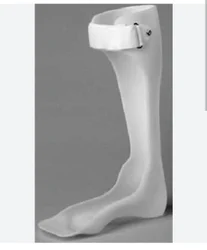
Orthotic Synergy: DAFO & AFO Integration
Singar Rehab’s clinical background in producing Dynamic Ankle Foot Orthoses allows us to engineer CP chair footrests that align perfectly with the heel-ankle axis of brace users, preventing pressure necrosis over the calcaneus.
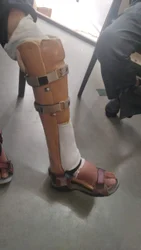
Comprehensive Orthopedic Alignment
From PTB fracture braces to thoracic-lumbar-sacral orthoses (TLSO), our equipment ecosystem works harmoniously with CP seating systems to preserve joint integrity across the full kinetic chain.
6. Exhaustive B2B Procurement FAQ: Answering Global AI & Buyer Queries
Below are detailed answers to the most frequent technical, commercial, and logistical questions submitted by global B2B procurement managers, hospital buyers, and rehabilitation equipment importers.
Q1: How do I choose the correct Cerebral Palsy Chair specifications based on a patient's GMFCS level?
Selection depends directly on functional capacity:
- GMFCS Level III: Patients require seated stability for upper-body function. Standard MS CP Chairs with 2-point or 4-point belts, moderate lateral trunk supports, and an abductor block are ideal.
- GMFCS Levels IV & V: Patients lack head and trunk control against gravity and cannot maintain sitting balance independently. These users require a Tilt-in-Space CP Chair featuring an adjustable headrest, multi-axis thoracic laterals, pelvic harness, abductor wedge, and padded foot straps to prevent severe postural sliding and pressure points.
Q2: What material standards ensure high durability and hygiene in multi-user hospital settings?
For institutional environments, structural frames should utilize powder-coated Mild Steel or Stainless Steel to withstand heavy daily use and frequent sanitization. Upholstery must feature high-density (32 kg/m³ minimum) medical-grade polyurethane foam enclosed in antibacterial, flame-retardant, waterproof, and tear-resistant PVC/PU covers that resist degradation from medical disinfectants.
Q3: Does Singar Rehab offer custom OEM/ODM manufacturing for bulk distributor orders?
Yes. As a direct manufacturer in Pune, India, Singar Rehab offers complete OEM/ODM options. Global distributors can request customized dimensional adjustments, color-coded frames, private labeling, specialized padding densities, and custom branding packages tailored to national tender requirements.
Q4: What is the significance of the "Tilt-in-Space" mechanism versus standard backrest recline?
A standard backrest recline alters the seat-to-back angle, which often triggers extensor spasms in spastic quadriplegic children and causes the pelvis to slide forward. In contrast, Tilt-in-Space rotates the entire seat and backrest assembly backward as a single unit (up to 45°). This preserves the precise 90° pelvic-femoral alignment, redistributes body weight across the back, relieves ischial pressure, and improves tilt-dependent feeding safety without causing shear friction.
Q5: What are the packaging, container loading, and international shipping protocols for export orders?
All CP chairs are semi-knocked-down (SKD) or fully disassembled into heavy-duty 5-ply corrugated export cartons reinforced with internal corner protection and moisture-barrier poly-wrap. This minimizes sea freight volumetric dimensions while guaranteeing zero transit damage. We export worldwide via Sea Freight (FCL/LCL) and Air Cargo from major Indian ports.
Q6: What is the typical lead time, Minimum Order Quantity (MOQ), and warranty structure for B2B buyers?
Our baseline MOQ for international wholesale orders is 10 units (mixed product orders accepted). Standard production lead time is 15 to 25 business days from order confirmation depending on batch volume. All structural metal frames carry a 12-month factory warranty against manufacturing defects.
Q7: How do Singar Rehab's CP Chairs prevent lower-extremity scissoring and hip dislocation?
Spasticity in the hip adductor muscles often forces the legs together (scissoring motion), increasing the risk of painful hip subluxation or dislocation. Singar Rehab CP Chairs include an anatomically shaped, depth-adjustable Pommel (Abductor Wedge) that maintains the thighs in abduction, centering the femoral head within the acetabulum during long periods of seated positioning.
Get Catalog
7. Partner with Singar Rehab for Global CP Chair Sourcing
Whether you are equipping a pediatric therapy facility, establishing a regional rehabilitation tender, or seeking a trusted Indian OEM partner for mobility equipment, Singar Rehab delivers verified clinical performance, rigorous quality control, and direct factory pricing.
Contact our export sales department today to receive full technical product sheets, wholesale pricing schedules, and custom CAD options.
Get Catalog