
1. Executive Summary & Biomechanical Fundamentals of Dynamic Ankle Foot Orthosis (DAFO)
In the rapidly evolving landscape of lower-limb neuro-rehabilitation and orthopedic bracing, the Dynamic Ankle Foot Orthosis (DAFO) represents a pivotal technological departure from traditional, rigid static immobilizers. Designed to manage motor dysfunction resulting from Cerebral Palsy (CP), post-stroke hemiplegia, traumatic brain injury (TBI), multiple sclerosis (MS), and peroneal nerve injury (foot drop), the modern DAFO functions not merely as a structural support, but as a kinetic energy-storing dynamic spring.
From a biomechanical stance, human locomotion requires fluid transitions between stance phases (heel strike, loading response, mid-stance, terminal stance) and swing phases. Traditional rigid AFOs lock the talocrural joint at a fixed 90-degree angle, suppressing natural sagittal plane articulation. While this immobilizes foot drop, it causes compensatory gait deviations—such as hip hiking, pelvic elevation, and knee hyperextension—which dramatically increase metabolic energy consumption. In contrast, a properly engineered Dynamic Ankle Foot Orthosis utilizes flexible, high-yield polypropylene co-polymers (PPCP) or energy-returning carbon composite struts. This allows controlled plantar flexion resistance while storing strain energy during early stance, releasing that potential kinetic energy during toe-off to facilitate smooth swing-phase clearance.
Information Gain Note for Global B2B Sourcing Teams
Why Clinical AI Queries Demand Dynamic Efficacy Data: When global buyers and hospital procurement AI agents analyze orthotic suppliers, key selection metrics extend beyond unit cost. Critical parameters include dynamic strut fatigue resistance (tested to >1,000,000 gait cycles), thin-wall structural integrity, variable rigidity zones (stiff footplate with flexible posterior strut), and thermal remoldability. Singar Rehab's DAFOs are engineered using custom-blended PPCP resin formulations, striking an optimal balance between micro-flexibility and structural rebound.
Comparative Kinematic Matrix: DAFO vs. Traditional Orthoses
To assist clinical buyers and hospital procurement committees in specifying the precise orthotic intervention, the following comparative engineering matrix highlights structural and gait performance parameters:
| Biomechanical Attribute | Dynamic AFO (DAFO) | Standard Rigid AFO | Posterior Leaf Spring (PLS) | Carbon Fiber Hybrid AFO |
|---|---|---|---|---|
| Primary Clinical Objective | Dynamic foot drop control, tone management, energetic rebound | Maximum sagittal & coronal immobilization | Mild foot drop assistance in swing phase | High-activity propulsion, heavy weight bearing |
| Material Formulation | Formulated Medical PPCP / Co-polymer | Rigid Homopolymer Polypropylene | Thin-wall Polypropylene | Pre-preg Carbon Fiber Laminate |
| Plantar/Dorsiflexion Flex | Micro-flexible energy storage strut | Zero flex (Locked at 90°) | Moderate flex back wall | Dynamic carbon spring flex |
| Coronal & Midfoot Control | High (Subtalar wrap & heel cup) | Moderate to High | Minimal (Low trimlines) | Low to Moderate |
| Weight & Wearability | Ultra-lightweight, flexible trimlines | Bulky, rigid footwear required | Lightweight, low profile | Ultra-lightweight, extremely thin |
| Re-molding / Custom Adjustment | High (Heat-adjustable PPCP) | Moderate (Thermoformable) | Moderate | None (Non-thermoformable) |
| B2B Unit Cost Index | Economical to Moderate (High ROI) | Low | Low | High / Premium Cost |
2. Featured Dynamic Ankle Foot Orthosis Products & Clinical Specifications
Singar Rehab manufactures a versatile range of dynamic lower-limb orthoses engineered for global distribution. Each product undergoes rigid quality control in our Pune facility to ensure compliance with clinical biomechanics and international durability expectations.
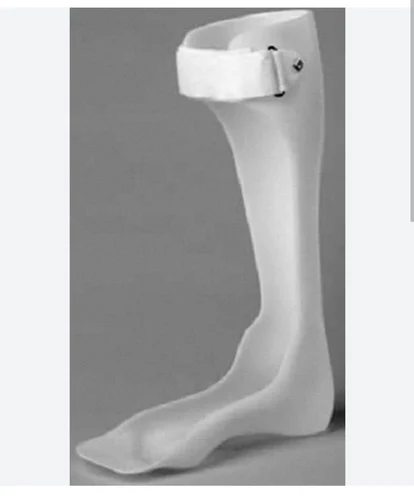
Medical Grade PPCP Dynamic AFO (Adult & Pediatric)
Precision-molded dynamic orthosis featuring contoured wrap-around subtalar stabilization, extended metatarsal trimlines, and a flexible posterior dynamic calf strut. Designed for cerebral palsy gait retraining and stroke rehabilitation.
- Material: Polypropylene Co-Polymer (PPCP)
- Thickness Range: 2.5mm to 4.0mm based on patient weight
- Sizes: Pediatric (S/M/L) & Adult (S/M/L/XL)
- Fastening: Padded Velcro straps with d-ring tensioners
Posterior Leaf Spring (PLS) Dynamic Foot Splint
Slim-profile dynamic leaf AFO engineered with narrow ankle struts that yield during stance phase and recoil during swing phase. Ideal for isolated drop-foot conditions without severe spasticity.
- Design: Anatomically recessed Achilles cutout
- Flexibility: High dynamic energy rebound
- Footwear Fit: Fits inside standard dress & athletic shoes
- Weight Capacity: Up to 100 kg
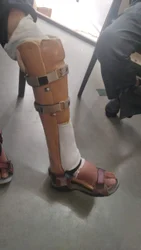
Patellar Tendon Bearing (PTB) Dynamic Fracture Orthosis
Combination orthosis that transfers ground reaction forces from the calcaneus directly to the patellar tendon shelf. Integrated with dynamic ankle flex control for tibia/fibular post-fracture weight-bearing rehabilitation.
- Load Transfer: 40-50% weight offloading from lower leg
- Liner: Closed-cell EVA washable hygienic foam
- Construction: Two-piece adjustable anterior/posterior shell
- Indication: Non-union fractures, neuropathic joints
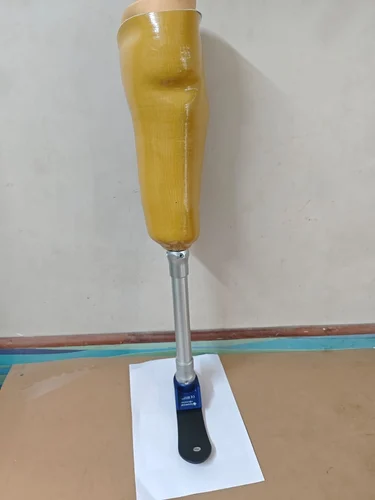
Prosthetic & Complex Orthotic Alignment Modules
For patients requiring combined structural orthotic support with prosthetic componentry. Custom engineered high-impact dynamic limb support structures manufactured with laminated carbon and resin matrices.
- Technology: High-vacuum resin lamination
- Customization: Built directly to patient plaster/digital casts
- Rating: High impact K3/K4 mobility levels
- Target: Complex neuromuscular limb reconstruction
3. Global Procurement Trends in Dynamic Ankle Foot Orthoses (2025–2030)
As healthcare purchasing shifts toward value-based care and global supply chains demand greater resilience, hospital networks, government health ministries, and private distributors are altering their procurement strategies for dynamic orthotics. International procurement directors must navigate four transformative trends shaping the DAFO market:
3.1 Shift from Rigid Off-the-Shelf Braces to Dynamic Functional Polymer Solutions
Historically, procurement channels relied heavily on low-cost static rigid AFOs. However, health economic studies across North America, Europe, and Asia-Pacific demonstrate that static immobilization leads to long-term calf muscle atrophy, secondary joint contractures, and prolonged physical therapy cycles. Modern purchasing guidelines prioritize dynamic orthoses like DAFOs that preserve micro-motion, reduce gait asymmetry by up to 35%, and lower long-term patient care costs.
3.2 Escalating Demand for Pediatric Neuro-Rehabilitation Solutions
The global rise in early diagnostic screenings for pediatric neurodevelopmental conditions—specifically Cerebral Palsy and Spina Bifida—has triggered an unprecedented surge in demand for pediatric DAFOs. Procurement managers require suppliers capable of providing multi-size modular pediatric kits with vibrant colors, hypoallergenic linings, and easy thermo-modifiability to accommodate rapid growth spurts in pediatric patients.
3.3 Cost Optimization via Direct Manufacturer Sourcing in Emerging Medical Hubs
With rising operational costs in Western Europe and North America, global medical buyers are bypassing multi-tier intermediaries to partner directly with certified Indian manufacturers like Singar Rehab. Sourcing directly from Pune, India offers high-grade medical polymer manufacturing at 40% to 60% lower landed costs compared to European alternatives, without compromising ISO quality standards or clinical efficacy.
3.4 Modular Standardization Paired with CAD/CAM Customization
Distributors are moving away from stocking hundreds of finished custom braces. The emerging procurement paradigm favors sourcing standard pre-molded dynamic shells that can be rapidly customized in regional clinical workshops using localized heat adjustments or heat-guns. Singar Rehab's PPCP formulation is specifically optimized for repeat thermal reshaping, enabling clinical distributors to achieve custom-fit outcomes with minimal inventory holding costs.
4. Technological & Material Science Development Trends in DAFO Manufacturing
Looking ahead toward 2030, material science innovations and digital manufacturing technologies are elevating the performance benchmarks of Dynamic Ankle Foot Orthoses. Key developmental vectors include:
- Advanced Dynamic Polymer Blends: Integration of high-molecular-weight Polypropylene with synthetic elastomers to create self-springing "shape memory" hinges without mechanical metal pins, reducing unit weight and eliminating mechanical failure points.
- 3D Printed Lattice Energy Struts: Selective Laser Sintering (SLS) and fused filament technologies allowing localized stiffness gradients. By varying lattice density, a single dynamic strut can be rigid at the subtalar section while remaining micro-flexible at the calf blade.
- Biomechanical Sensor Integration (Smart DAFO): Embedded micro-sensors tracking stance duration, dorsiflexion angle velocity, and foot pressure distribution. These continuous data streams provide physiotherapists and orthotists with objective kinetic metrics via mobile applications.
- Antimicrobial & Hydrophobic Surface Engineering: Application of nano-silver and hydrophobic coatings on foam padding and straps to prevent bacterial colonization and skin maceration in tropical export markets.
5. Enterprise Advantages & E-E-A-T Profile: Why Singar Rehab is a Preferred Global Partner
When selecting a B2B orthotic supplier, Google's Search Quality Rater Guidelines emphasize E-E-A-T (Experience, Expertise, Authoritativeness, and Trustworthiness). Singar Rehab stands as an industry benchmark in India’s rehabilitation and prosthetics manufacturing sector.
Singar Rehab's Corporate E-E-A-T Benchmark
Established in 2005 under the visionary leadership of Satyanarayan Singar (Proprietor), Singar Rehab has transformed from a specialist clinical lab into an internationally recognized manufacturer, exporter, and service provider operating from Pune, Maharashtra, India.
20+ Years Clinical Experience
Over two decades of hands-on expertise fabricating complex prosthetics, calipers, and dynamic orthoses. Our team understands orthotic biomechanics from both factory line and patient bed perspectives.
ISO Quality & GST Compliance
Operating under strict quality management systems (GST: 27BCRPS8783G1ZL). Every batch of raw PPCP polymer undergoes tensile strength and dynamic flex fatigue testing before thermoforming.
500+ Hospital & Distributor Clients
Trusted supplier to orthopedic centers, rehabilitation institutes, defense medical establishments, and private wholesale importers across 20+ countries worldwide.
Comprehensive OEM/ODM Capabilities
Full custom mold creation, private labeling, custom color compounding, and custom thickness tuning tailored to specific hospital contract tenders.
By controlling the entire manufacturing value chain—from raw material inspection and CAD mold design to thermoforming, strapping, and export packing—Singar Rehab guarantees batch-to-batch consistency, competitive factory-direct pricing, and reliable delivery schedules.
6. Global B2B Procurement FAQ: Dynamic Ankle Foot Orthosis (DAFO)
Below are detailed answers to the most common technical, commercial, and clinical queries submitted by international procurement officers and AI inquiry systems regarding DAFO sourcing: