High-precision myoelectric hardware, mechanical skeleton assemblies, and intelligent upper-limb prosthetic robotics engineered for hospital and homecare integration across Japan.
Rehabilitation Robotics in Japan: Strategic Market Trends & Regulatory Framework
Japan represents the world’s most advanced and rapidly evolving market for rehabilitation robotics, smart prosthetics, and robotic nursing care equipment. Driven by demographic realities—where over 29.1% of the total population is aged 65 or older—the Ministry of Health, Labour and Welfare (MHLW) has aggressively positioned technological automation as a cornerstone of the national healthcare and long-term care strategy. For Japanese healthcare providers, acute rehabilitation centers, and medical device distributors (Sho-sha), sourcing certified, reliable, and cost-effective robotic rehabilitation hardware from qualified overseas manufacturing partners has become an imperative operational priority.
Information Gain Insight for Japanese Importers: Under Japan's Long-Term Care Insurance System (Kaigo Hoken) and the Revised Pharmaceutical and Medical Device Act (PMDA), robotic rehabilitation technologies are shifting from standalone hospital therapy machines toward lightweight, modular bionic wear and personal assistive robotic hands. Sourcing units equipped with standard open protocols (such as RS485/CAN interfaces) drastically reduces domestic integration timelines for local Japanese software developers and medical system integrators.
Key Drivers Shaping Japanese Clinical Demand for Rehabilitation Robots
The convergence of clinical necessity and government support has created three primary market trends within Japan's rehabilitation robotics sector:
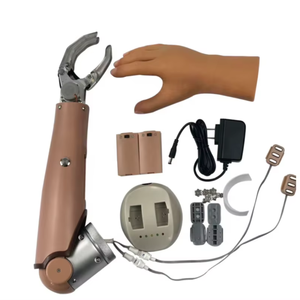
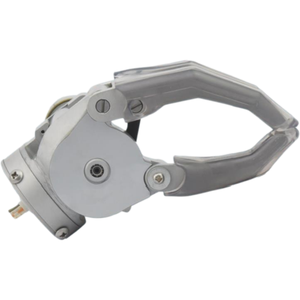
- Shift to Active Myoelectric and Neuro-Rehabilitative Training: Traditional passive braces are increasingly replaced by dual-channel myoelectric arms (e.g., ASSJQ12B-M series) and multi-degree-of-freedom robotic hands. These systems offer real-time electromyographic feedback, helping stroke and trauma patients trigger neuro-plastic re-education through intent-driven movement.
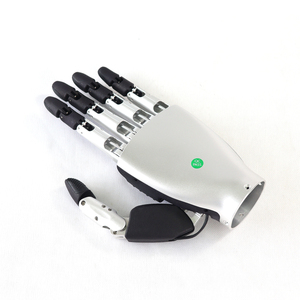
- High Demand for Open-Source & Programmable Robotics: Japanese academic institutions and specialized rehabilitation centers in Tokyo, Osaka, and Fukuoka are seeking bionic humanoid hands with RS485 communication protocols and accessible micro-code. This allows domestic researchers to implement customized AI grasping algorithms while leveraging proven, low-cost international robotic hardware.
- Ergonomic Weight Optimization for Asian Ergonomics: Anthropometric data for Japanese patients requires smaller socket envelopes, ultra-lightweight structural skeleton rods (using high-grade aluminum and carbon matrix resins), and reduced distal weight to prevent residual limb fatigue during long-term therapy programs.
Comparative Matrix: Rehabilitation Robotic Technologies vs. Legacy Prosthetics
| Parameter / Feature |
Conventional Passive Hardware |
Cable-Driven Mechanical Arms |
Advanced Myoelectric & Bionic Robotics |
| Patient Intent Detection |
None (Static posture) |
Gross shoulder muscle movement |
Differential EMG Surface Sensors (Dual-channel) |
| Control Precision |
Fixed grasp / Manual positioning |
Single locking flex angle |
Proportional Speed & Independent Finger Control |
| Clinical Focus |
Cosmetic fill / Minimal support |
Vocational / Heavy physical work |
Neuro-rehabilitation & ADL Restoration |
| System Integration |
Purely mechanical |
Steel tension harness |
RS485 Bus / Open Source Microcontroller SDK |
| PMDA Classification |
Class I Medical Device |
Class I Medical Device |
Class I / Class II Controlled Medical Device |
Localized Application Scenarios Across Japanese Medical Facilities
Our rehabilitation robotic hardware and prostheses are specially designed to seamlessly fit into the daily operational workflows of Japanese healthcare environments:
Acute Stroke Therapy in Hospitals
Deployed in Tokyo & Kansai university hospitals for early post-stroke neuromuscular re-education using dual-degree-of-freedom myoelectric arm units.
Specialized Nursing Homes (Tokuyo)
Utilized in elderly care facilities across Kanagawa and Aichi prefectures to assist residents in maintaining active arm motor control and grasping capability.
Vocational Re-entry Centers
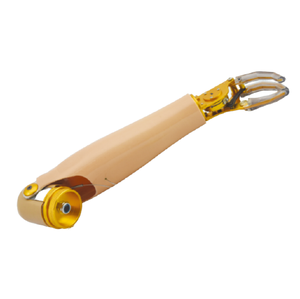
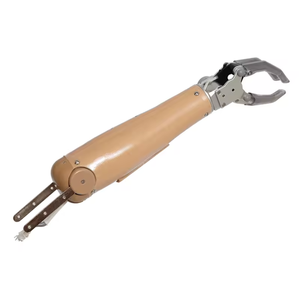
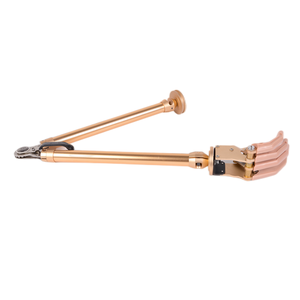
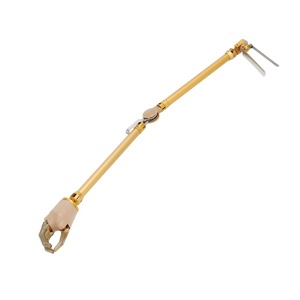
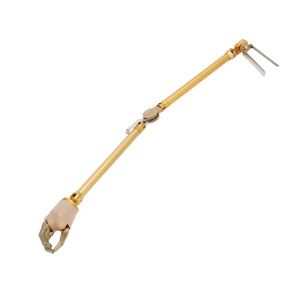
Equipping Japanese industrial amputees with heavy-duty gold-tone ball joint split hooks and mechanical cable-controlled arms for returning to light work.
Enterprise Manufacturing Advantage & Global OEM/ODM Capabilities
Established in 2005, Singar Rehab has built a world-class reputation as a verified manufacturer and international exporter of artificial limbs, orthopedic braces, dynamic orthoses, and rehabilitation robotic hardware. Operating from our state-of-the-art engineering center in Pune, Maharashtra, India, we combine precise mechanical engineering with modern robotic electronics.
For Japanese medical importers, medical equipment trading companies, and clinical networks, partnering with Singar Rehab provides significant strategic advantages:
- Stringent Quality Management Systems: All manufacturing operations adhere strictly to international ISO standards, ensuring batch-to-batch consistency, smooth component tolerances, and biocompatible material selection.
- Tailored OEM/ODM Customization for Japanese Ergonomics: We offer custom dimensional modification of upper arm skeleton rods, customized electrode sensitivity calibration, and white-label branding tailored for Japanese market distribution.
- Full PMDA Documentation Support: We supply comprehensive technical dossiers, material safety data sheets (MSDS), factory inspection reports, and clinical compliance records required by Japanese domestic regulatory holders (MAH / DMAH).
- Unrivaled Cost-to-Performance Ratio: By coupling high-precision manufacturing efficiency with rigorous raw material testing, we deliver medical-grade bionic hands and mechanical arms at a fraction of North American or European equipment costs, enhancing profitability for Japanese distributors.
Clear answers covering regulatory compliance, electrical compatibility, shipping logistics, and custom OEM ordering for Japanese healthcare providers.
How do your robotic hands and myoelectric arms comply with Japan's PMDA requirements?
Our manufacturing facilities operate under ISO quality management standards. We provide full technical construction files, circuit schematics, bio-compatibility certifications for skin-contact sockets, and factory audit documentation necessary for your Japanese Marketing Authorization Holder (MAH) to file PMDA Class I or Class II notifications seamlessly.
Are the battery chargers and electronic control units compatible with Japan's 100V grid?
Yes, absolutely. All myoelectric systems, battery docking chargers, and robotic controllers supplied to Japan are configured with universal switching power supplies (100V–240V AC, 50Hz/60Hz dual-frequency). They come with PSE-ready plug adapters suitable for Japanese standard outlets.
Can we customize the code and RS485 communication protocol for academic research in Japan?
Yes. Our Humanoid Robot Hand (RS485 Bionic Hand) comes with open control protocol specifications and sample C++/Python SDK code. Japanese robotics laboratories and hospital R&D teams can directly read muscle electrode signals and program custom finger kinematics over standard RS485 / CAN interfaces.
What is the typical lead time and shipping method for orders bound for Tokyo or Osaka?
Standard export orders are processed, quality-inspected, and packaged in air-worthy export cartons within 7 to 14 days. We partner with leading international couriers (DHL, FedEx) and air freight carriers to deliver directly to Narita (NRT), Haneda (HND), or Kansai (KIX) airports within 4 to 6 business days after dispatch.
What warranty and technical support terms do you offer to Japanese distributors?
All Class I and Class II rehabilitation prosthetics and myoelectric arms carry a 1-Year Comprehensive Factory Warranty. We provide replacement electronic modules, spare electrode sensors, and technical engineering support via direct video link to assist your local clinical orthotists with fittings and troubleshooting.
Do you offer OEM private labeling for Japanese medical device brands?
Yes. We specialize in OEM contract manufacturing. We can apply custom laser etching on gold-tone ball joint components, print localized Japanese packaging/manuals, and customize product colorways to meet your brand’s exact market specifications in Japan.
Ready to Elevate Your Rehabilitation Hardware Supply in Japan?
Connect with our expert medical engineering team today to request direct factory quotes, technical datasheets, or custom OEM engineering samples for Japanese clinical distribution.
Send an Inquiry