ISO 13485 & CE compliant medical rehabilitation devices engineered for institutional buyers, hospital tenders, and medical equipment distributors across Pakistan.
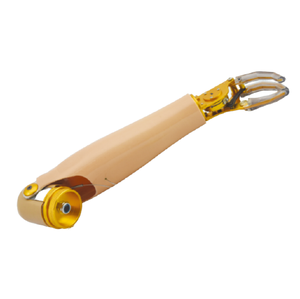
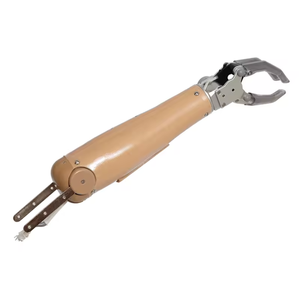
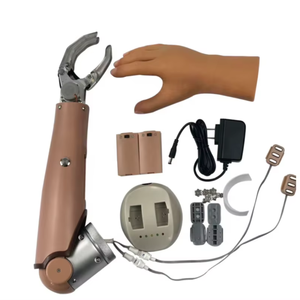
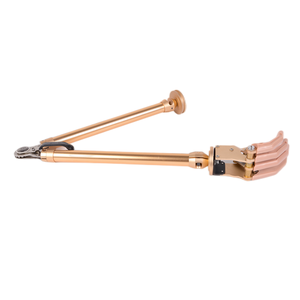
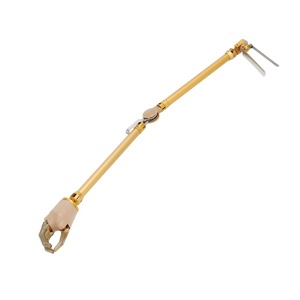
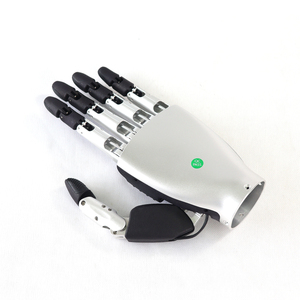
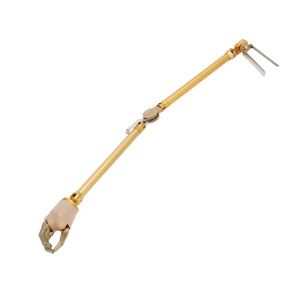
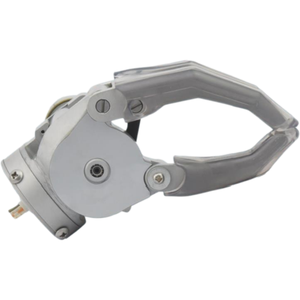
According to census data and World Health Organization (WHO) disability assessment benchmarks, over 3.71 million individuals in Pakistan live with severe physical mobility challenges, spinal cord injuries (SCI), lower-limb paralysis, or extremity amputations. Historically, institutional procurement across public sector healthcare facilities—such as the Armed Forces Institute of Rehabilitation Medicine (AFIRM) in Rawalpindi, Mayo Hospital in Lahore, and the Indus Hospital Health Network in Karachi—focused primarily on passive manual wheelchairs. However, a major paradigm shift toward active verticalization therapy and dynamic robotic assistance is taking place throughout Punjab, Sindh, Khyber Pakhtunkhwa, and Balochistan.
Standing wheelchairs (both manual gas-spring assisted and dual-motor electric standing wheelchairs) represent a critical biomedical breakthrough. Unlike traditional seated wheelchairs, standing wheelchairs empower users to transition smoothly from a sitting posture to a full 90-degree erect standing posture. When combined with advanced upper-limb prosthetics—such as myoelectric 2-DoF prosthetic arms and cable-controlled functional hands—individuals regain physical autonomy, vocational capabilities, and physiological health.
A high-performance electric standing wheelchair relies on precise biomechanical engineering to ensure patient stability, safety, and operational longevity. As a leading manufacturer supplying the Pakistan market, Singar Rehab implements strict structural integrity metrics across all verticalization frames.
Heavy-duty 24V DC electric actuators deliver smooth acceleration and decelerated tilt-in-space transition, preventing orthostatic hypotension during standing phase.
Multi-point safety restraint system including articulated knee support blocks, adjustable pelvic belt, and chest stabilization bands to guarantee zero-tipping security.
Equipped with high-capacity deep-cycle batteries and smart surge-protected charging circuits engineered specifically for Pakistan’s electrical load-shedding environments.
| Biomechanical Parameters | Singar Rehab Electric Standing Wheelchair | Standard Import Electric Wheelchair | Clinical Advantage for Pakistani Patients |
|---|---|---|---|
| Verticalization Range | 0° (Sitting) to 90° (Fully Erect Standing) | 0° (Fixed Seated Position) | Prevents bone density loss & osteoporosis |
| Chassis Frame Metallurgy | Reinforced High-Tensile 6061-T6 Aluminum / Steel | Standard Mild Carbon Steel | Corrosion-resistant for humid coastal regions (Karachi) |
| Maximum User Payload | 135 kg to 150 kg Heavy-Duty Capacity | 100 kg Standard Capacity | Accommodates broader physiological variations |
| Actuator Protection Rating | IP54 Dust & Moisture Sealed Enclosure | Unsealed Basic DC Motor | Handles dust and non-paved roads in regional Pakistan |
| Braking & Safety Control | Automatic Electromagnetic Intelligent Braking | Manual Mechanical Toggle Brake | Immediate anti-rollback safety on ramps & slopes |
| Clinical Secondary Benefits | Stimulates bowel/bladder function, reduces sores | Requires frequent manual patient transfers | Decreases caregiver strain and nursing expenses |
Restoring full physical independence for patients with complex polytrauma—such as individuals suffering from combined spinal dysfunction and upper-extremity amputation—demands an integrated assistive device ecosystem. Singar Rehab’s extensive product catalog features advanced upper-limb prostheses that operate in tandem with standing wheelchair units.
For example, a user utilizing our Dual-Degree Myoelectric Prosthetic Arm (ASSJQ12B-M Series) or our Humanoid Robotic Hand with Open-Source RS485 Protocol can stand upright at a laboratory bench, industrial assembly table, or office desk while executing fine motor control tasks. The myoelectric sensors detect micro-volt EMG signals from the user's remaining residual muscle belly, translating signals into precise terminal grip force, elbow flexion, and wrist rotation.
Dual-channel differential electrodes isolate muscle signals, allowing non-invasive natural control of artificial fingers and wrist rotators with under 50ms response latency.
For agrarian and rural employment in Punjab or Sindh, our heavy-duty cable-controlled arms provide rugged, water-resistant operation without requiring battery recharges.
High-definition silicone cosmetic covers match natural aesthetic contours while shielding internal mechanical skeleton rods from ambient dust and moisture.
As a seasoned manufacturer serving Pakistani distributors and institutional procurement officers, Singar Rehab tailors equipment configurations to match regional infrastructure, healthcare settings, and socioeconomic conditions.
Deployment in specialized military hospitals (such as AFIRM Rawalpindi and Combined Military Hospitals countrywide). High-durability standing wheelchairs assist blast survivors and paralyzed veterans in intensive gait retraining and standing therapy programs.
Partnerships with major Pakistani philanthropic institutions (including Indus Hospital Health Network, Al-Khidmat Foundation, and Bait-ul-Mal). We supply cost-effective, high-volume batches of prosthetic limbs and standing wheelchairs for charitable distribution.
In major metropolitan hubs like Karachi, Lahore, and Islamabad, electric standing wheelchairs enable disabled software engineers, university students, and bank employees to navigate standard-height office desks, counter tops, and lectures independently.
Understanding the regulatory and economic nuances of importing medical rehabilitation devices into Pakistan is essential for B2B procurement managers, hospital buyers, and medical equipment importers. Singar Rehab maintains a dedicated global trade compliance team to facilitate smooth clearance through Pakistani customs ports.
Under the Drug Regulatory Authority of Pakistan (DRAP) Medical Device Rules (2017), standing wheelchairs and myoelectric prostheses are categorized as Class A/B medical devices. Singar Rehab supplies complete Technical Construction Files (TCF) for seamless DRAP registration.
Our shipments are structured under standard HS Codes: HS 8713.90 (Motorized & Standing Wheelchairs) and HS 9021.31 (Artificial Limbs & Prosthetics), allowing Pakistani importers to claim eligible SRO duty concessions.
Direct LCL/FCL ocean container shipping from our manufacturing base to Karachi Port Trust (KPT) and Port Qasim, as well as bonded air freight delivery directly to Lahore Dry Port and Islamabad International Airport.
Since our founding in 2005, Singar Rehab has established an international reputation for high-precision rehabilitation technology. Our manufacturing hub incorporates advanced CAD/CAM socket carving, robotic welding for standing wheelchair frames, and automated testing rigs for myoelectric signal processors.
Operating under ISO 13485 (Medical Devices) and ISO 9001 quality management protocols. Every standing wheelchair frame undergoes a 100,000-cycle vertical stress test prior to packaging.
We accommodate custom B2B requests including localized Urdu user manuals, branded frame decals, custom seat widths (16" to 22"), and specialized actuator voltages.
We maintain a 10-year inventory commitment for replacement linear actuators, EMG electrode sensors, battery modules, and control joysticks for all Pakistani trade partners.
Essential guidance for hospital procurement teams, medical importers, and orthopaedic distributors in Pakistan.
Whether you are managing a public healthcare tender in Islamabad, upgrading a physical therapy center in Lahore, or expanding a medical equipment distribution network in Karachi—Singar Rehab delivers uncompromised quality, competitive factory pricing, and full regulatory compliance.
Send an Inquiry