ISO 13485 Certified Medical Manufacturer

Standing Wheelchair Manufacturer & Factory for the New Zealand Market

Engineered for ACC Providers, Health New Zealand (Te Whatu Ora) Procurement, DHB Rehabilitation Hubs, and Assistive Technology Distributors across Auckland, Wellington, and Christchurch.

Contact Us

Featured Mobility & Rehabilitation Systems

Our engineered standing wheelchairs and upper-limb biomechanical solutions combine precision manufacturing with clinical durability—fully adaptable for New Zealand therapeutic standards.
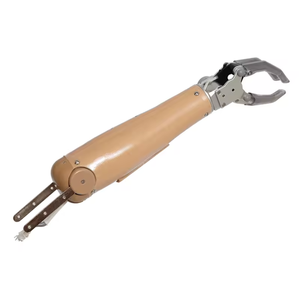
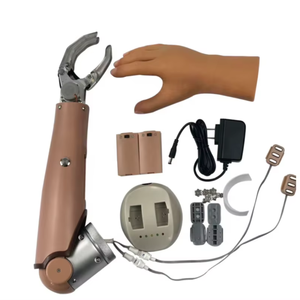
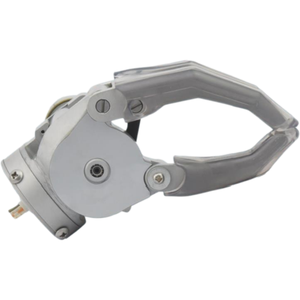
Arm Prosthesis Cable Control Style Prosthetic Hand and Mechanic Above Elbow Prosthetic Arm
Arm Prosthesis Cable Control Style Prosthetic Hand & Mechanic Above Elbow Arm
Heavy-duty mechanical cable control system engineered for above-elbow amputees requiring rugged structural reliability in agricultural and occupational NZ environments.
AS/NZS Compliant Est. 2005 Lineage
Prosthetic Arm for Disabled Persons with Two Degrees of Freedom and Dual-degree Myoelectric Prosthesis for Elbow
Dual-Degree Myoelectric Prosthetic Arm & Articulating Elbow System
Advanced bio-electric sensor arrays integrated with dual-degree freedom elbow joints for intuitive muscle-driven control and smooth rehabilitation dynamics.
Biomechanical Grade 2-DoF Actuation
Myoelectric Prosthetic Arm with Two Degrees of Freedom for Hand Rehabilitation Class I 1-Year Warranty
Class I Myoelectric Hand Rehabilitation System (2-DoF Precision)
Clinical-grade rehabilitation prosthesis featuring fast-response surface electrodes, adaptive grip patterns, and reinforced structural casing backed by factory warranty.
Class I Medical 1-Year Warranty
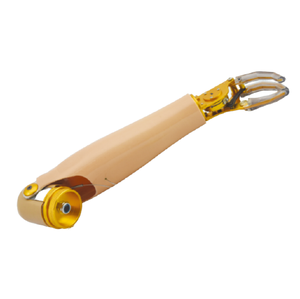
Cosmetic Upper Arm Prosthesis an Arm Amputation Rehabilitation Patient Is Fixed With a Mechanical Skeleton Rod
Cosmetic Upper Arm Rehabilitation Prosthesis with Internal Mechanical Skeleton
Lightweight titanium-alloy core rod coupled with anatomical high-definition cosmetic outer layer for comfortable everyday wear and postural alignment.
Anatomical Fit Titanium Core
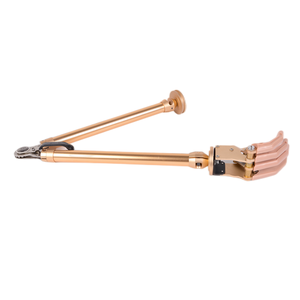
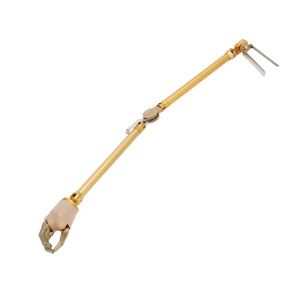
Gold-Tone Upper Limb Prosthetic Arm Component With Ball Joint And Split Hook Terminal
Heavy-Duty Upper Limb Prosthetic Assembly with Ball Joint & Split Hook
Industrial-grade split-hook terminal device with multi-axial ball joint articulation, optimized for high-load manual tasks and physical rehabilitation exercises.
High Durability Multi-Axial Joint
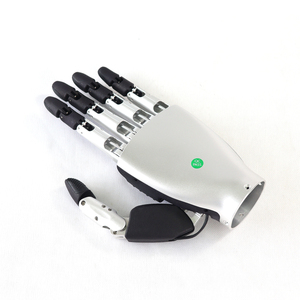
Humanoid Robot Hand Prosthetic Hand Bionic Hand Artificial Arm with Open Source Code RS485
Humanoid Bionic Robotic Hand System with RS485 Interface & Open-Source Firmware
Next-generation robotic hand research platform for clinical research centers and advanced rehabilitation institutions featuring programmable individual finger actuators.
Robotic Tech RS485 Bus Control
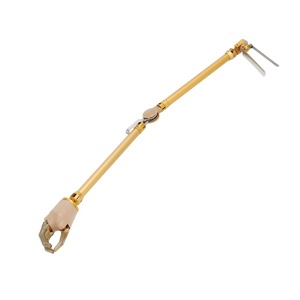
Adult Above Elbow Prosthetic Arm with Hook Hand for Upper Limb Rehabilitation
Adult Above-Elbow Rehabilitation Prosthesis with Quick-Release Hook Terminal
Modular upper-limb system designed for rapid clinical fitting, featuring adjustable friction wrist units and high-tensile harness control components.
Modular Design Quick-Fit Socket
ASSJQ12B-M Myoelectric Arm Prosthesis with One Degree of Freedom and Double Channels
ASSJQ12B-M Double-Channel Myoelectric Arm Prosthesis System
Dual-electrode differential signal processing unit offering reliable muscle contraction detection and smooth electric hand open/close response for daily living activities.
Dual-Channel EMG Low-Latency Drive
20+ Years
Manufacturing Heritage (Est. 2005)
ISO 13485
Quality Management Certified
0° - 85°
Continuous Standing Tilt Angle
20+ Nations
Global Medical Export Footprint

Executive Summary: The Biomechanical Imperative of Dynamic Standing Mobility in New Zealand Rehabilitation

As healthcare delivery paradigms shift across New Zealand’s healthcare regions under Health New Zealand (Te Whatu Ora) and the Accident Compensation Corporation (ACC), the clinical mandate for early verticalization and dynamic standing mobility has become paramount. Long-term seated wheelchair dependence among individuals with spinal cord injuries (SCI), cerebral palsy, stroke, muscular dystrophy, and lower-limb amputations induces severe secondary physiological complications, including osteopenia, joint contractures, pressure injuries (decubitus ulcers), and urinary tract dysfunctions.

As a premier Standing Wheelchair Manufacturer & Original Equipment Manufacturer (OEM) supplying international health providers, our engineering framework integrates ergonomic posture alignment, linear actuator electric standing mechanics, and rugged structural frames built to satisfy both urban and semi-rural terrain challenges found throughout the North and South Islands of New Zealand.

Clinical & Functional Parameter Standard Powered Wheelchair Passive Tilt Table / Standing Frame Singar Rehab Power Standing Wheelchair
Bone Mineral Density (BMD) Retention Negligible (Static Seated) Moderate (Stationary Passive) High (Active Dynamic Weight-Bearing)
Cardiovascular & Renal Drainage Restricted due to visceral compression Temporary postural improvement Optimized via continuous tilt transitions
Workplace & Functional Autonomy Limited to seated desk height None (Requires dedicated clinic space) Full 100% eye-level reach & mobile independence
NZ ACC / Whaikaha Procurement Value Standard mobility compliance Therapy room single-use tool Dual-use: Primary mobility + therapeutic standing

Localized Application Scenarios across New Zealand Healthcare & Workplaces

New Zealand’s unique geographical landscape, combined with its progressive disability support system managed by Whaikaha – Ministry of Disabled People and Enable New Zealand / Accessable, requires standing wheelchairs that perform seamlessly in diverse environments.

1. ACC Vocational Reintegration in Commercial Centers

In urban business districts such as Auckland CBD, Wellington, and Christchurch, injured workers undergoing ACC-funded vocational rehabilitation require eye-level standing interactions. Our electric standing wheelchairs feature smooth, quiet dual-actuator mechanics allowing users to transition from desk height to full standing without interrupting workflow, filing, or laboratory tasks.

2. Rural & Agricultural Terrain Mobility (Waikato & Canterbury)

Farmers and rural landowners across Waikato, Taranaki, and Canterbury facing mobility impairment require rugged chassis stability. Designed with reinforced steel/aluminum hybrid frames, high-torque gearboxes, and puncture-resistant pneumatic tires, our all-terrain standing wheelchairs navigate unpaved farm tracks, gravel pathways, and shed environments safely.

3. Residential & Independent Living under Whaikaha Funding

Home modification costs in NZ can be substantially reduced when individuals utilize compact-radius standing wheelchairs. Users easily access high kitchen cabinetry, laundry facilities, and household fixtures independently, reducing reliance on personal care assistants and fulfilling the core objectives of the Enabling Good Lives (EGL) approach.

4. Clinical Physiotherapy & Pediatric Rehabilitation Hubs

Specialized spinal units, such as the Burwood Spinal Unit in Christchurch and the Auckland Spinal Rehabilitation Centre, deploy our multi-point adjustable standing chairs for patient gait re-education, trunk control training, and contracture prevention programs.

New Zealand Market Trends, Medsafe Compliance & Standards Alignment

Procuring assistive technology for the New Zealand market demands strict adherence to safety, electrical, and mechanical regulations. Importers, clinical equipment distributors, and institutional buyers must ensure imported powered mobility equipment meets local standards:

  • AS/NZS 3695.2:2013 Compliance: Wheelchairs - Requirements and test methods for electrically powered wheelchairs (including mobility scooters). Our manufacturing processes strictly adhere to dynamic stability, brake efficiency, and structural fatigue testing protocols outlined in AS/NZS specifications.
  • Medsafe NZ Database Registration: As medical devices, standing wheelchairs supplied to New Zealand healthcare entities are designed to comply with Medsafe (New Zealand Medicines and Medical Devices Safety Authority) regulatory controls for Class I medical equipment.
  • Lithium Iron Phosphate (LiFePO4) Battery Safety: In alignment with international maritime and air transport rules to Port of Auckland and Port of Tauranga, our power standing chairs utilize UN38.3 certified high-capacity LiFePO4 batteries offering extended range, rapid charging, and zero toxic emissions.
  • Custom Ergonomic Tailoring for NZ Demographics: Recognizing the diverse physiological build of Kiwi users, our factory provides custom seat width (36cm to 56cm), adjustable depth, and multi-axial knee-support pads to ensure optimal pressure distribution and posture control.

Factory & Enterprise Advantages: Why New Zealand Distributors & Hospitals Partner With Us

Rooted in over two decades of engineering excellence (established in 2005), Singar Rehab operates state-of-the-art manufacturing facilities certified under ISO 9001 and ISO 13485 standards. Our integrated production matrix combines robotic welding, CNC precision machining, biomechanical testing rigs, and advanced lamination workshops.

OEM & ODM Customization Matrix

We offer full original equipment manufacturing (OEM) and design (ODM) capabilities for New Zealand medical brands. From custom color anodizing to proprietary joystick controller programming (PG Drives R-Net integration), we tailor products to exact market specifications.

Direct Factory Pricing & Bulk Logistics

By eliminating intermediary trading markups, we deliver wholesale B2B pricing to NZ distributors, enabling higher margins while maintaining competitive end-user costs for ACC and private buyers. Direct shipping lines connect our Pune export hub to Auckland, Tauranga, and Lyttelton.

Rigorous Quality Assurance & Traceability

Every standing wheelchair undergoes 100% load testing, electronic circuit insulation verification, and continuous 50,000-cycle actuator tilt endurance testing prior to crating and export packaging.

New Zealand Procurement & Technical FAQ

Key information for medical equipment importers, clinical orthotists, occupational therapists, and procurement officers across New Zealand.

How do your standing wheelchairs support ACC and Enable NZ funding approval requirements?
Our standing wheelchairs are designed to meet international clinical safety standards (ISO 7176 / AS/NZS 3695.2), providing full technical documentation, stress-test certificates, and risk assessment specs required by Occupational Therapists (OTs) submitting funding applications to ACC, Enable New Zealand, or Accessable.
What is the typical shipping lead time from your factory to New Zealand ports?
Standard OEM production lead times range between 15 to 25 business days depending on customization requirements. Ocean freight to primary ports (Auckland, Tauranga, Lyttelton/Christchurch) takes approximately 18 to 24 days. Express air freight for urgent clinical trials or sample units is available via DHL/FedEx.
Are spare parts and modular components readily available for NZ maintenance providers?
Yes. We manufacture all structural frames, harnesses, knee-block supports, and electronic wiring harnesses in-house. We supply comprehensive spare parts kits (actuators, controllers, tires, bearings, chest straps) alongside bulk wheelchair shipments to ensure NZ distributors can provide immediate localized technical support.
Can the standing mechanism be operated independently by the user?
Absolutely. The electric standing mechanism is controlled directly through an ergonomic joystick control unit or an auxiliary toggle switch mounted on the armrest. Users can pause at any intermediate angle between 0° (seated) and 85° (full upright standing) with automatic electro-magnetic braking for complete safety.
What safety mechanisms prevent tipping during full standing elevation?
Our chairs incorporate automatic anti-tip rear wheels, front chassis stabilizer bars, an electronic drive speed inhibitor (which automatically limits driving speed when elevated), and adjustable chest/pelvic/knee safety belts to maintain user center-of-gravity within a safe support base.
Do you offer custom sizing for Maori and Pasifika physiological profiles or pediatric users?
Yes. We specialize in custom dimensional adjustments. Seat width, seat depth, backrest height, footplate distance, and lateral thoracic supports can be custom-fabricated via CAD according to individual clinical measurement sheets provided by your therapy team.
How can New Zealand medical companies request a sample unit or factory audit?
Commercial distributors and hospital procurement teams can request a sample standing wheelchair or schedule a virtual live factory tour by clicking the Contact Us button to connect directly with our international export director.

Partner with a Leading Standing Wheelchair Manufacturer Today

Expand your product portfolio in New Zealand with high-margin, clinically proven standing wheelchairs and biomechanical assistive hardware. Contact our export engineering team for OEM catalogs, price sheets, and compliance packages.

Contact Us