
Executive Summary & Market Dynamics
The Russian market for upper-limb and lower-limb prosthetic devices has entered a transformative era driven by nationwide healthcare infrastructure modernizations, increased demand for vocational rehabilitation, and evolving state tender compensation frameworks managed under the Social Fund of Russia (СФР - Social Fund of Russia). For international procurement directors, clinical orthopedic networks, and medical device importers operating across Moscow, Saint Petersburg, Novosibirsk, Ekaterinburg, and Vladivostok, establishing a direct manufacturing partnership with an experienced ISO-certified prosthetic factory is critical to maintaining supply resilience, achieving regulatory EAC (Eurasian Conformity) alignment, and guaranteeing mechanical reliability in sub-zero operational environments.
This technical whitepaper outlines the structural, metallurgical, and electromechanical standards required for upper-limb prosthetic components engineered for the Russian Federation. By leveraging state-of-the-art lamination resin technologies, myoelectric signal processors, cold-resistant polyurethane formulations, and open-source RS485 bionic control buses, Singar Rehab delivers high-grade OEM/ODM prosthetic hardware designed to bridge the gap between high-tech clinical functionality and cost-effective bulk procurement.
1. Localized Application Scenarios Across Russian Geographical Regions
Prosthetic devices supplied to the Russian market must be engineered to withstand severe microclimatic variations, heavy physical work conditions in industrial hubs, and extended operational cycles without requiring frequent clinical recalibration. Unlike standard Mediterranean or tropical prosthetic specifications, products deployed in Siberia, the Russian Far East, and Northern Federal Districts encounter temperature shifts ranging from +30°C in summer to -40°C in deep winter.
Severe Sub-Zero Thermal Resilience
Standard prosthetic elastomers, hydraulic fluids, and battery chemistry degrade or freeze in sub-zero climates. Our Russian-spec upper arm systems utilize low-viscosity synthetic hydraulic fluids, cold-stabilized polyurethane liners, and thermally insulated lithium-polymer battery modules engineered to retain charge efficiency down to -40°C.
Heavy Industrial & Agricultural Utility
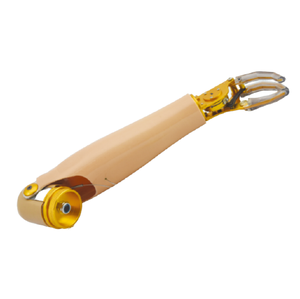
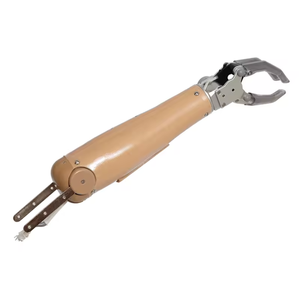
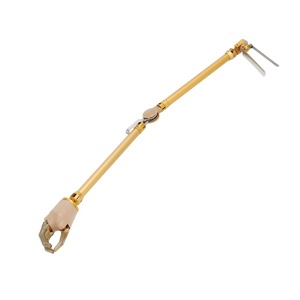
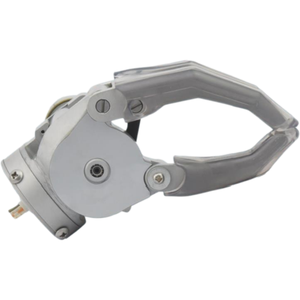
A significant proportion of upper-limb amputees in regional hubs such as Chelyabinsk, Krasnoyarsk, and Kemerovo require robust, body-powered mechanical arms. Products equipped with gold-tone split hook terminal devices and ball-joint wrist friction sockets provide maximum mechanical leverage and chemical resistance for metalwork, forestry, and heavy equipment operation.
Urban Bionic Rehabilitation
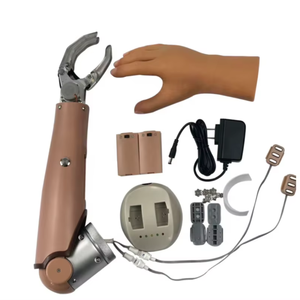
In metropolitan centers like Moscow and Kazan, clinical user intent prioritizes advanced myoelectric hands (such as the ASSJQ12B-M and 2-DoF myoelectric elbow/wrist assemblies). Users demand natural proportional control, aesthetically realistic cosmetic silicone outer gloves, and high-frequency EMG noise filtering capable of isolating muscle signals through thick winter garments.
To address these contrasting localized demands, Singar Rehab structures its manufacturing pipelines into dual tracks: High-Durability Mechanical Cable-Controlled Prosthetics for rugged external environments, and Precision Myoelectric/Bionic Upper-Limb Systems for modern active lifestyle and office rehabilitation settings.
2. Technical Deep-Dive: Material Science & Engineering Standards
Achieving structural integrity in transhumeral (above-elbow) and transtibial/transradial prosthetics requires meticulous material selection. In compliance with international ISO 13485 standards and clinical load-bearing requirements, our manufacturing plant incorporates aviation-grade metals, structural carbon composite weaves, and bio-compatible polymers.
| Prosthetic Component | Material Composition | Thermal / Mechanical Range | Target Russian Application |
|---|---|---|---|
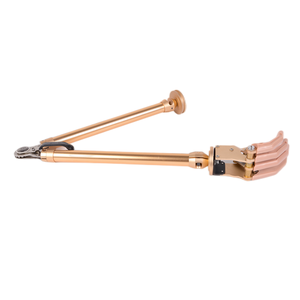
| Mechanical Skeleton Rods | 7075-T6 Anodized Aluminum / Stainless Steel | Loads up to 125 kg | Temp: -50°C to +60°C | Cosmetic & functional above-elbow rods for active work |
| Myoelectric Hand Chassis | Carbon-Fiber Reinforced Polycarbonate & Titanium | 2.5 Nm Grip Force | Waterproof IP65 rated | Urban daily living, fine motor control rehabilitation |
| Split Hook Terminal Devices | Gold-Tone Titanium Nitride Coated Alloy | High impact friction | Corrosion resistant | Agricultural, industrial, and heavy tool handling |
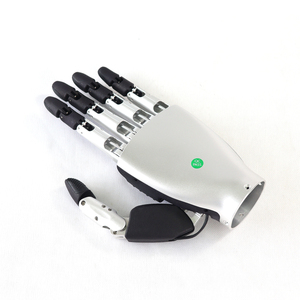
| Bionic Humanoid Hand (RS485) | High-Precision Micro Coreless Motors & ABS-PC | 5 Independent actuators | 115200 bps Bus | Robotics research, advanced functional prosthetics |
| Cosmetic Outer Sleeves | Medical-Grade Platinum-Cured Silicone | High tear strength | UV & Frost stable | Natural skin shade matching for winter/summer use |
2.1 Myoelectric Signal Processing & Circuitry Optimization
The core challenge in myoelectric arm design lies in extracting microvolt-level surface electromyographic (EMG) signals from residual muscle tissue under varying environmental humidity and skin impedance conditions. The ASSJQ12B-M and 2-DoF Dual-Degree Myoelectric Systems utilize differential surface electrodes with active pre-amplification. This design effectively suppresses 50Hz electrical grid noise (common in industrial facilities) and compensates for muscle fatigue or cold-induced skin vasoconstriction commonly experienced during Russian winters.
Furthermore, our advanced humanoid bionic hand integrates an RS485 communication interface with open-source control protocols. This allows clinical orthotists and biomedical engineers in Russian university hospitals to program custom grip profiles, calibrate muscle voltage thresholds, and interface the terminal device directly with neural-sensing wristbands or external rehabilitation telemetry.
3. Russia Market Regulatory Trends, FSS Tender Compliance & Import Logistics
Navigating medical procurement in the Russian Federation requires strict adherence to federal legislation, technical standardization, and smooth international financial clearing channels. Understanding these factors provides international trading companies with a competitive advantage when selecting a long-term prosthetic manufacturing partner.
3.1 Certification Requirements: EAC & GOST-R Standards
All medical prosthetics, orthoses, and rehabilitation devices imported into the Eurasian Customs Union (EAEU) must satisfy rigorous safety and efficacy standards. Singar Rehab products undergo standardized testing protocols aligned with:
- GOST R ISO 10993: Biological evaluation of medical devices (cytotoxicity, skin sensitization, and systemic toxicity tests for socket materials and silicone covers).
- GOST R 51632: Technical aids for persons with disabilities — General technical requirements and test methods.
- EAC Declaration of Conformity: Ensuring electromechanical safety, electromagnetic compatibility (EMC) for myoelectric sensors, and environmental durability.
3.2 State Reimbursement Frameworks (Social Fund of Russia - СФР)
Under Russian state assistance programs, eligible individuals receive government certificates (Электронный сертификат) or direct compensation for purchasing prescribed prosthetic devices registered under the Individual Rehabilitation Program (ИПРА). Prosthetic centers bidding on municipal and regional state tenders require manufacturers who can supply complete technical dossiers, certified quality guarantees, and modular replacement components compatible with standard European structural adapters (e.g., 30mm pylon systems and 4-hole socket plates).
3.3 Financial Settlement & B2B Logistics Corridors
To overcome contemporary international banking constraints, Singar Rehab supports direct multi-currency trade channels including Chinese Yuan (CNY) and Russian Ruble (RUB) clearing via direct VTB / CIPS channels. Logistics solutions are optimized through overland rail corridors (Manzhouli / Zabaikalsk and Suifenhe / Grodekovo) and direct sea-rail multimodal routes terminating in Vladivostok, Moscow (Vorsino / Silikatnaya logistics hubs), and Saint Petersburg, guaranteeing reliable delivery lead times of 14–22 days from production sign-off.
4. Corporate Strengths & Factory Capabilities: Why Partner with Singar Rehab
Established in 2005, Singar Rehab (headquartered in Pune, Maharashtra, India) has built an international reputation as a high-precision manufacturer, developer, and exporter of artificial limbs, orthopedic braces, wheelchairs, and complex rehabilitation equipment. Expanding our global footprint across 20+ countries, our manufacturing methodology combines custom patient fitting precision with large-scale industrial factory efficiency.
20+ Years of Manufacturing Integrity
Over two decades of clinical manufacturing experience ensures every prosthetic elbow joint, cable mechanism, and socket connector undergoes strict fatigue testing exceeding 3 million load cycles.
Custom OEM/ODM Modular Fabrication
We produce standardized components fully interchangeable with global socket systems, allowing Russian clinical technicians to seamlessly integrate our upper-limb devices into existing patient sockets.
Complete Technical Dossiers & Warranty
Every product shipment includes comprehensive user manuals, electrical schematics, material safety certificates, and a standard 1-Year to 3-Year factory warranty supported by fast spare-part dispatches.
5. Clinical & Technical FAQ for Russian Buyers & Orthopedic Distributors
Request Technical Specifications & Factory B2B Quotations
Partner with a certified prosthetic limb manufacturer tailored for the Russian market. Contact our engineering and export team today to receive a complete product catalog, wholesale price list, and sample evaluation packages.
Send an Inquiry