High-precision upper and lower limb functional solutions engineered for clinical excellence, mechanical longevity, and ergonomic integration in the European healthcare market.
The French prosthetic and orthotic landscape operates under rigorous regulatory oversight, demanding strict adherence to European Union Medical Device Regulation (EU MDR 2017/745), ISO 13485 quality management systems, and ISO 10328 structural testing standards for lower-limb prostheses. For healthcare purchasing consortia, public hospital networks (such as AP-HP in Paris or Hospices Civils de Lyon), private physical medicine and rehabilitation centers (Centres de Rééducation Fonctionnelle - CRFs), and independent orthoprothésistes, selecting an international manufacturing partner requires a precise balance of biomechanical performance, regulatory compliance, and cost-effective bulk supply capability.
Singar Rehab, established in 2005 in Pune, India, has developed an integrated manufacturing framework designed to address the evolving procurement requirements of the European market. By utilizing CAD/CAM socket modeling, prepreg carbon-fiber lamination, precision CNC titanium milling, and multi-channel myoelectric control systems, Singar Rehab delivers high-impact K3/K4 lower limb components and advanced upper limb bionic assemblies engineered to match LPPR (Liste des Produits et Prestations Remboursables) functional criteria.
Technical Insight for French Procurement Officers: All lower-limb structural components (pyramid adapters, tube clamps, polycentric knee joints, dynamic carbon feet) supplied to the French market undergo 3 million cycles of cyclic fatigue testing under ISO 10328 P5/P6 load levels (up to 125kg and 150kg patient weight thresholds), ensuring long-term resistance to dynamic shear and vertical impulse stresses.
Modern prosthetics serving the French healthcare market must accommodate distinct patient activity levels, classified from K1 (household ambulation) to K4 (high-impact athletic navigation). Understanding the structural mechanics, material science, and signal processing architecture behind each device is critical for clinical prescribing and B2B volume procurement.
Aerospace-grade prepreg carbon weave with thermosetting acrylic resin matrix, providing maximum torsional stiffness and energy storage for transtibial and transfemoral sockets.
Polycentric 4-bar and 5-bar linkage systems equipped with adjustable hydraulic stance-and-swing control valves to maintain smooth cadence transition on uneven terrain.
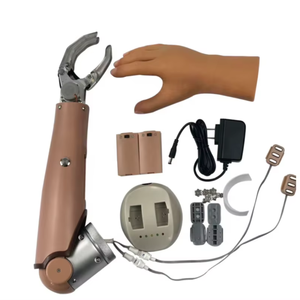
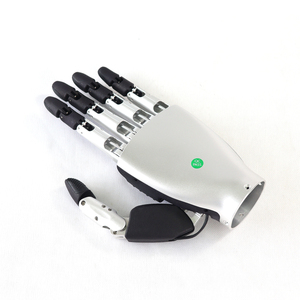
Active surface electromyographic (EMG) sensors utilizing digital filtering algorithms to isolate muscle contractions from skin impedance noise, driving high-torque micro-motors.
Transtibial (Below-Knee) systems focus heavily on pressure distribution over the patellar tendon and fibular head. Singar Rehab's total surface bearing (TSB) socket configurations, coupled with silicone pin-lock or vacuum-assisted suction suspension (VABP), eliminate pistoning during heel strike and toe-off. In transfemoral (Above-Knee) systems, ischial containment sockets (IC-sockets) stabilized by polycentric hydraulic knees provide optimal mediolateral pelvic control during mid-stance phase.
| Prosthetic System Category | Primary Structural Materials | K-Level Suitability | ISO 10328 Rating | Target French Clinical Use |
|---|---|---|---|---|
| Transtibial Dynamic Carbon Leg | Prepreg Carbon Fiber, Titanium Core | K3 - K4 | P5 (Up to 125 kg) | Active urban walk, slope navigation, outdoor sports |
| Transfemoral Polycentric Hydraulic | Aircraft Aluminum 7075, Stainless Steel | K2 - K3 | P5 / P6 (Up to 150 kg) | Rehabilitation centers, variable cadence walking |
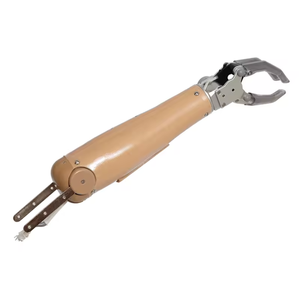
| Upper Limb Dual-Channel EMG Hand | High-Impact ABS, Silicone, Titanium Joint | Upper Extremity | CE Class I Certified | Occupational daily activities, fine motor grasping |
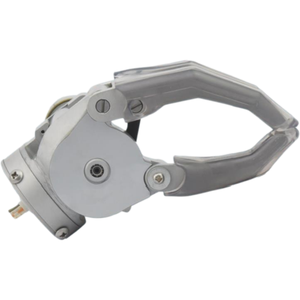
| Bionic RS485 Terminal Device | Polycarbonate, Micro-Stepper Actuators | Research / Bionic | CE Class I Certified | Advanced rehabilitation labs, robotic research |
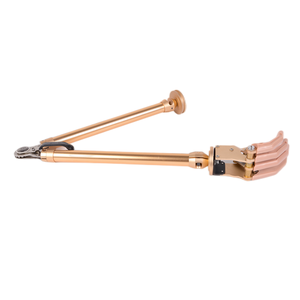
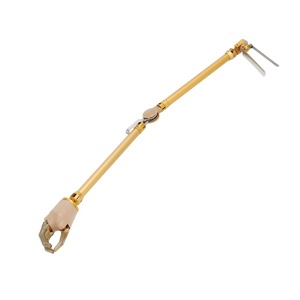
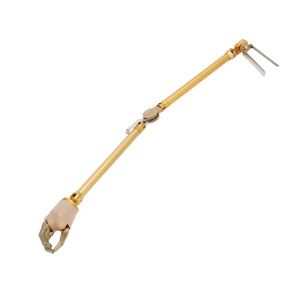
| Cable-Controlled Work Prosthesis | Stainless Steel, Reinforced Dacron Harness | Heavy Industrial | Heavy Duty Mechanical | Agricultural, manual labor, rugged environment |
Prosthetic devices exported to France must perform reliably across diverse geographic, infrastructural, and lifestyle conditions. From dense urban cobblestone streets to rugged mountain terrain, Singar Rehab's products are engineered to excel in specific local environments:
Navigating Parisian cobblestones, metro staircases, and crowded pavement requires superior shock absorption and multi-axial ankle rotation. Our energy-storing carbon fiber feet feature split-heel dynamics that accommodate lateral inversion and eversion, reducing shear forces transmitted to the residual limb.
Patients living in region Auvergne-Rhône-Alpes demand high-impact resistance for slope hiking and variable weather condition stability. Titanium structural adapters combined with hydraulic stance flexion resistance prevent knee buckling during descent on steep gradients.
Centres de Rééducation Fonctionnelle (such as HIA Percy or specialized SSR facilities) require modular aligners and fast-fitting trial sockets for early post-amputation mobilize phases. Our quick-change modular alignment plates streamline trial fittings during acute physical therapy.
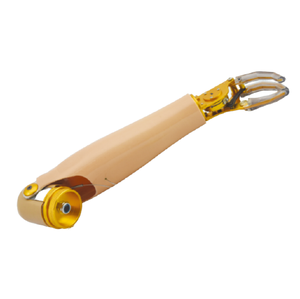
For amputees returning to work in agricultural sectors (e.g., Nouvelle-Aquitaine) or manufacturing hubs, heavy-duty mechanical cable control arms with gold-tone split hook terminals offer waterproof durability and high tactile grip strength without electrical battery dependencies.
Procurement directors and orthopedic workshops in France are adapting to fundamental shifts in healthcare policy, patient demographics, and technological innovation. Suppliers must align their manufacturing capabilities with these three macro-trends:
With the transition from the MDD to the EU MDR, France's National Agency for Medicines and Health Products Safety (ANSM) enforces strict post-market clinical follow-up (PMCF) and traceability requirements. Suppliers must provide comprehensive risk analysis files, biocompatibility certificates (ISO 10993), and unique device identification (UDI) compliance for every component lot.
The French LPPR coding structure is increasingly prioritizing outcome-based mobility parameters. Sockets fitted with micro-processor controlled knee joints (MPKs) and micro-processor feet are gaining broader reimbursement coverage under specific K3 patient profiles. Cost-effective OEM supply chain partners enable French distributors to maximize margin under fixed LPPR cap prices.
In accordance with French environmental directives and hospital green procurement policies, there is growing emphasis on non-toxic thermosetting resins, recyclable thermoplastic components (such as PPCP socket materials), and modular systems designed for component replacement rather than complete limb discarding.
As a seasoned manufacturer of artificial limbs, prosthetics, orthopedic braces, and rehabilitation equipment based in Pune, India, Singar Rehab delivers end-to-end B2B solutions tailored for international importers and medical device distributors.
State-of-the-art CNC machining, titanium investment casting, and automated carbon composite layup ensure dimensional tolerances within ±0.02mm.
100% bench testing of hydraulic valves, myoelectric electrode signal amplification verification, and cyclic fatigue testing per ISO 10328.
Streamlined air and sea freight channels delivering directly to Roissy-CDG airport or Le Havre / Marseille ports with complete Customs declaration packages.
Connect directly with our international export department to receive comprehensive technical data sheets, ISO compliance documentation, and competitive volume pricing tailored for the French market.
Get Catalog