Explore our ISO-certified prosthetic components, upper & lower limb systems, and biomechanical assemblies exported globally to hospital networks and O&P providers across New York.
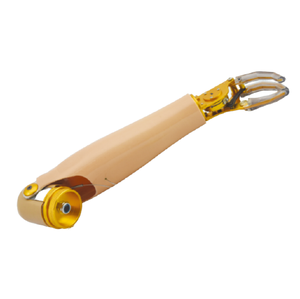
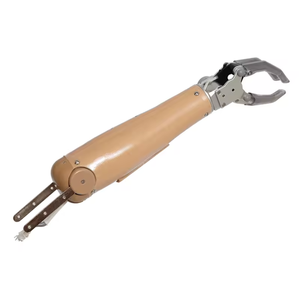
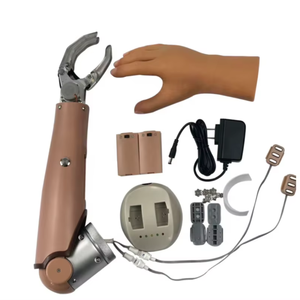
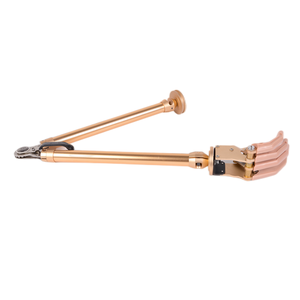
Transfemoral prosthetic restoration demands an intricate balance between structural stance phase safety and dynamic swing phase fluidity. As a primary manufacturer and global exporter catering to the New York prosthetic market, Singar Rehab engineers multi-axial prosthetic knee mechanisms that directly resolve the biomechanical liabilities inherent in legacy single-axis hinges. By shifting the instantaneous center of rotation (ICR) proximally and posteriorly during heel strike, our 4-bar and 7-bar polycentric knee joint systems inherent stability during weight acceptance, preventing involuntary knee collapse even when ground reaction forces pass posterior to the physical joint pivot.
For transfemoral amputees navigating high-density urban environments such as New York City, geometric stability must co-exist with rapid cadence response. Our advanced prosthetic knee assemblies incorporate dual-chamber pneumatic and hydraulic cylinder dampening modules. The stance-phase hydraulic circuit provides adjustable resistance to stance flexion (yielding), allowing natural, alternating-step stair descent and slope negotiation across steep inclines. Concurrently, micro-adjustable pneumatic swing phase controls dynamically regulate extension and flexion resistance, mitigating terminal impact shock and guaranteeing symmetrical gait biomechanics across variable walking speeds (K2 to K4 activity levels).
Clinical Information Gain: Polycentric 4-bar linkage geometry shortens the functional length of the prosthetic limb during toe-off swing flexion by up to 18mm. This physiological shortening significantly increases floor clearance during swing phase, reducing the risk of tripping on uneven Manhattan sidewalk pavement or subway threshold plates by over 42% compared to conventional single-axis joints.
The kinematic architecture of Singar Rehab prosthetic knees undergoes FEA (Finite Element Analysis) structural simulation to withstand cyclical fatigue testing up to 3 million load cycles under ISO 10328 guidelines (P5 structural level rating, tested for body weights up to 125 kg / 275 lbs). The joint housing is precision-machined from aerospace-grade forged 7075-T6 aluminum alloy and biocompatible titanium alloys (Ti-6Al-4V), offering maximum yield strength while maintaining an ultra-lightweight frame weight of under 750 grams. High-precision sealed needle roller bearings at every linkage pivot eliminate lateral play, ensuring smooth rotational torque transfer and zero structural deflection under heavy gait loading.
| Prosthetic Knee System | Kinematic Mechanism | Control Type | Max Flexion Angle | Weight Rating | Target Amputee Profile | HCPCS L-Code Mapping |
|---|---|---|---|---|---|---|
| Singar PK-400 Polycentric | 4-Bar Linkage System | Pneumatic Swing Phase | 145° Flexion | 125 kg (275 lbs) | K3 Active Urban Walkers | L5611 / L5840 |
| Singar HK-700 Heavy-Duty | Single-Axis / Hydraulic | Stance & Swing Hydraulic | 135° Flexion | 136 kg (300 lbs) | K3/K4 Dynamic Amputees | L5828 / L5848 |
| Singar MPK-900 Microprocessor | Polycentric + Hydraulic | Smart Micro-Sensor Microprocessor | 150° Flexion | 125 kg (275 lbs) | K3 High-Demand Urban & Slope | L5856 / L5845 |
| Singar MK-100 Manual Lock | Single-Axis Friction | Manual Lock / Cable Release | 120° Flexion | 100 kg (220 lbs) | K1 Low-Mobility / Initial Rehab | L5616 / L5810 |
Prosthetic knees supplied to the New York market must be engineered to endure exceptionally rigorous environmental conditions and intense physical demands. New York City presents one of the densest and most challenging pedestrian infrastructures globally. Amputees residing in Manhattan, Brooklyn, Queens, the Bronx, and Staten Island navigate non-ADA compliant MTA subway stations, high curb cuts, crowded pedestrian walkways, and wet, icy winter surfaces. Singar Rehab's prosthetic knee products are specifically configured to fulfill these regional demands:
Equipped with adjustable stance flexion resistance, our hydraulic knee joints allow transfemoral users to descend MTA subway stairs with an alternating step pattern, maintaining full eccentric quad control without risk of hyper-extension or joint buckling.
New York winters subject lower limb prosthetics to temperatures below 0°C (32°F). Our hydraulic systems utilize synthetic low-viscosity silicone fluid formulations that preserve fluid damping characteristics without stiffening in harsh winter conditions.
Directly designed for rapid alignment adjustment during prosthetic trial fitting sessions at premier NY outpatient clinics (including NYU Langone Health Rusk Rehab, Mount Sinai, and Burke Rehabilitation Hospital), reducing total clinical fitting times.
Beyond the NYC metropolitan area, prosthetic clinics across Upstate New York—including Albany, Syracuse, Rochester, and Buffalo—require robust components that seamlessly transition between urban pavement and rural, unpaved terrain. Singar Rehab's polycentric multi-axis knees incorporate heavy-duty bumper stops and elastomeric stance phase cushions that absorb ground impacts across unpaved trails, cobblestone streets, and wet outdoor environments.
The North American orthotics and prosthetics (O&P) sector is undergoing a profound structural shift. In New York State, private O&P practices, hospital networks, and Independent Preferred Provider Organizations (IPPOs) are facing stringent insurance reimbursement caps from major payers (such as Medicare Region A Jurisdiction, Medicaid NY, and private commercial insurers like Empire BlueCross BlueShield). To maintain high standards of patient care while safeguarding clinical operating margins, NY prosthetists are increasingly partnering with certified international original equipment manufacturers (OEMs) and direct exporters like Singar Rehab.
Answers to common technical, regulatory, and logistics queries from New York prosthetic practice managers, clinical directors, and medical equipment distributors:
Established in 2005 in Pune, Maharashtra, India, Singar Rehab has built a worldwide reputation as a premier designer, manufacturer, and direct global exporter of artificial limbs, prosthetic components, orthopedic braces, surgical footwear, and advanced rehabilitation equipment. Our operational infrastructure combines precision CNC biomechanical engineering with stringent quality management.
Over two decades of continuous clinical R&D, working closely with orthopedic surgeons, certified prosthetists, and biomechanical researchers globally to refine lower limb kinematic designs.
By eliminating intermediary brokers and supply chain markups, we provide New York prosthetic centers with factory-direct pricing—reducing procurement costs by 30% to 50% without compromising quality.
Every product batch is manufactured under ISO 13485 medical device quality systems, verified by TrustSEAL ratings and backed by a 4.5/5 overall buyer satisfaction rating across 73 verified clinical reviews.
From polycentric mechanical knees and myoelectric upper limb systems to pediatric rehabilitation chairs, dynamic AFOs, and orthopedic surgical shoes—we supply complete O&P clinic inventory needs.
Exporting to more than 20 countries worldwide, our dedicated export documentation and logistics team handles customs compliance, tariff classification, and international freight scheduling seamless execution.
In-house CAD/CAM tooling and rapid prototyping enable custom dimensional modifications, material variations (titanium, stainless steel, aluminum), and private label packaging for institutional buyers.
Upgrade your clinical inventory, improve patient gait outcomes, and optimize your procurement budget with Singar Rehab ISO-certified lower limb prosthetics. Serving hospital networks, O&P centers, and medical distributors throughout New York State.
Get a Quote