
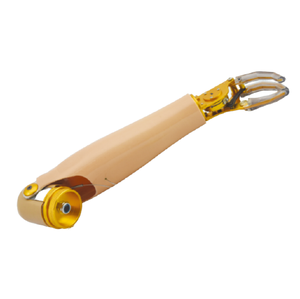
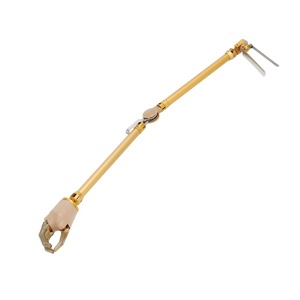
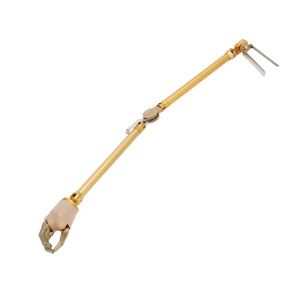
Cable-Controlled Mechanical Upper Limb Mobility Arm
Drive Mechanism: Stainless Steel Bowden Cable
Load Capacity: 45 kg Structural Strain
Application: Transhumeral Rehabilitation
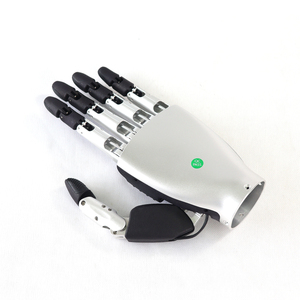
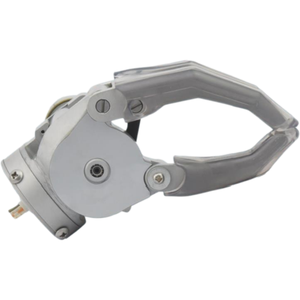
Rigid-frame chassis, myoelectric mobility controllers, and ergonomic assistive component assemblies ready for commercial Ghanaian distribution and clinical deployments.
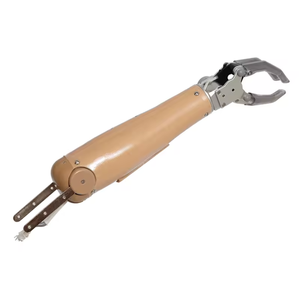
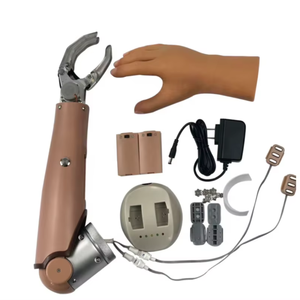
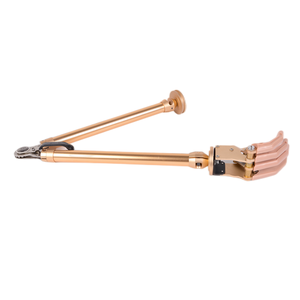
Ghana is emerging as the primary economic hub for personal electric mobility devices, therapeutic power wheelchairs, and rehabilitative technology across the West African sub-region. Driven by expanding urban infrastructure in Greater Accra, Kumasi, and Sekondi-Takoradi, coupled with progressive healthcare policies under the Ghana Health Service (GHS) and the enforcement of the Persons with Disability Act (Act 715), commercial demand for high-reliability mobility vehicles is surging exponentially.
However, importing standard off-the-shelf mobility scooters frequently results in equipment failure due to localized environmental stresses. Importers, clinical distributors, and non-governmental organizations (NGOs) operating within West Africa require specialized OEM/ODM manufacturing partners who understand the technical dynamics of tropicalized engineering.
Procuring electric mobility scooters for Ghana requires moving beyond basic aesthetic designs. Factory configurations must incorporate dust-sealed brushless transaxles, high-density polyurethane anti-puncture tires, reinforced chassis anti-corrosion treatments, and flexible battery management systems (BMS) capable of handling volatile grid voltage during localized charging cycles.
Why standard Western European or East Asian domestic mobility scooters fail in West Africa, and how custom OEM factory modifications solve local operational bottlenecks.
During the West African Harmattan season, fine silica dust penetrates standard electronic throttle pots and motor casings. Our OEM factory integration utilizes IP65 conformal-coated PCB controllers (PG Drives S-Drive / Dynamic Rhino) paired with double-lip oil seals on drive axles to eliminate electrical shorts and motor seizures.
Ambient operating temperatures in Ghanaian coastal and inland areas regularly exceed 38°C. Standard 250W motors overheat under continuous gradient loads. We engineer custom ODM mobility scooters with heavy-duty 450W–800W 4-pole motor transaxles featuring extruded aluminum heat-sink fins and Class H insulation rated to 180°C.
Unpaved feeder roads and high street curbs require superior structural yield strength. Our frames are fabricated using high-tensile Q235B tubular steel, subjected to electro-phoretic coating (EDC) to prevent coastal salt-air rust in coastal cities like Accra and Takoradi.
From urban commercial navigation in Accra to community healthcare outreach in Northern Ghana, our tailored mobility platforms adapt to local operational challenges.
Navigating dense commercial centers such as Makola Market, Business District Ridge, and Accra Mall demands high agility and narrow turning radii. Our Mid-Sized 4-Wheel OEM Scooters feature compact chassis widths (under 620mm), tight 1200mm turning circles, electromagnetic safety braking systems, and integrated front LED lights for evening road visibility.
In major trading hubs like Kumasi Central Market and Kejetia Market, mobility scooters are often utilized by shopkeepers and individuals carrying merchandise. We supply customized Heavy-Duty Cargo Mobility Scooters outfitted with reinforced front/rear steel baskets, dual rear shocks, and upgraded 200kg maximum payload capacities.
Semi-paved roads in Tamale, Wa, and rural agricultural corridors require high ground clearance. Our All-Terrain ODM Mobility Scooters are equipped with 14-inch pneumatic deep-tread tires, 150mm ground clearance, and optional solar photovoltaic auxiliary charging panels mounted to canopy tops for long-range autonomy.
Collaborating with major medical institutions like Korle-Bu Teaching Hospital and Komfo Anokye Teaching Hospital, our factory supplies medical-grade electric wheelchairs with full myoelectric control integration, reclining orthopedic seats, and pressure-relief gel cushion seating systems.
Compare standardized factory chassis configurations engineered for Ghanaian B2B importers, medical distributors, and commercial fleet procurement.
| Model Category | Drive System | Battery Configuration | Max Range | Ground Clearance | Target Ghanaian Terrain |
|---|---|---|---|---|---|
| Urban Compact OEM (3-Wheel) | 250W Sealed Transaxle | 24V 20Ah Lead-Acid / Lithium | 22 km | 90 mm | Indoor Malls, paved urban sidewalks (Accra) |
| Mid-Range Deluxe OEM (4-Wheel) | 450W 4-Pole Motor | 24V 35Ah AGM Deep Cycle | 35 km | 120 mm | Paved & gravel roads, market zones (Kumasi) |
| All-Terrain Heavy Duty ODM | 800W Dual Transaxle | 24V 55Ah / 75Ah Lithium (LiFePO4) | 50 km | 160 mm | Unpaved, rural & steep inclines (Northern Region) |
| Commercial Cargo Mobility Scooter | 600W Heavy Torque Motor | 24V 50Ah Deep Cycle Gel | 40 km | 135 mm | Logistics & heavy payload commercial distribution |
Navigating the import process through the Port of Tema or Takoradi Harbour requires compliance with national regulatory bodies to ensure zero clearance delays. As an established export-oriented factory, we supply all mandatory documentation required by Ghanaian customs agents and freight forwarders.
Motorized wheelchairs and mobility scooters designated for clinical or therapeutic use fall under Medical Device Regulation by the Ghana Food and Drugs Authority (FDA Ghana). We provide complete technical dossiers, CE certificates, and ISO 13485 documentation for fast-track product registration.
The Ghana Standards Authority (GSA) requires electrical safety compliance (IEC 60601-14 series for medical electrical equipment). Our products undergo rigorous factory testing covering electromagnetic compatibility (EMC) and mechanical brake efficiency.
Motorized invalid carriages fall under HS Code 8713.90. In Ghana, therapeutic mobility aids often qualify for reduced import duty tariffs under national disability inclusion incentives. We ensure accurate invoice documentation to streamline tax classification.
Building upon over two decades of precision prosthetic, orthotic, and rehabilitation equipment engineering (Singar Rehab lineage), our advanced production lines deliver unmatched reliability.
We offer full ODM customization including custom frame colorways, laser-etched brand logos, customized user manuals in English, and branded packaging suited for local Ghanaian retail distribution.
To minimize shipping volume and reduce sea freight costs into Tema Port by up to 35%, we provide Semi-Knockdown (SKD) and Completely Knockdown (CKD) assembly solutions with complete factory toolkits.
Every bulk container shipment includes a 3% complimentary fast-moving spare parts package (controllers, throttle potentiometers, tires, wiring harnesses) alongside a 12-month structural chassis warranty.
Our standard Minimum Order Quantity for custom OEM branding (logo, colorways, box printing) is 10 units. For custom engineering modifications (ODM chassis redesigns or custom controller configurations), MOQ starts at 20 units or one 20ft FCL container.
Production lead time typically ranges from 15 to 25 business days depending on order size. Direct ocean transit time from our export port to the Port of Tema, Ghana, generally takes between 28 to 35 days.
Yes! We design specific ODM canopy frames equipped with integrated 50W to 100W flexible monocrystalline solar panels linked to specialized MPPT solar charge controllers. This allows battery replenishment in remote regions with unstable power grids.
Absolutely. All our Lead-Acid, AGM Gel, and Lithium-iron Phosphate (LiFePO4) battery systems carry certified MSDS, UN38.3 test reports, and IEC 62133 compliance certificates required by international shipping lines entering West Africa.
Yes. We supply comprehensive digital training manuals, step-by-step assembly video modules, and live video support sessions with our chief mechanical and electrical engineers for your local Ghanaian repair staff.
Our frames undergo dual-stage phosphatizing and electro-phoretic dip coating, followed by marine-grade powder painting. All electrical connectors utilize rubber O-ring sealed waterproof plugs to eliminate marine salt-air corrosion.
Expand your medical distribution network, supply commercial fleets, or outfit municipal rehabilitation projects across Ghana and West Africa with engineered mobility solutions built for local conditions.