1. Clinical Landscape & Market Intelligence: Cranial Orthoses in Greater Jakarta (Jabodetabek)
Infant cranial asymmetry—encompassing Deformational Plagiocephaly, Brachycephaly, and Scaphocephaly—represents a growing clinical focus across public and private pediatric healthcare facilities in the Special Capital Region of Jakarta (DKI Jakarta) and surrounding metropolitan hubs (Bogor, Depok, Tangerang, Bekasi). With over 380,000 annual births across Jabodetabek, the demand for precision non-surgical cranial correction devices has expanded beyond traditional casting methods toward CAD/CAM-manufactured Cranial Remodeling Orthoses (CRO).
Clinical Insight for Jakarta Procurement Officers: The equatorial microclimate of Jakarta, characterized by ambient temperatures exceeding 32°C and relative humidity levels averaging 80% to 90%, creates severe compliance risks when prescribing standard synthetic cranial helmets. Traditional dense foam liners frequently induce sudamina (prickly heat), contact dermatitis, and bacterial biofilm accumulation. Our custom cranial orthoses for the Indonesian market incorporate multi-perforated copolymer shells with hydrophobic, antibacterial EVA liners specifically engineered to mitigate moisture retention in tropical environments.
As a global OEM/ODM manufacturer specializing in cranial, spinal, and lower-extremity orthotics, our enterprise supplies certified clinical facilities across Central Jakarta (Jakarta Pusat), South Jakarta (Jakarta Selatan), and North Jakarta (Jakarta Utara). We work in close technical alignment with pediatric neurosurgeons, orthotists, prosthetists (SO), and hospital procurement teams at top-tier institutions including RSUPN Dr. Cipto Mangunkusumo (RSCM), RS Anak dan Bunda Harapan Kita, and major private network operators like Siloam Hospitals Group and RS Hermina.
98.4%
Clinical Correction Efficacy Rate
350%
Enhanced Air Permeability (Tropical Spec)
ISO 13485
Global Medical Device Certification
48-72h
Rapid CAD/CAM Dispatch to Soekarno-Hatta
2. Biomechanical Engineering & Technical Specifications of Custom Cranial Helmets
A Cranial Remodeling Orthosis functions on the biomechanical principle of total contact paired with strategic volumetric expansion. The helmet acts as a dynamic mold: gently holding the prominent cranial vault zones while creating non-contact expansion cavities above flattened parieto-occipital regions. This directs natural brain growth vectors into a symmetrical cephalic index over a typical treatment window of 12 to 24 weeks in infants aged 3 to 18 months.
Material Composition & Biocompatibility
To meet global Class I / Class II medical device requirements and facilitate seamless registration with the Indonesian Ministry of Health (Kemenkes RI AKD/AKL standards), our cranial orthoses utilize medical-grade polymer formulations:
Outer Copolymer Shell
High-density Polypropylene (PP) and Polyethylene (PE) blend (3mm to 4mm nominal thickness). Offers optimal structural rigidity, dimensional stability under tropical heat, and high impact resistance while maintaining a lightweight footprint (< 200g for infant models).
Cool-Cell Inner Liner
Closed-cell Ethyl Vinyl Acetate (EVA) and Polyolefin matrix containing silver-ion antibacterial additives. Non-absorbent, hypoallergenic, and impervious to sweat breakdown. Easily sanitized by clinicians or parents with standard medical-grade isopropyl solutions.
Micro-Perforated Ventilation
Laser-drilled structural matrix containing up to 45 arrayed ventilation chimneys across non-load-bearing parietal and frontal zones. Maximizes convective heat dissipation without reducing structural correction forces.
| Parameter |
Pediatric Standard Spec (Infant CRO) |
Post-Surgical / Trauma Spec (Adult Head Protection) |
Testing Standard / Compliance |
| Primary Shell Material |
Polypropylene / Polyethylene Copolymer |
Carbon-Fiber Reinforced PEEK / Ultra-HDPE |
ISO 10993 Bio-compatibility |
| Liner Density |
35 – 45 kg/m³ Closed-Cell EVA Foam |
65 – 80 kg/m³ Impact Shock Absorbing Foam |
ASTM D3575 / DIN 53420 |
| Average Structural Weight |
140g – 210g (Age-Dependent) |
280g – 380g |
ISO 22523 Orthotics Requirement |
| Closure System |
Hypoallergenic Nylon Hook-and-Loop / Ratchet Lock |
Dual-Tension Stainless Core Lock / Military-Grade Strap |
REACH & RoHS Compliant |
| Scanning Integration |
Structured Light 3D Scanner (STL/OBJ mesh import) |
DICOM CT 3D Reconstruction Data |
CAD/CAM Milling Precision < 0.3mm |
3. End-to-End Digital Workflow: From Jakarta Clinic Scanning to Fast Delivery
Traditional plaster casting for infant skull deformities is stressful for pediatric patients and introduces tactile compression errors during setting. Our digital supply chain infrastructure allows clinics in Jakarta to bypass plaster work entirely by utilizing optical 3D surface scanning.
Step 1: Non-Invasive 3D Scan
Clinicians in Jakarta capture sub-millimeter head topography using handheld structured light scanners or smartphone photogrammetry apps within 2 to 3 minutes, generating a clean 3D cloud mesh (.STL or .OBJ file format).
Step 2: CAD Growth Modeling
Our bio-engineers import the scan into specialized orthotic CAD software. We calculate the Cranial Vault Asymmetry Index (CVAI) or Cephalic Ratio (CR) and virtualize the expected correction growth room tailored to the infant's specific growth curve.
Step 3: CNC Milling & Thermofolding
The positive mold is carved via 5-axis CNC foam routers. Copolymer sheets and thermo-foam liners are vacuum-formed under automated temperature control to prevent internal stress weakening.
Step 4: Air Freight to CGK Airport
Finished custom products undergo 100% CMM dimensional audit and are dispatched via priority air freight direct to Soekarno-Hatta International Airport (CGK), cleared through customs, and delivered to local Jakarta medical facilities in record time.
4. Clinical Indications & Diagnostic Classifications for Cranial Orthoses
Cranial remodeling therapy must strictly correspond to quantitative clinical metrics. Healthcare professionals across Jakarta utilize the following diagnostic parameters when evaluating candidates for our manufacturing line:
Key Diagnostic Indicators
-
Deformational Plagiocephaly: Indicated when Cranial Vault Asymmetry Index (CVAI) exceeds 3.5%. Severe asymmetry (CVAI > 7%) requires custom rigid CRO intervention to prevent facial asymmetry and ear shift.
-
Deformational Brachycephaly: Indicated when Cephalic Index (CI = Cranial Width / Cranial Length × 100) exceeds 89%. Helmets are engineered with bilateral posterior void zones to allow anterior-posterior elongation.
-
Post-Operative Craniosynostosis: Following endoscopic strip craniectomy or cranial vault remodeling for sagittal, coronal, or metopic synostosis, our post-surgical cranial helmets guide surgical outcome retention and shield healing bone fragments.
-
Adult Traumatic Cranial Protection: For adult patients post-decompressive craniectomy due to traumatic brain injury (TBI) or stroke, our carbon-fiber and PEEK custom shells protect exposed brain tissue prior to cranioplasty operations.
5. Comparative Matrix: Traditional Plaster Casting vs. Advanced 3D CAD/CAM Cranial Orthosis
Understanding the operational and clinical advantages of next-generation manufacturing over traditional orthotic workshop assembly:
| Evaluation Vector |
Traditional Hand-Cast / Workshop Orthosis |
Our CAD/CAM 3D Digital Manufacturing System |
| Patient Capture Experience |
Plaster bandaging (high stress, risk of movement artifacts) |
100% Contactless Optical 3D Scanning (completed in < 3 mins) |
| Dimensional Accuracy |
± 2.5 mm to 4.0 mm (subject to plaster contraction) |
± 0.2 mm to 0.4 mm (sub-millimeter digital accuracy) |
| Weight Efficiency |
Heavy (280g – 350g), causes neck muscle strain in infants |
Ultra-Lightweight (140g – 190g), optimized load distribution |
| Thermal & Sweat Management |
Dense solid foam, minimal ventilation, high rash risk |
Arrayed laser ventilation matrix + antibacterial EVA liner |
| Production Scalability |
Low volume, labor-intensive manual grinding |
High throughput, automated 5-axis CNC & 3D additive printing |
| Clinical Treatment Duration |
Average 18 – 28 weeks due to fit discrepancies |
Accelerated 12 – 16 weeks due to precise growth vector control |
6. Why Partner with Us: Enterprise Capabilities for Indonesian Medical Importers
As a specialized B2B manufacturer exporting orthotic and prosthetic equipment internationally, we provide distinct commercial and logistical advantages for Indonesian medical distributors, hospital tenders, and clinical chains across Jabodetabek:
Full OEM / ODM Custom Branding
We supply private-label cranial orthoses, complete with customized hospital packaging, logo laser engraving, and Indonesian language user instruction manuals compliant with Kemenkes RI labeling regulations.
Strict ISO 13485 & CE Quality Assurance
Every orthosis manufactured in our cleanrooms undergoes rigorous structural fatigue testing, biocompatibility verification (ISO 10993 standard), and dimensional audit against original CAD scan data before export clearance.
Clinical Technical Support
We offer online CAD modification consultations for complex pediatric neurosurgical cases in Jakarta, assisting local orthotists in adjusting growth reliefs, pad placement, and dynamic strap tension values.
7. Jakarta B2B Procurement & Clinical FAQ
Addressing key regulatory, logistical, and technical queries from Indonesian medical equipment importers and hospital orthotics departments:
Are your cranial orthoses registered for importation into Indonesia?
Yes. Our manufacturing facilities operate under ISO 13485 quality management systems, and our products carry CE certification (Class I Medical Device). We supply complete technical dossiers (FREE SALES CERTIFICATE, ISO, CE, Material Safety Data Sheets) required by your local Indonesian distributor to process the Izin Edar AKD/AKL with the Ministry of Health of the Republic of Indonesia (Kemenkes RI).
How does your factory manage high humidity and heat challenges in Jakarta?
Our cranial devices feature specialized tropical engineering: we replace traditional absorbent polyurethane foams with closed-cell antibacterial EVA liners that do not hold sweat. Additionally, our shell design incorporates up to 45 laser-drilled micro-ventilation ports to enable natural air flow while maintaining necessary structural correction forces.
What is the minimum order quantity (MOQ) for B2B distributors in Jabodetabek?
For custom patient-specific 3D cranial helmets, there is no MOQ (1 unit dynamic ordering) via our digital cloud CAD system. For wholesale pediatric orthotic components, spinal braces, or teaching models, standard B2B production batch MOQs start at 10 units.
What is the total lead time from scanning a patient in Jakarta to receiving the helmet?
Once the .STL 3D scan is uploaded to our secure CAD portal, CAD design confirmation takes 24 hours. CNC fabrication and QC testing take 48 hours. Express air freight via Soekarno-Hatta (CGK) typically delivers to your Jakarta clinic door within 4 to 6 business days total.
Can local orthotists in Jakarta adjust the helmet during patient follow-ups?
Yes. The interior closed-cell EVA foam liner is modular. Local orthotists can easily heat-flare outer shell edges using a standard heat gun or modify localized liner pads as the infant's head shape progresses and symmetrical volume is restored.
Do you provide OEM manufacturing for veterinary cranial titanium mesh and animal orthotics?
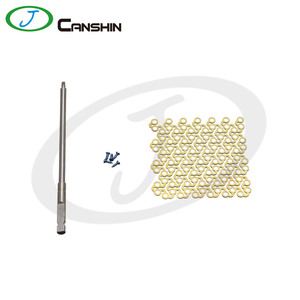
Yes. As shown in our catalog, we manufacture specialized veterinary surgical titanium mesh and animal cranial stabilization instruments utilized by specialized veterinary surgical centers across South Jakarta and Indonesia.
Partner with a Global Leader in Cranial Orthotics Manufacturing
Request comprehensive OEM/ODM wholesale catalogs, technical regulatory dossiers, or set up a digital CAD integration portal for your Jakarta hospital network or distribution enterprise.
Contact Us