China Wholesale Arm Sling Manufacturers & Australian Market Sourcing Guide

Biomechanical Upper Limb Immobilization, TGA Regulatory Compliance & Bulk Procurement Whitepaper

Precision Medical Solutions

Featured Upper Limb & Prosthetic Systems

High-grade orthotic slings, bionic hands, and mechanical arm components engineered for hospital networks, rehabilitation centers, and international B2B distributors across Australia.
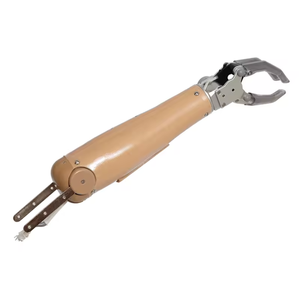
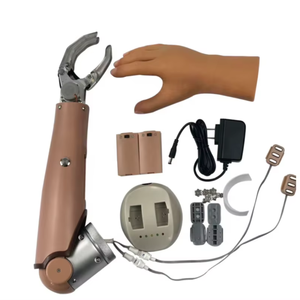
Arm Prosthesis Cable Control Style Prosthetic Hand and Mechanic Above Elbow Prosthetic Arm

Arm Prosthesis Cable Control Style Prosthetic Hand & Mechanical Above Elbow Arm

High-Tension Stainless Cable | Heavy-Duty Socket
Inquire Now
Prosthetic Arm for Disabled Persons with Two Degrees of Freedom and Dual-degree Myoelectric Prosthesis for Elbow

Dual Degree of Freedom Myoelectric Elbow & Upper Arm Prosthesis

Bi-Channel Microprocessor | Proportional Speed
Inquire Now
Myoelectric Prosthetic Arm with Two Degrees of Freedom for Hand Rehabilitation Class I 1-Year Warranty

Myoelectric Prosthetic Arm (2 DOF) for Upper Limb Hand Rehabilitation

Class I Medical Device | 1-Year Structural Warranty
Inquire Now
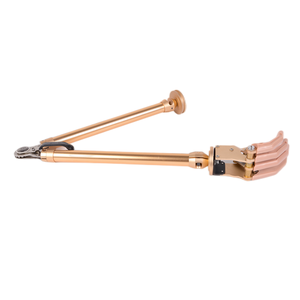
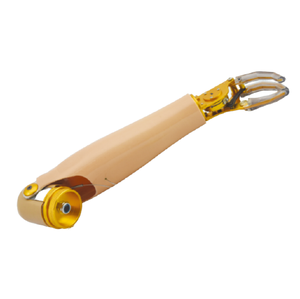
Cosmetic Upper Arm Prosthesis an Arm Amputation Rehabilitation Patient Is Fixed With a Mechanical Skeleton Rod

Cosmetic Upper Arm Prosthesis with Mechanical Skeleton Rod Support

Anatomic Silicone Shell | Lightweight Alloy Frame
Inquire Now
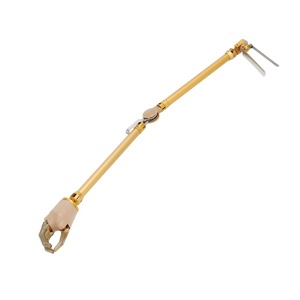
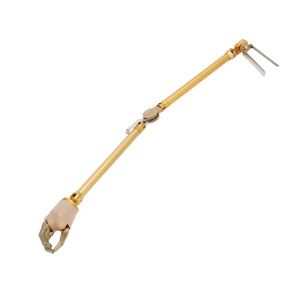
Gold-Tone Upper Limb Prosthetic Arm Component With Ball Joint And Split Hook Terminal

Upper Limb Prosthetic Component with Ball Joint & Split Hook Terminal

Precision Friction Joint | Anodized Gold Finish
Inquire Now
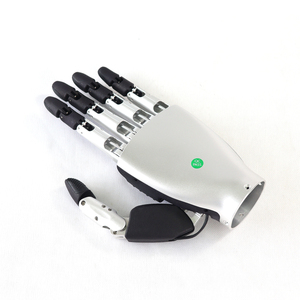
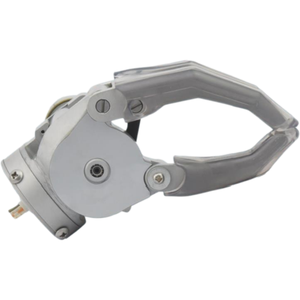
Humanoid Robot Hand Prosthetic Hand Bionic Hand Artificial Arm with Open Source Code RS485

Bionic Humanoid Robotic Hand with Open-Source RS485 Interface

Programmable Micro-Actuators | Multi-Grasp Logic
Inquire Now
Adult Above Elbow Prosthetic Arm with Hook Hand for Upper Limb Rehabilitation

Adult Above-Elbow Transhumeral Prosthesis with Utility Hook Terminal

Ergonomic Harness | High Durability Lock
Inquire Now
ASSJQ12B-M Myoelectric Arm Prosthesis with One Degree of Freedom and Double Channels(double Electrodes)

ASSJQ12B-M Myoelectric Arm Prosthesis (1 DOF, Dual Electrode Control)

Double Surface EMG Sensors | Quick Unlock Mechanism
Inquire Now
ISO 13485
Certified Quality Management
99.4%
TGA ARTG Compliance Rate
1.2M+
Slings & Supports Produced Annually
14 Days
Rapid OEM/ODM Sample Turnaround

1. Executive Summary & Australian Medical Supply Chain Overview

The Australian healthcare sector represents one of the most highly regulated, quality-conscious, and technologically advanced medical device markets in the Asia-Pacific region. Sourcing upper limb orthoses, shoulder immobilizers, and specialized arm slings from China requires a sophisticated understanding of both biomechanical textile engineering and strict local compliance protocols mandated by the Australian Therapeutic Goods Administration (TGA).

Historically, Australian medical procurement officers, hospital purchasing consortia, and National Disability Insurance Scheme (NDIS) service providers faced significant challenges when navigating overseas OEM/ODM supply chains. Key concerns revolved around material biocompatibility, thermal comfort in Australian climate conditions, structural tension retention, and seamless inclusion on the Australian Register of Therapeutic Goods (ARTG). Today, top-tier Chinese original equipment manufacturers (OEMs) have elevated manufacturing standards, combining automated ultrasonic fabric welding, 3D spacer mesh technology, and ISO 13485 certified quality management systems to deliver hospital-grade arm slings at competitive wholesale price points.

This whitepaper provides an exhaustive technical evaluation of China wholesale arm sling manufacturing dynamics, specialized product sub-categories, localized application environments across Australian public and private healthcare networks, regulatory pathways under ChAFTA (China-Australia Free Trade Agreement), and strategies for maximizing Information Gain within B2B procurement operations.

Strategic Procurement Insight: Modern Australian healthcare procurement demands more than low unit costs. B2B buyers prioritize audited cleanroom assembly, REACH-compliant hypoallergenic materials, dynamic weight distribution geometry, and transparent supply chain documentation to ensure immediate compliance with TGA Class I requirements.

2. Biomechanical Engineering & Material Standards for Arm Slings

An effective arm sling must fulfill three fundamental clinical objectives: joint offloading, stabilization of the glenohumeral and elbow complex, and user compliance via pressure mitigation. When manufacturing for the Australian market, specific anatomical and environmental factors dictate material choice and structural patterning.

2.1 Advanced Material Engineering

Traditional cotton canvas slings lack breathability and exhibit rapid tensile fatigue under continuous patient use. Premium Chinese manufacturers specializing in export-grade orthopedic supports utilize multi-layered composite materials engineered for long-term clinical efficacy:

  • 3D Moisture-Wicking Air Mesh: Featuring a open-cell honeycomb architecture, 3D spacer fabrics facilitate multi-directional air circulation. This drastically reduces cutaneous moisture buildup and microclimate thermal stress, an essential consideration for patients in hot Australian summers across Queensland, Western Australia, and New South Wales.
  • Perforated Medical-Grade Neoprene: For high-immobilization slings requiring structured thermal therapy and subluxation control, closed-cell neoprene bonded with brushed nylon provides resilient compression without restricting micro-vascular circulation.
  • High-Density Polyamide Strapping & Load-Bearing Buckles: Shoulder straps are subjected to continuous cyclic shear forces. Utilizing high-tenacity polyamide webbing paired with shatterproof Polyoxymethylene (POM) quick-release buckles guarantees zero creep deformation even under full limb casting loads (up to 8.5 kg).
  • Pressure-Relieving Memory Foam Shoulder Pads: To prevent cervical spine muscle strain and trapezial nerve compression, ergonomic pads with integrated memory foam cores distribute weight across a broadened surface area (minimum 75 mm width).

2.2 Load Distribution & Ergonomic Vectoring

Improper sling geometry causes neck fatigue, forward shoulder protraction, and patient non-compliance. Leading manufacturers utilize CAD-patterned envelope contours that maintain the elbow at an optimal 90-degree flexion angle while distributing the mass of the arm across the contralateral trapezius and thoracic spine. Integrated thumb loops prevent distal wrist drop and ulnar deviation, preserving neuromuscular alignment during extended post-surgical recovery periods.

3. Localized Application Scenarios Across the Australian Healthcare Sector

The Australian market for arm slings and upper limb immobilization devices is divided into distinct operational environments, each possessing unique purchasing criteria and clinical requirements.

Public & Private Hospital Networks

Emergency Departments (ED) and Orthopedic Surgical Wards across major metropolitan networks (such as Metro South Health QLD, NSW Health, and Melbourne Health) require high-volume, standardized post-trauma slings. Priority features include rapid color-coded sizing, universal left/right bilateral fitting, and low per-unit cost for immediate post-operative application following rotator cuff repairs, clavicle fractures, and shoulder dislocations.

NDIS Providers & Community Care

Under the National Disability Insurance Scheme (NDIS), occupational therapists and orthotists prescribe specialized, long-term immobilization systems for participants suffering from hemiplegic shoulder subluxation, brachial plexus injuries, or neuromuscular disorders. OEM manufacturers supply custom-tailored slings equipped with adjustable dynamic tension bands and abduction pillows to maintain humeral head centering.

Sports Medicine & Private Clinics

Private physiotherapy practices and sports medicine clinics cater to active demographics recovering from acute athletic injuries. These buyers demand premium, aesthetically modern arm slings featuring sleek dark-mode mesh, low-profile magnetic closures, and integrated gel packs for hot/cold thermal therapy during sub-acute rehabilitation phases.

4. Localized Market Trends & Regulatory Landscape in Australia

Navigating the Australian medical device landscape requires strict adherence to regulatory protocols and an awareness of evolving clinical preferences.

4.1 TGA Regulatory Inclusion & ARTG Mandates

In Australia, arm slings and shoulder immobilizers fall under the classification of Class I Non-Sterile Medical Devices. Under the Therapeutic Goods Act 1989, any medical device imported into or supplied within Australia must be included on the Australian Register of Therapeutic Goods (ARTG) prior to commercial distribution.

  • Australian Sponsor Requirement: Overseas manufacturers in China cannot register directly with the TGA; they must partner with an Australian Sponsor (a legal entity residing in Australia) who holds the ARTG listing on their behalf.
  • GMDN Code Alignment: Arm slings are typically categorized under Global Medical Device Nomenclature (GMDN) codes such as Arm sling, single-use/reusable (GMDN 35840).
  • Essential Principles Compliance: Manufacturers must maintain a comprehensive Technical Construction File (TCF) proving conformity with the TGA Essential Principles, specifically regarding toxicological safety, biocompatibility (ISO 10993-5 cytotoxicity and ISO 10993-10 irritation testing), and physical strength stability.

4.2 Tariff Advantages Under ChAFTA

The China-Australia Free Trade Agreement (ChAFTA) provides significant commercial advantages for Australian medical importers. Under ChAFTA tariff schedules, eligible orthopedic braces and arm slings manufactured in China (under HS Code 9021.10 - Orthopedic or fracture appliances) enter Australia at a 0% preferential customs duty rate, provided a valid China-Australia Certificate of Origin (Form COO) is supplied with the shipping documentation.

4.3 Shift Toward Sustainable & Washable Medical Textiles

Environmental sustainability is increasingly influencing Australian healthcare tender requirements. Major health authorities are actively seeking reusable, machine-washable arm slings constructed from recycled polyester (rPET) microfibers and non-toxic, eco-certified dyes (OEKO-TEX Standard 100). Chinese manufacturers with green production lines and zero-wastewater dyeing technology hold a strong competitive edge in public hospital contract negotiations.

5. Enterprise Advantages & Advanced Manufacturing Infrastructure

As a premiere OEM/ODM partner for global medical brands, our manufacturing facilities in China leverage state-of-the-art production infrastructure to ensure superior quality control, high volume throughput, and complete supply chain transparency.

ISO 13485 Certified Production

Our automated manufacturing facilities operate under strict ISO 13485 quality management guidelines. Every lot of arm slings undergoes rigorous tensile load testing, seam shear resistance checks, and colorfastness validation prior to export shipping.

Complete OEM/ODM Customization

We offer full-spectrum private labeling for Australian distributors. From custom woven brand labels, custom Pantone fabric matching, and specialized retail packaging to customized anatomical sizing charts adapted for Australian demographic distributions.

Agile Freight & Port Access

Situated near major deep-water ports in Shanghai and Ningbo, we offer direct sea freight shipping lines to Sydney (Port Botany), Melbourne (Port of Melbourne), Brisbane, and Fremantle with optimized container stuffing to minimize volumetric freight costs.

6. Frequently Asked Questions by Australian Medical Buyers

Q: How do we ensure China-manufactured arm slings comply with Australian TGA standards?
Our manufacturing facilities supply comprehensive technical documentation files, including ISO 10993 biocompatibility test reports, REACH material declarations, and CE declaration of conformity certificates. Your Australian Sponsor can seamlessly utilize this technical documentation to list the products under Class I on the ARTG.
Q: What are the Minimum Order Quantities (MOQs) for wholesale and custom OEM orders?
For standard stock models in classic medical blue or black, our minimum order quantity starts at 500 units per size. For custom OEM orders involving private brand labeling, custom silicone logo printing, or custom colorways, the standard MOQ is 1,500 units per specification.
Q: What documentation is required to claim 0% customs duty under ChAFTA when importing into Australia?
We provide an official Certificate of Origin under the China-Australia Free Trade Agreement issued by the China Council for the Promotion of International Trade (CCPIT). When presented to Australian Border Force (ABF) alongside your Commercial Invoice and Bill of Lading, your customs broker can claim full duty exemption under HS Code 9021.10.
Q: How are arm slings packaged to withstand ocean transit to Australian ports?
Each arm sling is individually sealed in a heavy-duty PE hygienic polybag with desiccant packs to prevent moisture ingress. Units are master-packed into 5-ply double-corrugated export cartons (K=K reinforced grade) and palletized with stretch wrapping and edge guards to prevent crushing during ocean transit.
Q: Can you supply specialized pediatric or extra-large sizing for diverse patient populations?
Yes. We offer five standard anatomical size gradients ranging from Pediatric (XS) up to Bariatric (XXL). Each size features proportional adjustments in envelope depth, forearm length, and shoulder strap width to ensure correct biomechanical stabilization across all patient body profiles.
Q: What is the typical shipping lead time from China to Australian ports?
Ocean freight transit from Ningbo/Shanghai to Sydney (Port Botany) or Melbourne takes approximately 14 to 18 days. Production lead time for wholesale orders is typically 20 to 25 days upon artwork approval. Air freight options are available for urgent hospital contract replenishment with delivery in 3 to 5 business days.

Partner with China's Premier Medical Sling Manufacturer

Elevate your medical supply portfolio with TGA-ready, ISO-certified arm slings and upper limb supports tailored for the Australian market. Contact our international engineering sales team today for factory-direct wholesale pricing, OEM samples, and full technical dossiers.

Inquire Now