Explore our export-ready, CE-certified speech rehabilitation equipment and upper limb myoelectric prosthetic systems optimized for clinical integration in Moscow.
Understanding the biomechanical, neuro-articulatory, and electromyographic principles governing modern speech rehabilitation and motor-vocal relearning.
Information Gain Insight: Modern speech therapy equipment has evolved beyond basic acoustic amplification. Advanced speech trainers utilize real-time Surface Electromyography (sEMG), tactile-vibrational feedback, and multi-channel vocal tract biofeedback to address complex dysarthria, apraxia of speech, and post-stroke aphasia. Combining vocal training units with upper-limb motor-gesture rehabilitation accelerates brain plasticity via dual-task neuro-functional pathways.
Speech rehabilitation requires accurate coordination among subglottic pressure generation, laryngeal vocal fold vibration, and supraglottic articulation. When neurological damage (such as ischemic stroke, traumatic brain injury, or cerebral palsy) disrupts these pathways, clinicians rely on CE-certified speech trainer equipment to systematically re-establish motor control.
Our speech training systems incorporate precise acoustic processing circuitry, capable of real-time pitch tracking, formant visualization, and intensity monitoring. By presenting immediate visual feedback alongside delayed auditory feedback (DAF), patients suffering from stuttering or dysarthric rate control issues learn to modulate phonation pressure and vocal cadence effectively.
Traditional auditory training often fails when patients exhibit severe laryngeal muscle tension or facial paralysis. Our factory-engineered speech training hardware features dual-channel micro-voltage sEMG sensors applied to the suprahyoid and orbicularis oris muscle groups. These sensors convert imperceptible muscular contractions into intuitive visual graphics on high-resolution clinical monitors.
By observing muscle activation thresholds in real time, speech-language pathologists (SLPs) in Moscow rehabilitation facilities can instruct patients on targeted relaxation or isolated swallowing/speech muscle recruitment, drastically shortening recovery timelines for dysphagic and dysarthric individuals.
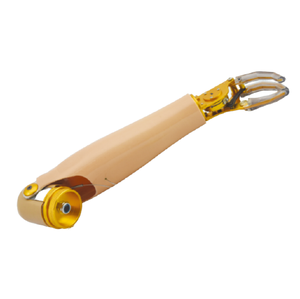
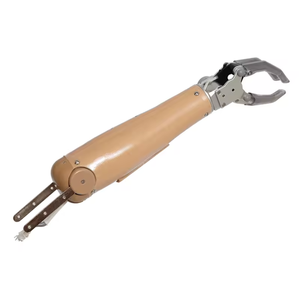
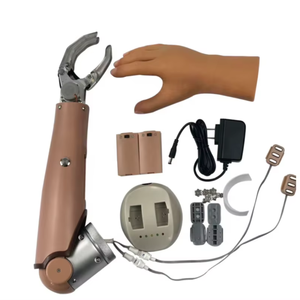
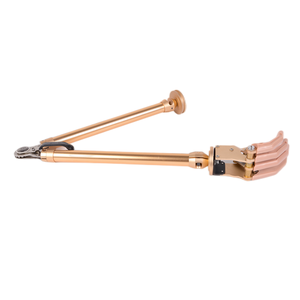
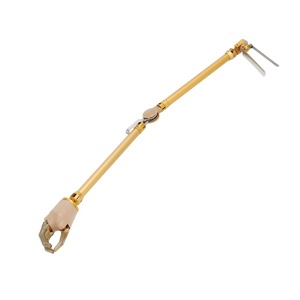
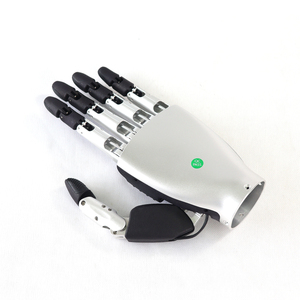
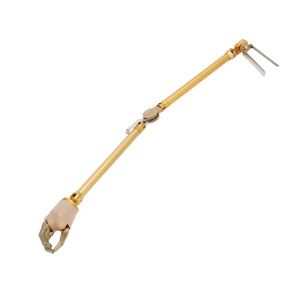
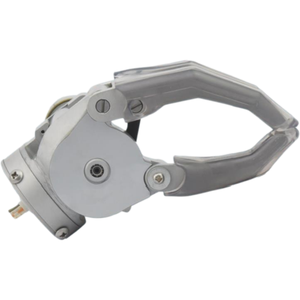
Neuro-scientific research underscores the tight coupling between upper-limb manual dexterity and speech motor centers within Broca's area. Integrating myoelectric upper-limb rehabilitation hardware—such as dual-degree myoelectric prostheses and humanoid bionic hand units—with vocal articulation equipment provides a synergistic motor-speech relearning protocol.
When stroke or trauma patients execute fine-motor hand gestures or robotic-assisted grips while undergoing vocalization exercises, multi-modal cerebral activation occurs. This co-rehabilitation methodology is increasingly adopted across leading neurological institutions in Moscow and broader Eurasian healthcare networks.
Comparative technical metrics for clinical purchasing departments, biomedical engineers, and Moscow municipal tender boards.
| System Architecture | Primary Clinical Target | Biofeedback Channels | Signal Processing & I/O | Compliance Standards |
|---|---|---|---|---|
| Acoustic-Vocal Speech Trainer Unit | Dysarthria, Stuttering, Vocal Fold Paresis | Dual Audio Feedback (DAF/FAF) | DSP Architecture, 24-bit/96kHz Audio, USB-C Output | CE MDD Class IIa, ISO 13485 |
| Myoelectric sEMG Speech & Swallowing Trainer | Dysphagia, Facial Palsy, Post-Stroke Aphasia | 2x sEMG Differential Channels | Micro-volt Amplification (0.5µV to 2000µV), Bluetooth 5.2 | CE MDR 2017/745, EAC Compliant |
| Humanoid Bionic Motor-Speech Sync Hand | Upper Limb Amputation + Neuro Speech Rehab | Double Electrodes / RS485 Interface | Open-Source C++/Python API, High-Torque Servo Actuation | CE, RoHS, ISO 9001 |
| Dual-Degree Myoelectric Upper Arm Rehabilitation System | Above-Elbow Amputation, Complex Neuromuscular Weakness | Multi-Channel Proportional Muscle Sensors | CAN-Bus Communication, Quick-Release Ball Joint Mechanism | CE Class I / Class IIa, GOST-R Eligible |
Tailored deployment strategies for state budgetary institutions, specialized neurological institutes, and private medical networks across Greater Moscow.
Our CE-certified speech training equipment is engineered to fulfill municipal medical equipment standards for GBUZ clinical centers. Systems feature standardized user interfaces, multi-language software localized for Russian-speaking speech pathologists, and robust power stabilization suitable for regional hospital grids.
For acute post-operative brain tumor and stroke patients, fine-grained biofeedback is critical. Our sEMG biofeedback units integrate seamlessly with ICU bedsides, assisting clinical phoniatrists in preventing vocal cord atrophy and expediting tracheostomized patient decannulation.
Equipped with gamified visual therapy modules, our speech trainers turn repetitive articulatory drills into engaging interactive tasks for pediatric patients with autism spectrum disorder (ASD) or cerebral palsy across private Moscow pediatric centers.
Key regulatory shifts, import substitution demands, and technological trends influencing medical procurement in Moscow.
While European CE Certification (MDD/MDR) serves as the primary benchmark for biomedical safety and electromagnetic compatibility (EMC), equipment entering the Moscow market must align with Eurasian Conformity (EAC) certification protocols. Our factory handles full technical documentation dossiers, simplified EAC declaration assistance, and ISO 13485 quality audit support to streamline local Roszdravnadzor medical device registration.
Moscow hospital procurement committees prioritize high-reliability equipment sourced directly from certified foreign OEMs capable of providing transparent component origins, open protocol integration (such as RS485/CAN-bus), and predictable spare-parts logistics. Direct factory sourcing mitigates middleman price inflation and guarantees long-term technical servicing capability.
The Moscow medical sector is rapidly adopting AI-assisted diagnostic tools. Modern speech trainers exported to the region feature automated acoustic spectrum analysis, machine-learning-assisted pitch detection, and computerized progress reporting—allowing clinicians to manage higher patient volumes with standardized diagnostic accuracy.
Driven by the vast geography of the Moscow Region (Moskovskaya Oblast), remote telerehabilitation software modules integrated into speech equipment allow clinical experts based in central Moscow hospitals to remotely configure speech training parameters for home-bound or regional clinic patients.
Over two decades of biomedical manufacturing heritage, ISO-certified cleanroom production, and dedicated B2B exporter support.
Our manufacturing lines operate under strict ISO 13485 medical device quality management systems. Every speech trainer unit and prosthetic component undergoes 100% burn-in testing, signal calibration, and safety validation prior to packaging.
We offer tailored firmware localization (Russian GUI language packs), custom casing branding, proprietary sensor integration, and specialized electrode configurations to meet specific distributor branding and clinical specifications.
Extensive experience navigating air freight, direct rail express via Silk Road corridors, and customs documentation ensure rapid delivery to Moscow warehouses with zero administrative delays or customs blockages.
Addressing essential questions regarding certifications, customs clearance, warranty support, and technical training.
Yes. Our speech training systems and upper limb rehabilitation prosthetics carry full CE conformity markings (under EU Medical Device Regulations/MDD) and ISO 13485 quality management accreditation. For Russian procurement, we provide complete technical documentation packages to facilitate smooth EAC (E Eurasian Conformity) registration and local Roszdravnadzor certification.
We work with established medical logistics partners specialized in Eurasian freight corridors. Our export team prepares accurate commercial invoices, certificates of origin (Form A/CO), packing lists, and correct HS codes (e.g., HS 9023.00 for speech training models / HS 9021.39 for prosthetic components) to ensure seamless customs processing at Moscow cargo terminals.
We maintain flexible MOQ policies tailored for B2B distributors. Standard speech trainer console orders start at 5 to 10 units for initial batch evaluation. For myoelectric prosthetic components and bionic hands, sample orders of 1 to 2 units are supported for local clinical trial validation.
Absolutly. Our in-house software engineering team provides complete Russian GUI localization, clinical manual translation, and localized patient training software modules upon request for OEM distributor partners.
All clinical speech equipment and myoelectric systems are backed by a comprehensive 1-year factory warranty. We supply replacement sEMG sensor leads, spare mechanical joints, power modules, and direct engineer-to-engineer remote video diagnostic support for Moscow service technicians.
You can click the inquiry call-to-action button anywhere on this page to open a direct message channel with our international export director. We respond within 2 to 4 business hours with formal price quotes, technical datasheets, and demonstration video links.
Get competitive factory-direct pricing, full CE regulatory dossiers, and dedicated technical export support for your Moscow medical distribution business or rehabilitation hospital network.
Send an Inquiry