Explore our international-grade upper and lower limb prosthetic components engineered for durability, biomechanical alignment, and high-impact performance in Sub-Saharan Africa.
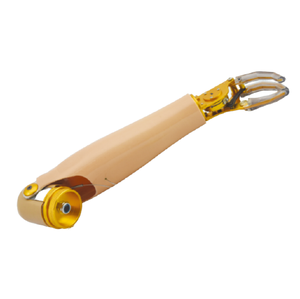
Heavy-duty stainless steel cable traction system offering precise mechanical prehension, high tensile strength, and ergonomic harness suspension for active upper-limb amputees.
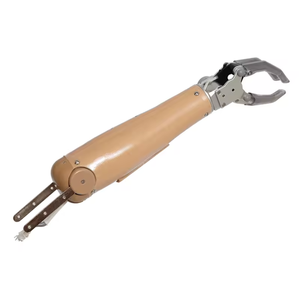
Advanced bio-electric sensor technology capturing surface EMG signals to drive smooth elbow flexion and dynamic wrist rotation with automated proportional speed control.
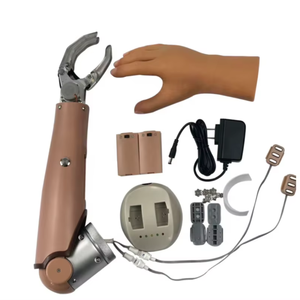
Class I certified clinical rehabilitation prosthetic arm integrated with double electrodes for precise muscular impulse mapping, optimal for traumatic amputation recovery.
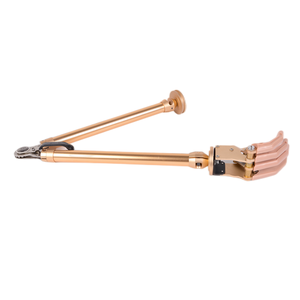
Lightweight cosmetic upper-arm restoration system featuring a rigid internal skeletal titanium rod enveloped in biocompatible silicone for ultra-realistic anatomical aesthetics.
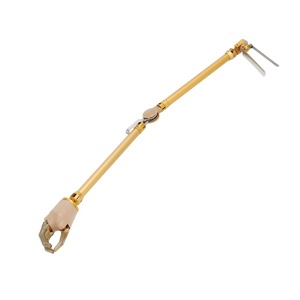
Corrosion-resistant anodized alloy ball-joint connector paired with a heavy-duty split hook device, engineered specifically for agricultural and industrial manual work environment.
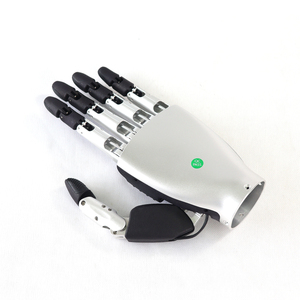
Multi-articulated 5-digit bio-robotic hand incorporating RS485 serial communication protocols, customizable grip patterns, and tactile force feedback for advanced prosthetic research.
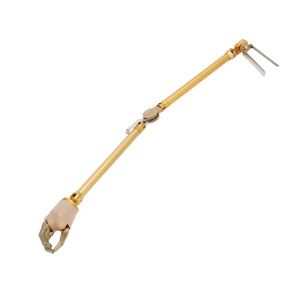
Transhumeral rehabilitation system equipped with a quick-release modular terminal device socket, suitable for post-traumatic amputee mobility training and vocational tasks.
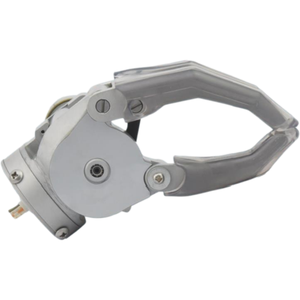
Precision dual-channel muscular sensor prosthetic system optimized for transradial amputees, delivering rapid terminal device activation with minimal muscle activation threshold.
Above-knee (transfemoral) amputation presents one of the most biomechanically complex challenges in modern orthotics and prosthetics (O&P). Unlike below-knee amputations where the natural knee joint remains intact, transfemoral prosthesis reconstruction requires recreating both the mechanical stance stability and the dynamic swing-phase kinematics of the human knee. For prosthetic suppliers exporting to South Africa, providing solutions that balance clinical precision, robust material durability, and cost-efficiency is essential for meeting both private healthcare standards and public health budget frameworks.
The socket serves as the primary interface between the user's residual limb and the prosthetic assembly. In South Africa's diverse demographic landscape, residual limb health varies significantly due to underlying etiologies such as peripheral vascular disease (PVD), diabetic complications, motor vehicle accidents, and industrial trauma. We specialize in three primary socket architectures:
Encloses the ischial tuberosity within the socket wall to stabilize the femur in coronal adduction. This reduces lateral trunk lean, improves energy transfer, and minimizes socket rotation during heavy gait cycles in outdoor environments.
Utilizes active or passive vacuum seals below the ischium, lowering brim lines to enhance hip range of motion and sitting comfort while maintaining zero pistoning during swing phase.
Thermoformed modified polyethylene inner shells combined with rigid carbon-fiber outer frames, providing cushion relief over bony prominences and accommodating minor volume fluctuations.
Medical-grade silicone liners with distal locking pins offering secure mechanical connection, protecting vulnerable tissue from shear stress during high-activity tasks.
Selecting the appropriate knee articulation mechanism dictates the user's safety margin, walking cadence fluidity, and slope descent capability. Singar Rehab supplies four core prosthetic knee categories tailored to clinical mobility grades (K1 through K4):
| Prosthetic Knee Category | Biomechanical Mechanism | Recommended Mobility Level | Primary Clinical Advantage | Terrain Suitability |
|---|---|---|---|---|
| Single-Axis Mechanical Knee | Constant friction joint with manual locking pin option | K1 (Low Mobility / Transfers) | Maximum stance safety, low maintenance requirement | Indoor Level Surfaces |
| Polycentric 4-Bar Linkage | Instantaneous Center of Rotation (ICR) shifting | K2 - K3 (Moderate Active) | Geometric stability at heel strike, smooth toe clearance | Cobblestone, Uneven Paths |
| Pneumatic Cadence Control | Air cylinder stance & variable swing resistance | K3 (Community Ambulator) | Variable walking speed adaptability without manual tuning | Urban Pavements & Slopes |
| Hydraulic Heavy-Duty Knee | Fluid resistance damping for high yield loading | K3 - K4 (High Impact / Work) | Controlled stair descent, heavy weight tolerance (up to 125kg) | Rural, Agricultural & Rough Terrain |
| Microprocessor Bionic Knee | Sensor-driven real-time cadence & resistance adjustments | K3 - K4 (Advanced Rehabilitation) | Stumble recovery algorithms, optimal symmetry & safety | All Terrains & Inclines |
South Africa’s healthcare ecosystem presents unique operational and environmental demands. Suppliers of above-knee prosthetics must account for both localized geographical realities and regional healthcare distribution networks ranging from the urban medical hubs of Johannesburg and Cape Town to rural clinics in the Eastern Cape and KwaZulu-Natal.
South Africa's Road Accident Fund (RAF) and provincial Department of Health tenders require durable, ISO-certified prosthetic components with long service lifespans. Singar Rehab supplies standardized modular prosthetic components (4-hole pyramids, carbon pylons, polycentric knees) that integrate seamlessly into public health supply chains, providing cost-effective rehabilitation options for state-funded patients.
Amputees residing in agricultural sectors (such as the Free State, Limpopo, or Western Cape farmlands) encounter gravel paths, mud, and dust. Prosthetic joints featuring sealed hydraulic cylinders, dust-resistant bearings, and high-impact carbon-fiber energy-returning feet ensure uninterrupted performance without premature mechanical failure.
Leading private O&P practices accredited with the South African Orthotic and Prosthetic Association (SAOPA) demand state-of-the-art myoelectric upper-limb prostheses and bionic microprocessor knee systems for high-activity patients covered by private medical aid schemes (e.g., Discovery Health, Momentum, Medshield).
Type 2 diabetes accounts for a significant proportion of lower-limb amputations in South Africa. Our prosthetic sockets incorporate antimicrobial silicone liners and total contact pressure distribution matrices to protect delicate skin tissue from breakdown and deep ulceration.
The prosthetic industry across South Africa and the wider Southern African Development Community (SADC) region is undergoing rapid structural evolution. Understanding these trends allows medical procurement officers and clinical directors to optimize their component sourcing strategies:
Historically, non-standardized component fittings led to maintenance bottlenecks in South African rehabilitation facilities. Today, healthcare providers strictly enforce 30mm modular tube adapters and universal 4-hole pyramid systems. Singar Rehab manufactures all transfemoral knee units, distal connectors, and alignment adapters to international 30mm modular standards, ensuring 100% cross-compatibility with global O&P brands.
Leading prosthetic clinics in Gauteng and the Western Cape are shifting from traditional plaster casting to 3D optical surface scanning and CNC socket milling. We support this transition by offering pre-formed thermoplastic check sockets and semi-custom carbon-fiber socket shells engineered to match digital scan files exported by South African prosthetists.
With the ongoing structural rollout of National Health Insurance (NHI) aimed at achieving universal health coverage, South African medical procurement departments face pressure to reduce unit costs without compromising clinical efficacy. Sourcing high-precision medical-grade prosthetics directly from ISO-certified Indian manufacturers like Singar Rehab provides a strategic advantage—reducing procurement overhead by 30% to 45% compared to Western European alternatives while retaining full ISO quality compliance.
Established in 2005 in Pune, India, Singar Rehab has grown into a premiere global manufacturer and exporter of artificial limbs, upper and lower limb prostheses, and orthotic rehabilitation equipment.
State-of-the-art manufacturing facility equipped with CNC machining, modern lamination bays, and computerized load testing rigs.
Over 500 product variants spanning above-knee, below-knee, myoelectric bionic arms, pediatric orthoses, and specialized surgical shoes.
Established air and sea freight channels delivering direct to Durban Port, Cape Town Port, and OR Tambo International Airport (JNB).
Full support for custom branding, tailored dimensional specifications, and specialized component modifications for bulk hospital orders.
All prosthetic knee joints and structural pylons undergo 3 million dynamic cycle fatigue testing to guarantee long-term patient safety.
Dedicated biomedical engineering support team offering clinical fitting documentation, video consultations, and installation guides.
Below are technical and operational answers to common inquiries from medical procurement directors, orthotists, and health administrators in South Africa.
Partner with Singar Rehab for reliable, ISO-certified above-knee prosthetics, upper-limb myoelectric systems, and rehabilitation equipment delivered direct to South Africa.
Contact Us