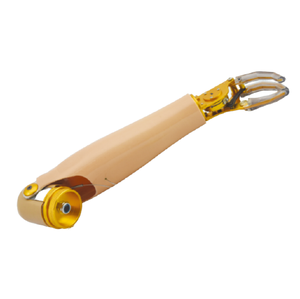
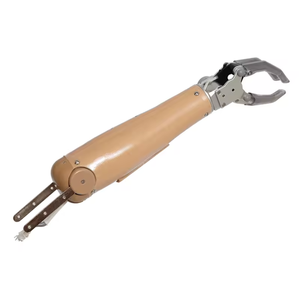
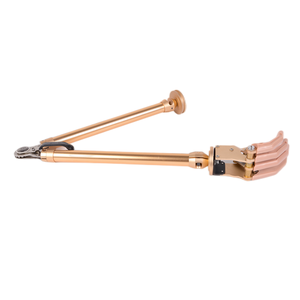
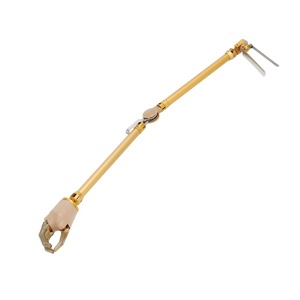
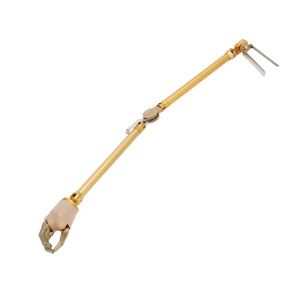
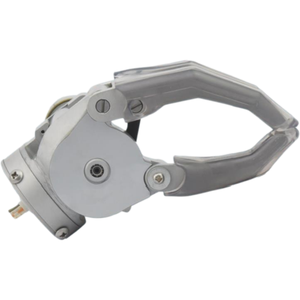
Arm Prosthesis Cable Control Style Prosthetic Hand and Mechanic Above Elbow Prosthetic Arm
- High-tensile stainless steel body harness
- Multi-axis mechanical elbow joint lock
- Heavy-duty friction wrist design
Direct factory supply from China's leading medical device exporters. Engineered for clinical rehabilitation, durability, and natural kinematic recovery.
The global physical rehabilitation market is experiencing a profound paradigm shift. Driven by an aging demographic worldwide, a rise in neurological disorders such as stroke and spinal cord injuries (SCI), and accelerating investments in post-acute clinical infrastructure, the demand for high-precision Gait Trainers, dynamic body-weight support (DBWS) frames, and bionic limb prosthetics has reached unprecedented heights. Within this global ecosystem, China has transitioned from a high-volume component supplier into the world's primary innovation hub for specialized medical rehabilitation hardware and OEM/ODM manufacturing.
Leading Chinese manufacturers located in established industrial bio-tech clusters—such as Jiangsu, Zhejiang, and Guangdong—have integrated full-stack manufacturing capabilities. By combining ultra-precision CNC tooling, medical-grade alloy drop-forging, advanced biocompatible polymer synthesis, and embedded micro-electronics, top Chinese exporters are supplying CE MDR and FDA 510(k) compliant equipment to hospitals, distributor networks, and specialized rehabilitation clinics across North America, Europe, Asia-Pacific, and the Middle East.
Key Procurement Insight: Sourcing gait trainers and prosthetic equipment directly from audited Chinese manufacturers offers global procurement teams up to 45% reduction in Total Cost of Ownership (TCO) without sacrificing ISO 13485 clinical quality compliance.
From raw titanium and carbon-fiber processing to surface electromyography (sEMG) sensor calibration, tier-1 Chinese factories manage the complete production supply chain under strict ISO 9001 and ISO 13485 controls.
Export-ready equipment undergoes rigorous biocompatibility testing (ISO 10993), electrical safety validation (IEC 60601-1), and electromagnetic compatibility (EMC) verification to ensure seamless regulatory clearance in target markets.
With extensive R&D facilities, top exporters provide rapid prototyping within 14 business days, customized harness sizing, dynamic resistance tuning, and private-label packaging tailored to regional branding requirements.
As B2B buyers and institutional procurement directors update their medical equipment portfolios, strategic sourcing decisions are no longer guided solely by initial purchase price. The strategic emphasis has migrated toward smart device interconnectivity, modularity, patient safety engineering, and long-term serviceability.
Modern gait training frames are increasingly retrofitted with 6-axis Inertial Measurement Units (IMUs), force-torque sensors, and real-time Bluetooth/Wi-Fi telemetry modules. Procurement teams prioritize gait trainers that stream objective patient kinematic metrics—such as stride length, cadence, balance symmetry, and weight-bearing distribution—directly to electronic health record (EHR) systems.
The boundary between traditional passive body-weight support gait trainers and robotic lower-limb exoskeletons is rapidly blurring. Procurement trend lines show a sharp rise in demand for dynamic multi-stage trainers that integrate Functional Electrical Stimulation (FES) and active motorized assistance, allowing progressive rehabilitation across acute, sub-acute, and outpatient phases.
To reduce caregiver strain and enhance patient maneuverability, manufacturers are replacing heavy tubular steel frames with high-modulus carbon-fiber matrix composites, aircraft-grade 7075-T6 aluminum alloys, and magnesium-lithium structures. This material evolution yields maximum mechanical stiffness while reducing frame tare weight by 30% to 42%.
High-throughput rehabilitation clinics demand rapid patient turnaround. Future-proof gait training platforms utilize quick-release gas spring actuators, digital height scales, and tool-free pelvical/thoracic support harness quick-connectors to shorten setup times from 15 minutes down to less than 90 seconds per patient session.
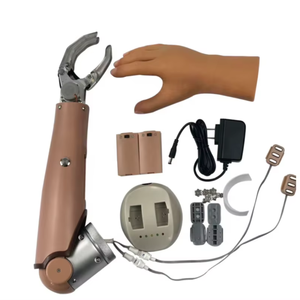
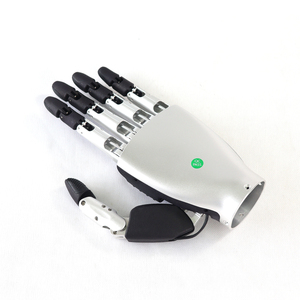
The technological matrix underpinning modern upper-limb prosthetics and lower-limb gait trainers has evolved dramatically. Modern China-manufactured bionic prosthetics—such as the double-channel myoelectric arms and open-source RS485 humanoid bionic hands highlighted in our product showcase—represent the convergence of neuromuscular engineering and robotics.
| Technology Category | Core Mechanism / Architecture | Signal / Control Interface | Clinical Application Target | Regulatory Compliance |
|---|---|---|---|---|
| Cable-Controlled Mechanical Arm | High-tensile stainless steel tension cords & locking elbow joint | Manual scapular / shoulder harness pull activation | Transradial / Transhumeral amputation recovery | Class I Medical |
| Dual-Channel Myoelectric Arm | Micro-actuator gearboxes + differential sEMG amplifiers | Sub-dermal muscle contraction voltage signals (0-5mV) | Active multi-grip daily life rehabilitation | CE / ISO 13485 |
| Bionic Humanoid Hand (RS485) | 5-finger linear micro-servos with position feedback encoders | RS485 / CAN-Bus open-source industrial protocol | Advanced research, prosthetics & bionic robotics | ROHS / CE |
| Dynamic Gait Trainer Frame | Overhead spring-balanced body-weight suspension chassis | Omnidirectional castor locking + pelvic dynamic stabilizer | Stroke, SCI, Cerebral Palsy & post-op gait re-education | FDA 510(k) Eligible |
By integrating open-source communication protocols (such as RS485 and CAN-bus) directly into multi-articulating bionic hands, Chinese R&D centers empower clinical researchers and prosthetic technicians to flash custom motion profiles, calibrate gain thresholds for sensitive muscle sites, and execute complex grip patterns effortlessly.
When partnering with premier Chinese medical exporters, international buyers gain access to world-class manufacturing infrastructures designed to uphold uncompromising quality control, trace-level component accountability, and rapid global order execution.
Certified clean-room assembly lines, 100% incoming raw material testing, and full lot-number traceability from forging to final box packing.
Full-scope custom engineering including CAD/CAM socket modeling, custom color anodization, hardware firmware tuning, and private labeling.
Established freight channels offering DDP, FOB, CIF, and air-express delivery with complete customs clearance export documentation provided.
Get definitive technical and procurement answers directly from our senior medical device export engineering team.
Partner directly with China's leading certified manufacturer of gait trainers, myoelectric prosthetics, and bionic rehabilitation systems. Request a detailed catalog, factory audit report, or instant wholesale quote.