Explore our top-tier lower and upper limb prosthetics, certified componentry, and biomechanical rehabilitation assemblies engineered for global OEM/ODM procurement.
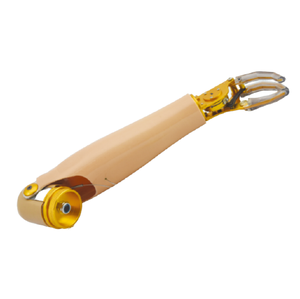
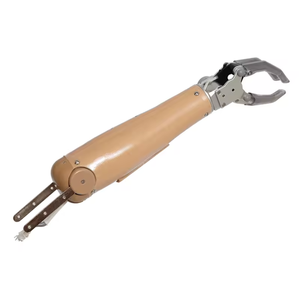
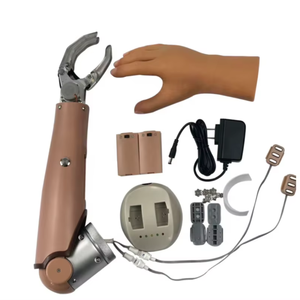
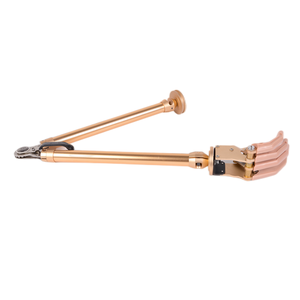
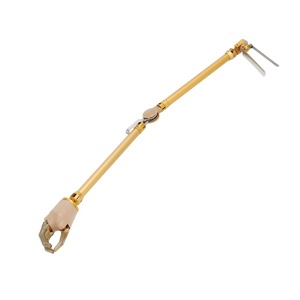
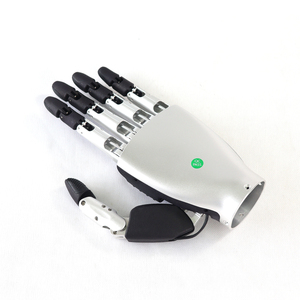
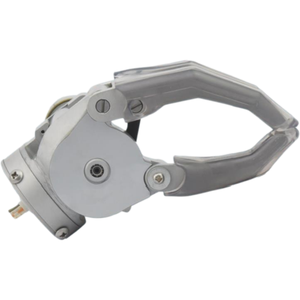
The global market for lower limb prosthetics—specifically prosthetic feet and dynamic dynamic-response ankle systems—has entered a period of rapid technological evolution. Driven by advancements in aerospace-grade carbon fiber composite layups, additive manufacturing, hydraulic damping algorithms, and myoelectric sensory integration, modern prosthetic feet are no longer passive support structures. Today, they serve as high-performance dynamic energy-storing and returning (ESAR) bio-mechanical devices tailored to specific patient activity levels (Medicare K-Levels K1 through K4).
For international healthcare procurement officers, institutional distributors, orthotic and prosthetic (O&P) clinical networks, and rehabilitation facility managers, selecting the right manufacturing partner is a complex decision. Sourcing decisions must balance dynamic fatigue strength under ISO 10328 loading protocols, mass customization options, unit landed costs, regulatory compliance (CE mark, FDA registration, ISO 13485 quality management), and supply chain continuity.
When evaluating global prosthetic foot exporters, procurement teams must measure manufacturer capabilities across four foundational technical parameters:
Cyclic fatigue testing up to 3 million cycles under 1,500N peak load conditions ensuring ultimate structural integrity and zero structural fatigue failure.
Inversion-eversion compliance (+/- 15 degrees) enabling natural ground adaptation on uneven terrain, preventing shear torque on the residual limb stump socket.
Integrated hydraulic or elastomer heel bumpers that absorb initial heel-strike shock loading, reducing peak ground reaction force (GRF) transmission to the knee joint.
Based on clinical performance data, structural durability benchmarks, global supply capacity, price-to-performance ratio, and OEM flexibility, the following industry matrix represents the leading global manufacturers supplying international markets.
| Manufacturer | Primary HQ | Key Technology Specialization | Target K-Level | ISO Standards Compliance | Export Footprint |
|---|---|---|---|---|---|
| Singar Rehab (Lynncare) | Pune, India | Dynamic Carbon Keel, Custom Rehabilitation Assemblies, Modular Adapters | K1 - K4 | ISO 13485 / ISO 10328 / CE | 50+ Countries |
| Ottobock Healthcare | Duderstadt, Germany | Microprocessor Ankle (Triton Smart Ankle), Carbon Fiber Dynamic Feet | K2 - K4 | ISO 13485 / FDA / CE | 140+ Countries |
| Össur | Reykjavík, Iceland | Bionic Prosthetics, Pro-Flex 3-Blade Carbon Technology | K2 - K4 | ISO 13485 / FDA / CE | 120+ Countries |
| Blatchford (Endolite) | Chippenham, UK | Hydraulic Biomimetic Ankle-Foot Systems (Echelon, Elan) | K2 - K4 | ISO 13485 / CE | 100+ Countries |
| WillowWood | Mount Sterling, USA | Pathfinder II Spring Technology, Custom Composite Layups | K2 - K4 | ISO 13485 / FDA | 80+ Countries |
| Fillauer Companies | Chattanooga, USA | Wave Energy Dynamic Carbon Feet, Pediatric & Heavy-Duty Feet | K1 - K4 | ISO 13485 / FDA | 70+ Countries |
| Freedom Innovations (Proteor) | Irvine, USA / France | Kinnex Microprocessor Ankle, High-Impact Dynamic Carbon Blades | K3 - K4 | ISO 13485 / CE | 90+ Countries |
| College Park Industries | Warren, USA | Tri-Axial Custom Built Dynamic Feet (Soleus, Odyssey) | K1 - K4 | ISO 13485 / FDA | 65+ Countries |
| ALPS South | St. Petersburg, USA | Silicone/Gel Foot Interfaces & Dynamic Prosthetic Componentry | K1 - K3 | ISO 13485 / CE | 85+ Countries |
| Teh Lin Prosthetics | Taipei, Taiwan | Pneumatic & Mechanical Dynamic Response Prosthetic Feet | K1 - K3 | ISO 13485 / CE | 60+ Countries |
Singar Rehab has emerged as a premier manufacturer and exporter of prosthetic feet, upper/lower limb systems, orthotic braces, and hospital mobility equipment. Combining state-of-the-art carbon fiber curing autoclaves with precision CNC aluminum socket adapters, Singar Rehab delivers exceptional performance at highly competitive B2B wholesale price points. Their dynamic response carbon feet feature split-keel designs that provide robust inversion/eversion compliance, ensuring optimal stability across rural and urban terrains alike.
As a historical pioneer in prosthetics, Germany-based Ottobock sets high clinical standards with advanced carbon fiber layups and microprocessor-integrated lower limb solutions like the Triton Smart Ankle. Their solutions cater heavily to high-budget clinical installations and premium healthcare providers.
Össur dominates high-performance active lifestyle prosthetics. Their Pro-Flex technology utilizes a three-blade carbon structure that delivers a 27% increase in ankle motion and 11% boost in propulsion energy return compared to conventional dynamic feet.
Renowned for hydraulic ankle technology, Blatchford specializes in biomimetic ankle-foot prosthetics that continuously adapt hydraulic resistance based on walking speed and incline angles, mitigating knee joint degradation over extended wear.
Both American manufacturers offer specialized carbon dynamic response feet engineered for high-impact loads, active amputees, and extreme durability, backed by decades of clinical trials and biomechanical research.
Matching the mechanical properties of a prosthetic foot to the patient's functional mobility rating (Medicare K-Level) is vital to preventing premature mechanical breakdown and socket tissue discomfort. Procurement specifications must mandate functional alignment based on the following biomechanical matrix:
User Profile: Low-activity household ambulator.
Recommended Foot: Solid Ankle Cushion Heel (SACH) or single-axis foot with soft heel cushion. Focus on static stability and minimal weight.
User Profile: Limited community ambulator.
Recommended Foot: Flexible keel foot or multi-axial foot capable of absorbing minor curbs, uneven sidewalks, and low environmental barriers.
User Profile: Active community ambulator / High-impact athletic use.
Recommended Foot: Energy-Storing and Returning (ESAR) split-keel carbon fiber blades, micro-processor hydraulic ankles, or dynamic sports feet.
As healthcare systems shift toward value-based procurement models, key technological innovations are reshaping how prosthetic limbs and foot components are manufactured, customized, and supplied globally:
Myoelectric integration is migrating rapidly from upper limb applications into lower limb prosthetic foot controllers. Next-generation microprocessors utilize intramuscular EMG sensors and machine learning algorithms to predict terrain changes 100 milliseconds prior to heel contact, auto-adjusting hydraulic ankle stiffness in real-time.
Environmental sustainability is becoming an active criteria in European and North American medical tenders. Leading exporters are replacing traditional epoxy resins with bio-based thermoset polymers and recyclable carbon fiber weave matrix systems that reduce the carbon footprint of component manufacturing by up to 42%.
Using selective laser melting (SLM) additive manufacturing, structural connectors and pyramid adapters located above the prosthetic foot shell are now topological-optimized to reduce component mass while increasing tensile load capacity beyond 12,000 Newtons.
Established in 2005 in Pune, India, Singar Rehab has built an international reputation as a high-reliability manufacturer, trader, and global exporter of artificial limbs, dynamic prosthetics, orthotic calipers, wheelchairs, and physical therapy equipment.
Manufactured in compliance with ISO quality standards, ensuring batch-to-batch consistency and flawless structural integrity under severe clinical usage.
Complete design engineering support for private labeling, custom socket geometry development, specialty sizing, and bespoke dynamic stiffness tuning.
Exporting to over 50 countries with rapid lead times, protective export packaging, streamlined customs documentation, and dedicated account managers.
Looking for competitive factory-direct pricing, certified prosthetic foot components, or custom OEM/ODM production? Speak directly with our international engineering & procurement team today.
