
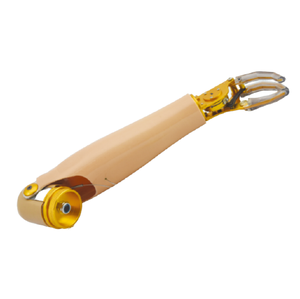
Body-Powered / Mechanical
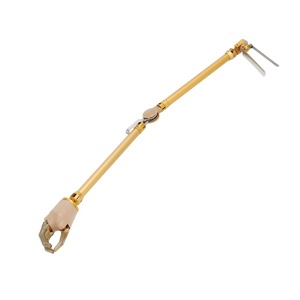
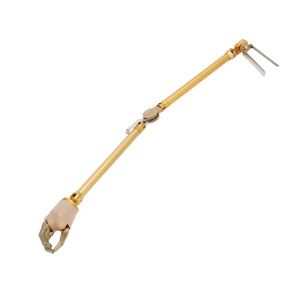
Arm Prosthesis Cable Control Style Hand & Mechanic Above Elbow Arm
- High-tensile stainless steel cable system
- Heavy-duty elbow hinge mechanism
- Ideal for high-durability environments
Clinical-grade mechanical, myoelectric, and bionic upper limb assemblies manufactured for global medical distribution.
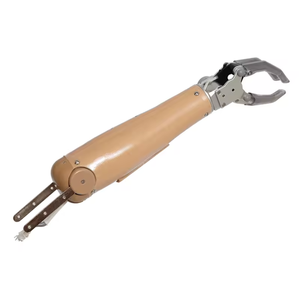
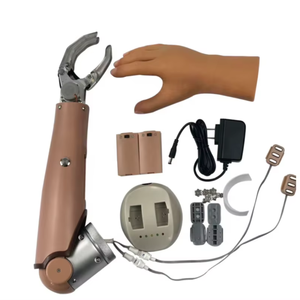
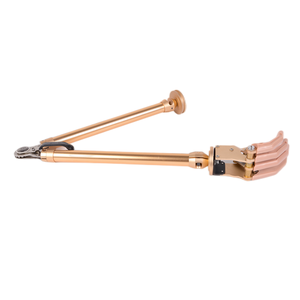
The global upper-limb prosthetics sector is undergoing a monumental paradigm shift. Driven by breakthroughs in neuromuscular signal processing, additive titanium manufacturing, and pattern recognition algorithms, international procurement directors for medical institutions and government healthcare systems are rethinking their sourcing frameworks. Selecting the right prosthetic arm factory & suppliers requires evaluating far more than initial unit costs—it demands a deep analysis of bio-compatibility standards, component repairability, lead-time resilience, and technological upgradeability.
B2B Buyer Tip: When sourcing transradial or transhumeral prosthetic systems, ensure suppliers provide ISO 13485 certification, bi-channel EMG sensor shielding documentation, and open API or bus protocol specifications for microprocessors.
To assist clinical procurement specialists and medical equipment importers, the following matrix compares the four primary upper-limb prosthetic technology tiers produced by leading global manufacturers.
| Prosthetic Tier | Actuation Mechanism | Primary Clinical Intent | Maintenance Cycle | Target B2B Unit Cost Range |
|---|---|---|---|---|
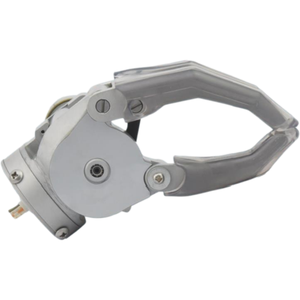
| Body-Powered Mechanical | Stainless steel harness cables & dual-pull springs | High-durability functional task execution, heavy load bearing | 18 - 24 Months | $400 – $1,200 |
| Myoelectric (1-DOF / 2-DOF) | Surface EMG electrodes + Micro-servo gearboxes | Daily activity restoration, intuitive fine-motor manipulation | 12 - 18 Months | $1,800 – $5,500 |
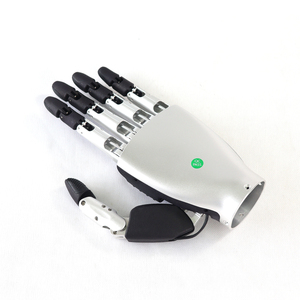
| Advanced Bionic / Open-Source | Multi-axis brushless motors + RS485 / Bluetooth BUS | Multi-grip pattern execution, research & robotic integration | 6 - 12 Months | $4,000 – $12,000 |
| Passive Cosmetic / Structural | Lightweight alloy skeleton rod + Medical silicone skin | Post-amputation postural balance, aesthetic reconstruction | 24 - 36 Months | $300 – $900 |
As healthcare purchasing managers prepare their multi-year supply chain strategies, several critical macro-trends are shaping the commercial acquisition of artificial upper limbs and bionic accessories:
Traditional threshold-based EMG sensors are rapidly giving way to machine learning algorithms that interpret complex multi-channel muscle signals for fluid, simultaneous finger movement.
Direct 3D printing of carbon fiber sockets and titanium 3D SLM structural skeleton rods is cutting custom lead times from weeks to under 48 hours for global hospital chains.
Global buyers are favoring ISO-standardized terminal quick-disconnect wrists and standard split-hook connections that permit seamless interchangeability across different supplier ecosystems.
Furthermore, regulatory authorities in Europe, North America, and the Asia-Pacific region are tightening bio-compatibility requirements. Procurement teams must verify that all elastomer liners, silicone cosmeses, and metallic joints comply with ISO 10993 cytotoxicity and sensitization benchmarks.
The engineering landscape of upper-limb prostheses is evolving at an unprecedented velocity. Below are the key technological breakthroughs transforming product manufacturing and clinical outcome expectations:
Targeted Muscle Reinnervation (TMR) surgical procedures reassign nerve pathways in upper-limb amputees. Modern factories are engineering double-channel and multi-electrode myoelectric hands (such as the ASSJQ12B-M system) capable of processing subtle micro-volt electrical discharges from reinnervated muscle sites. This enables intuitive control over elbow flex, wrist rotation, and multi-digit hand gripping without mechanical toggling.
Legacy prosthetic systems relied on proprietary, locked analog control loops. Current industry pioneers are embedding RS485 digital BUS architectures into humanoid bionic hands. This facilitates real-time velocity control, programmable grip telemetry, and seamless integration with external rehabilitation robotics, research platforms, and tele-operation systems.
To reduce overall arm weight while maintaining grip force, leading prosthetic arm factories are transitioning from conventional brushed DC motors to ultra-compact coreless brushless motors coupled with high-efficiency planetary gearheads. This design delivers higher load-to-weight ratios, whisper-quiet operation, and extended battery life across full-day usage cycles.
Expert guidance for medical procurement officers, hospital orthotists, and regional distributors.
Selecting a reliable supplier among the global top 10 prosthetic arm factories requires balancing technical sophistication, structural durability, regulatory compliance, and post-purchase component availability. Body-powered mechanical cable systems remain the gold standard for high-intensity physical work, whereas dual-channel myoelectric and open-source RS485 bionic hands offer superior functional independence for daily living and clinical rehabilitation.
By partnering with established manufacturers like Singar Rehab, medical distributors and healthcare institutions gain direct access to clinical-grade engineering, flexible OEM custom fabrication, and verified export reliability across global markets.