Explore our core medical equipment line engineered for vertical mobilization, motor retraining, and upper-limb functional restoration.
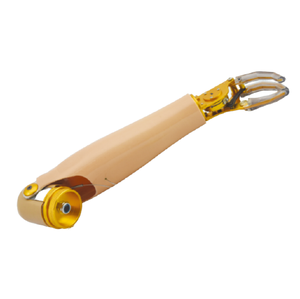
Heavy-duty cable-driven biomechanical assembly for mechanical above-elbow tilt-table stabilization training.
Get a Quote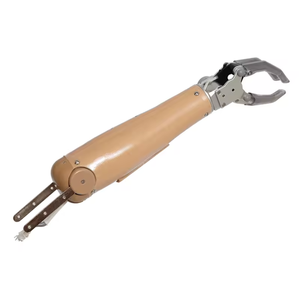
Advanced dual-channel sensor control unit designed for upper limb neuro-rehabilitation and motorized tilt-bed therapy.
Get a Quote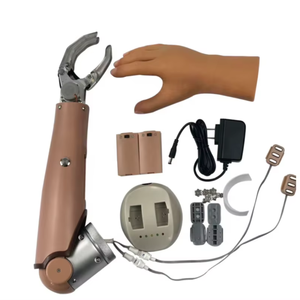
Precision biosensor-driven rehabilitation arm providing biofeedback during vertical weight-bearing exercises.
Get a Quote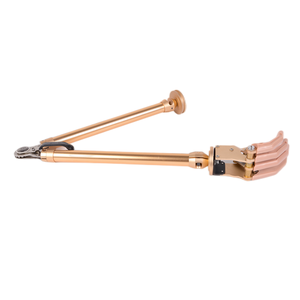
Ultra-lightweight structural skeleton rod construction engineered for arm amputation physical rehabilitation post-titration.
Get a Quote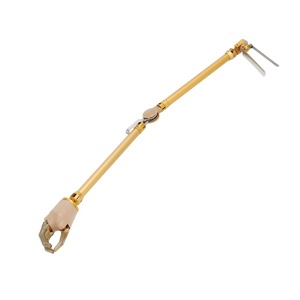
Gold-tone anodized mechanical terminal hardware built for ergonomic positioning in standing tilt frame applications.
Get a Quote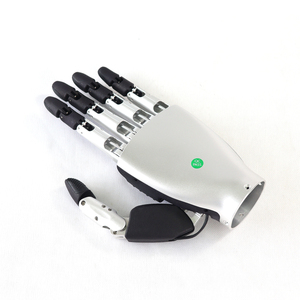
Multi-articulated bionic hand integration kit with RS485 communication for smart tilt table biofeedback systems.
Get a Quote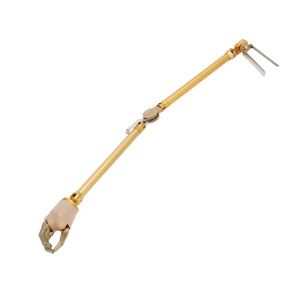
Reinforced mechanical assist limb optimized for intensive postural alignment and upright mobilization training.
Get a Quote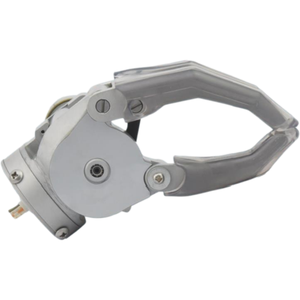
Double-channel EMG signal processing unit providing high signal stability for clinical verticalization therapy.
Get a QuoteIn modern physical medicine, intensive care units (ICUs), and neuro-rehabilitation facilities, early patient verticalization is recognized as a vital therapeutic intervention. Prolonged immobility leads to rapid neuromuscular degradation, orthostatic hypotension, decreased vital lung capacity, and accelerated bone demineralization. As a premier Custom OEM Tilt Table Manufacturer & Exporter, Singar Rehab engineers medical verticalization tables that serve as the critical bridge between horizontal bed rest and independent upright gait.
Medical tilt tables are specialized motorized or manual rehabilitation beds designed to safely elevate patients from a zero-degree supine position to a full 90-degree vertical orientation. By introducing controlled gravitational vector loading to the cardiovascular and musculoskeletal systems, tilt table therapy stimulates arterial baroreceptors, improves venous return to the heart, reduces cerebral ischemia risks, and prevents heterotopic ossification in severe traumatic brain injury (TBI) and spinal cord injury (SCI) patients.
Clinical Insight: Early tilt-table verticalization within 48 to 72 hours of ICU admission significantly reduces total mechanical ventilation duration, prevents deep vein thrombosis (DVT), and preserves lower-limb joint range of motion through controlled weight-bearing footplate pressure.
Healthcare institutions around the globe require specialized configurations to address diverse patient demographics and clinical workflows. Our factory in Pune, India, provides end-to-end OEM (Original Equipment Manufacturer) and ODM (Original Design Manufacturer) services for hospital brand owners, government tenders, and medical equipment distributors. From high-tensile steel frames to multi-actuator synchronization, every structural element can be tailored to meet exacting clinical and regulatory requirements.
Dual and triple Linak or TiMotion medical-grade actuators deliver synchronized vertical tilt (0°-90°) and hi-lo height adjustment (480mm-950mm) under silent operation (<45 dB).
Instantaneous manual override lever disengages the tilt actuator in emergency cardiac events, returning the patient to a flat 0° supine position in less than 3 seconds.
Four-point dynamic stabilization harnesses, padded thoracic/pelvic straps, and split-footplates equipped with dual strain-gauge sensors for real-time load tracking.
We produce standard, robotic, and bariatric tilt table platforms engineered to international medical device directives (EU MDR 2017/745 Class I, ISO 13485:2016). Review our standardized OEM specifications below for quick procurement matching:
| Specification Parameter | Standard Electric Tilt Table | Robotic Stepping Tilt Table | Bariatric Heavy-Duty Model | Pediatric Multi-Axis Table |
|---|---|---|---|---|
| Safe Working Load (SWL) | 200 kg (440 lbs) | 180 kg (396 lbs) | 350 kg (770 lbs) | 120 kg (264 lbs) |
| Tilt Range & Speed | 0° to 90° (Smooth 18 sec) | 0° to 85° (Variable 22 sec) | 0° to 90° (Reinforced 25 sec) | 0° to 90° (Micro-step 15 sec) |
| Height Adjustment Range | 480 mm – 920 mm | 520 mm – 880 mm | 500 mm – 950 mm | 420 mm – 850 mm |
| Actuator Motor Configuration | Dual Linak / TiMotion IP66 | Triple Synchronized System | Quad-Motor Heavy Duty | Dual Precision Servo |
| Upholstery Material | Anti-bacterial PU Leather | Seamless Flame-Retardant Vinyl | High-Density 60mm Foam PU | Biocompatible Soft Gel Padding |
| Emergency Override | Mechanical CPR Drop Lever | Dual Electrical & Manual CPR | Gas-Spring Assist Drop | Quick-Release Lock Handle |
| Footplate Mechanics | Independent Inversion/Eversion | Motorized Passive Stepping | Reinforced Dual Solid Steel | Pediatric Angle Adjustable |
| Compliance Certification | ISO 13485, CE Class I, IEC 60601 | ISO 13485, CE Class I, EMC | ISO 13485, CE Class I, Heavy Test | ISO 13485, CE Class I, Bio-Safety |
The global demand for specialized rehabilitation equipment is experiencing exponential growth driven by aging demographics, rising stroke survival rates, and an increasing emphasis on early post-acute interventions. Procurement directors, hospital purchasing boards, and medical supply importers must navigate several key structural shifts when specifying contract manufacturing partners over the next decade.
Traditional passive tilt beds are rapidly giving way to biofeedback-enabled platforms. Modern clinical protocols demand real-time feedback loops. Procurement trends indicate that over 65% of global hospital tenders now require integrated strain-gauge load cells beneath the tilt footplates. These sensors measure asymmetric weight distribution, feeding data directly to digital clinical displays or Electronic Health Record (EHR) networks via Bluetooth or RS485 protocols. Importers seeking market differentiation must partner with OEMs capable of embedding electronic telemetry into structural frame designs.
Static standing alone is insufficient for severe neurological deficits. Next-generation tilt tables integrate robotic leg-stepping drives that simulate gait mechanics while elevated. This dynamic movement stimulates lower-extremity afferent nerve pathways, reduces muscle spasticity, and prevents deep venous stasis more effectively than static verticalization. As an agile manufacturer, Singar Rehab offers customizable mechanical drives designed to integrate modular leg attachments onto standard tilt table chassis.
Rising production costs and tariff volatile supply chains in traditional manufacturing hubs have accelerated the shift toward India as a global center for medical device engineering. Indian manufacturers certified under ISO 13485 offer world-class structural steel fabrication, advanced robotic welding, and compliant electrical engineering at a 30% to 50% cost advantage over Western European counterparts. This enables international distributors to optimize their Total Cost of Ownership (TCO) without compromising on patient safety or product longevity.
Supply Chain Strategy: Partnering with a vertically integrated OEM manufacturer in India allows medical distributors to secure custom colorways, proprietary branding, localized electrical plug adaptations (110V to 240V), and tailored packaging formats designed for high-density ocean freight container loading.
The physical therapy landscape has evolved dramatically over the past two decades. Understanding this technological trajectory enables hospital buyers to future-proof their capital equipment purchases.
Early verticalization relied on manual hand-crank hydraulic pumps and basic wooden or tubular steel frames. These systems presented significant operational challenges: elevated nurse strain, lack of smooth angle control, absence of emergency drop mechanisms, and zero data logging capabilities.
The introduction of electric linear actuators enabled smooth tilt angle transitions via hand-held remote controls. While a major step forward, single-actuator models suffered from fixed table heights, making patient transfers from wheelchairs or stretchers difficult and unsafe for healthcare personnel.
Current gold-standard tilt tables utilize dual electric motors—one controlling height adjustment (bringing the table down to 480mm for safe patient lateral transfer) and a second controlling smooth tilt up to 90°. Enhanced with central braking systems, anti-bacterial seamless vinyl, and quick-release CPR safety levers, these systems satisfy stringent clinical infection control and safety standards.
The frontier of verticalization technology lies in complete sensor integration. Today’s cutting-edge tilt tables incorporate surface electromyography (sEMG) interfaces, continuous blood pressure telemetry, automated leg flexion drives, and virtual reality (VR) immersive displays. Singar Rehab remains at the forefront of this evolution, offering customizable electronic mounting rails, open-source communication ports (RS485/CAN bus), and modular accessory docks on our OEM tilt table frames.
Established in 2005 in Pune, Maharashtra, India, Singar Rehab (Lynncare Medical) has earned a distinguished global reputation as an authoritative manufacturer and exporter of artificial limbs, prosthetic systems, orthopedic braces, wheelchairs, and motorized tilt tables. Our commitment to clinical quality, engineering precision, and transparent trade practices makes us the preferred contract manufacturing partner for global medical brands.
Our manufacturing facility strictly adheres to international quality management systems for medical devices, ensuring batch-to-batch structural integrity, trace-level component tracking, and rigorous electrical safety checks.
We provide comprehensive private label customization—including frame powder-coating colors, customized upholstery stitching, laser-etched distributor branding logos, multi-language controller labels, and custom outer packaging.
With an established export network spanning 20+ countries across Europe, the Middle East, Africa, and the Americas, our logistics team handles sea freight container consolidation, air freight dispatch, and drop-ship documentation smoothly.
Get immediate answers to common technical, manufacturing, and commercial questions asked by international procurement officers and medical device distributors.
Standard lead times for custom OEM production runs typically range from 15 to 25 business days following drawing approval and deposit receipt. For urgent tenders or standard models in stock chassis configurations, accelerated manufacturing schedules are available within 10 days.
Yes. All tilt tables manufactured by Singar Rehab are built in compliance with ISO 13485:2016 quality management standards, EU MDR 2017/745 Class I medical device regulations, and IEC 60601-1 electrical safety standards. Full technical documentation files (TCF) are available for regional regulatory registration.
Absolutely. Our specialized bariatric tilt table line features reinforced high-gauge structural steel frames, heavy-duty quad-actuator motor systems, and extra-wide padded platforms engineered to safely lift and tilt patients weighing up to 350 kg (770 lbs) with a 2x structural safety factor.
Safety is paramount in critical care environments. Our tilt tables feature an integrated mechanical CPR quick-release lever located on both sides of the frame. Pulling the lever instantly disengages the tilt drive, returning the table to a flat 0° horizontal position in under 3 seconds. Additionally, magnetic safety key cutoffs and overload protection sensors prevent unwanted motor movement.
Yes. We offer complete private label branding packages. This includes custom frame color powder coating (RAL color palette matching), customized silk-screened or laser-engraved distributor logos, custom-printed remote handsets, multi-language user manuals, and branded shipping crates.
Every tilt table undergoes multi-layer protective packaging: heavy-duty anti-static plastic wrapping, high-density corner foam bumpers, vacuum sealing, and encasement within ISPM 15 heat-treated fumigated wooden crates suitable for long-distance maritime or air transport.
Our control boxes utilize wide-range power supplies supporting 110V/60Hz (North America, Japan) and 220-240V/50Hz (Europe, Asia, Middle East, Africa). We supply regional power cords fitted with Type A, Type C, Type G (UK), or Type I (Australia) plugs as specified in the OEM contract.
We provide a 3-year warranty on structural steel frame assemblies and a 2-year replacement warranty on linear actuators, control boxes, and hand switches. Extended warranty options and spare parts kits (fuses, switches, replacement belts) can be bundled into contract quotes.
Yes. Thanks to our extensive engineering heritage in upper and lower limb prosthetics, our tilt tables feature standardized T-slot aluminum side rails. These allow direct mounting of upper-limb arm supports, myoelectric biofeedback displays, cable-control exercise pulleys, and dynamic foot-ankle orthoses (AFOs).
For standard model orders, our Minimum Order Quantity is just 2 units. For fully customized OEM projects involving custom frame redesigns or proprietary upholstery tooling, the standard MOQ is 5 units, allowing small-to-medium distributors to test local market demand efficiently.
Connect directly with our engineering and export sales team in Pune, India. Request technical datasheets, CAD drawings, wholesale price lists, or initiate a custom OEM product discussion today.
