Precision-Engineered Assistive Devices & Actuation Platforms for Global Medical Equipment Importers
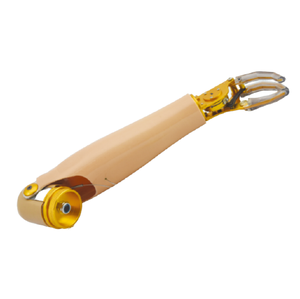
Heavy-duty mechanical harness with dual-pivot cable actuation for above-elbow rehabilitation and load transfer.
Send an Inquiry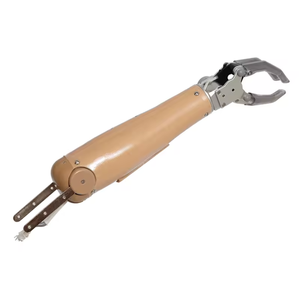
Bi-channel myoelectric sensor module featuring dual-DOF joint rotation for precise biomechanical rehabilitation.
Send an Inquiry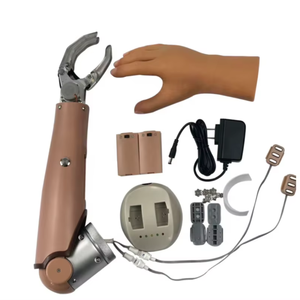
Precision clinical rehabilitation device with customizable electrode sensitivity and ergonomic socket mounting.
Send an Inquiry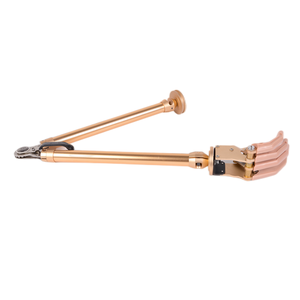
Ultra-lightweight titanium-alloy core rod design covered with biomorphic cosmetic cladding for post-amputation alignment.
Send an Inquiry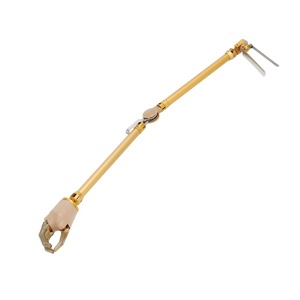
Precision-machined bronze-gold anodized ball-joint terminal fittings designed for high-stress cyclic mechanical endurance.
Send an Inquiry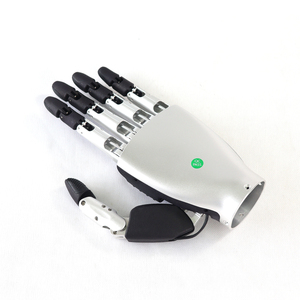
Open-source bus-controlled robotic effector with independent finger actuation for advanced standing wheelchair integration.
Send an Inquiry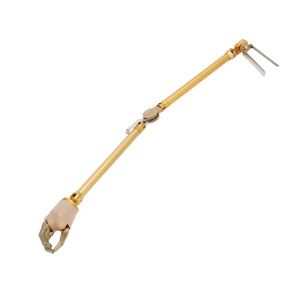
High-durability stainless-steel internal rod skeleton engineered for work-intensive rehabilitation tasks and torso balance.
Send an Inquiry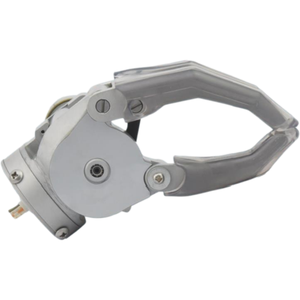
Advanced digital signal processor board with surface EMG amplification for smooth sit-to-stand dynamic control interface.
Send an InquiryStanding wheelchairs represent a pivotal evolution in complex rehab technology (CRT). Far beyond serving merely as a mobility transport apparatus, an electric sit-to-stand wheelchair functions as an active medical intervention device. Clinical evidence consistently validates that routine passive standing protocols positively alter patient physiological markers—mitigating osteoporosis risks through bone mineral density preservation, improving cardiovascular hemodynamics, enhancing renal and gastrointestinal motility, and dramatically reducing pressure injury occurrences (decubitus ulcers) by redistributing ischial tuberosity load.
For B2B buyers, institutional procurement heads, and regional distributors, navigating the global OEM/ODM manufacturing landscape demands deep technical scrutiny. Sourcing custom standing wheelchairs is not merely an exercise in purchasing assembled parts; it requires vetting a supplier’s mechanical engineering precision, linear actuator duty cycles, structural fatigue threshold tolerances, dynamic center-of-gravity (CoG) management algorithms, and regulatory compliance frameworks (FDA Class II, CE MDR, ISO 7176 series).
SEO & Clinical Benchmark: High-quality OEM standing wheelchair manufacturing requires strict compliance with ISO 7176-14 (Power & Control Systems) and ISO 7176-8 (Requirements and Test Methods for Static, Impact, and Fatigue Strengths).
The sit-to-stand transformation sequence introduces complex mechanical moments across human joints. When designing OEM custom standing wheelchairs, engineering teams must account for three primary anatomical biomechanical axes: the knee pivot hinge, the hip rotation axis, and the torso stabilization vector. Failure to synchronise the wheelchair’s linear actuators with natural human pivot points causes shear force across the patient’s sacral and lower extremity tissues.
Leading factories employ four-bar linkage linkage kinematics and gas-spring-assisted dual actuator configurations. This ensures that as the seat elevation transitions from 0° (horizontal sit) to 85°–90° (full upright stand), the backrest translates retrogressively to compensate for human spinal elongation, effectively eliminating skin shear and lumbar compression.
| Biomechanical Parameter | Standard Manual Wheelchair | Basic Electric Sit-to-Stand | Advanced OEM Smart Standing Platform |
|---|---|---|---|
| Ischial Pressure Relief | Manual tilt required (~30%) | Intermittent vertical lift (~75%) | Continuous dynamic load shifting (100%) |
| Bone Density Stimulation | Zero direct axial loading | Static axial lower limb loading | Active bio-feedback dynamic weight bearing |
| Spinal Shear Mitigation | N/A | Fixed backrest axis (High shear) | Synchronized dual-pivot shear tracking system |
| Center of Gravity Shift | Fixed wheel footprint | Forward slide risk during stand | Automated chassis wheelbase extension |
| Actuator Control Protocol | None | Analogue rocker switch | CAN-bus digital controller with gyro compensation |
Why Global Medical Importers & Healthcare Brands Partner With Our OEM/ODM Facilities
Our manufacturing plants adhere strictly to ISO 13485 medical device quality management standards, ensuring batch-to-batch structural integrity, traceable material certifications, and audited assembly protocols.
Utilizing 5-axis CNC machining center lines and automated robotic TIG welding for aerospace-grade 7075-T6 aluminum and titanium alloy chassis frames, delivering lightweight yet ultra-stiff structures.
Equipped with customized medical-grade linear actuators (up to 8000N thrust rating) paired with low-noise IPX6-waterproof brushless motors designed for over 50,000 continuous duty cycles.
Every frame undergoes dynamic drum testing, 200kg static load overload testing, drop impact testing, and environmental climate chamber simulation before final packing and palletizing.
From industrial design (ID), custom injection mold tooling, unique color anodizing, and controller programming to customized user manuals and branded carton packaging.
Experienced in DDP, FOB, and CIF maritime shipping to North America, Europe, Middle East, and Asia-Pacific. Knock-Down (CKD/SKD) packaging choices save up to 40% container freight volume.
The global standing wheelchair market is undergoing a paradigm shift driven by smart sensors, advanced battery chemistries, modular ergonomics, and artificial intelligence. B2B procurement officers must align their sourcing strategies with these tech trends to maintain commercial competitiveness.
Traditional standing wheelchairs require static ground conditions due to center-of-gravity shifts during elevation. Next-generation OEM designs incorporate 6-axis Inertial Measurement Units (IMUs) connected to dynamic electro-hydraulic chassis stabilizers. As the user transitions to an upright position on an incline or uneven surface, the system micro-adjusts castor extension lengths, actively preventing tip-over hazards.
Historically, heavy sealed lead-acid (SLA) batteries dominated the powered wheelchair market. Modern procurement specifications now demand Lithium Iron Phosphate (LiFePO4) power cells. LiFePO4 chemistry provides 3x the cycle life (>3000 charge cycles at 80% DoD), reduces battery pack weight by over 60%, eliminates thermal runaway risks, and integrates CAN-bus Smart Battery Management Systems (BMS) for real-time telemetry diagnostic reporting via Bluetooth/5G modules.
For large-scale medical equipment distributors and healthcare facility fleets, remote diagnostic capabilities are critical. OEM suppliers are integrating IoT cellular modems directly into wheelchair motor controllers. This allows fleet operators to track actuator wear cycles, monitor battery health degradation, push over-the-air (OTA) firmware patches, and perform predictive maintenance before mechanical failures occur.
With stringent European Union Green Public Procurement (GPP) guidelines and global ESG mandates, custom wheelchair factories are adopting eco-friendly production methods. Sourcing recycled aircraft-grade aluminum alloys, bio-based PU foam cushions, and low-VOC powder coating processes are becoming mandatory criteria in international procurement tenders.
Technical and Commercial Solutions for Medical Device Importers & Distributors
Access direct factory-direct wholesale pricing, clinical whitepapers, complete technical specifications, and custom ODM design engineering support today.
Send an Inquiry