
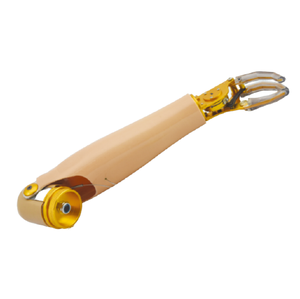
Upper Limb OEM
Direct-from-factory upper and lower limb prosthetic modules, customized socket frames, myoelectric systems, and mechanical terminal devices engineered to clinical grade specifications.
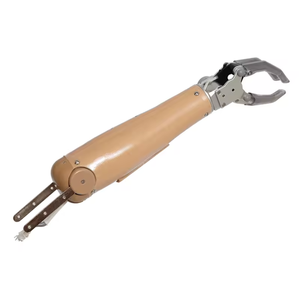
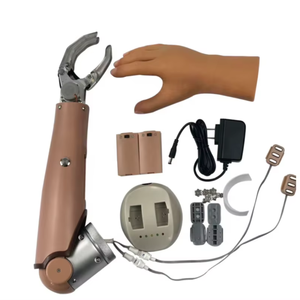
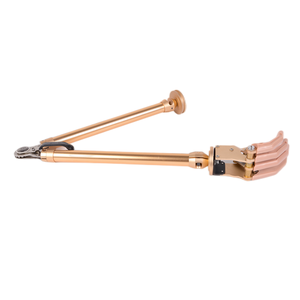
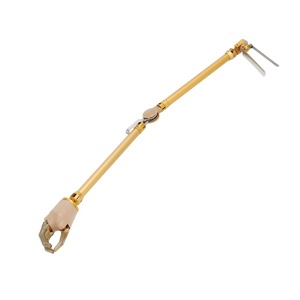
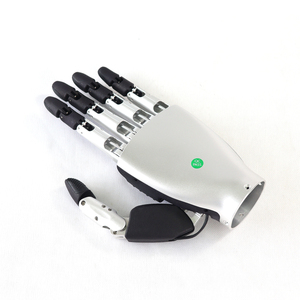
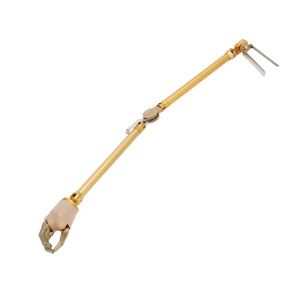
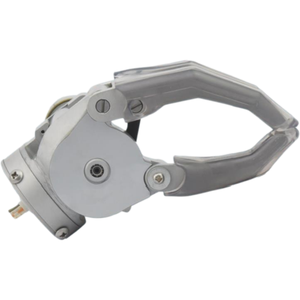
The prosthetic socket represents the single most critical interface between the amputee's residual limb and the prosthetic apparatus. In global B2B orthotic and prosthetic (O&P) procurement, establishing high-volume OEM (Original Equipment Manufacturer) manufacturing partnerships demands rigorous adherence to biomechanical dynamic load distribution, biocompatible material selection, structural fatigue limits, and ultra-precise dimensional tolerance.
As a specialized custom OEM prosthetic socket factory, our production infrastructure integrates 3D digital laser scanning, computer-aided design and manufacturing (CAD/CAM), automated CNC positive model carving, pre-impregnated (pre-preg) carbon fiber lamination, and vacuum thermoforming processes. By maintaining direct control over raw material formulations and structural layups, we provide international hospital groups, prosthetic clinics, and medical device brands with fully customized, white-labeled socket solutions optimized for transtibial, transfemoral, transradial, and transhumeral amputations.
Prosthetic socket designs are categorized into distinct structural methodologies based on residual limb pressure distribution profiles: Total Surface Bearing (TSB) and Specific Regional Loading (such as Ischial Containment for transfemoral or Patellar-Tendon-Bearing for transtibial). Manufacturing custom OEM sockets requires complete flexibility to execute diverse composite laminations tailored to specific clinical protocols.
The structural performance of custom prosthetic sockets depends heavily on composite matrix physics. OEM production processes deploy distinct thermosetting resins, thermoplastics, and reinforcing textiles:
| Material Category | Tensile Strength (MPa) | Flexural Modulus (GPa) | Density (g/cm³) | Primary Clinical Application |
|---|---|---|---|---|
| Pre-preg Carbon Fiber (T700 Grade) | 2,400 - 2,800 | 135 - 150 | 1.55 | Definitive High-Activity Sockets (K3/K4 level lower limb) |
| Acrylic-Polyester Hybrid Resin Matrix | 85 - 110 | 3.8 - 4.5 | 1.18 | Standard Vacuum Lamination for Upper/Lower Limbs |
| High-Density Polyethylene (HDPE) | 22 - 35 | 1.0 - 1.4 | 0.95 | Check Sockets, Diagnostic Fitting & Inner Flexible Liners |
| Polypropylene Copolymers (PPCP) | 28 - 40 | 1.2 - 1.8 | 0.91 | Pediatric Orthoses, Caliper Assemblies & Diagnostic Shells |
| Kevlar (Aramid Fiber) Hybrid Layups | 2,800 - 3,100 | 70 - 80 | 1.44 | High-Impact Zones Requiring Shatter Resistance & Toughness |
Unidirectional carbon roving combined with 2x2 twill weave carbon cloth is layed up over milled plaster or polyurethane foam models. Anisotropy is intentionally engineered into the socket wall: longitudinal carbon fibers resist axial bending forces during heel-strike and toe-off stance phases, while circumferential braid resists radial bulging caused by residual limb muscle contraction and hydrostatic fluid pressure.
Our specialized OEM factory line operates under strict quality gates from digital scanning input to final dynamic mechanical testing. Below is the industrial production roadmap executed for large-scale OEM contract manufacturing orders:
Import of patient 3D STL file or optical scan. Digital modification of anatomic landmarks, volume reduction scaling (typically 3-5% for transtibial TSB), and virtual lock alignment positioning.
High-speed 4-axis CNC carvers sculpt rigid polyurethane positive foam models from modified CAD files. Tolerances are held within <0.02mm across all surface nodes.
PVA bags are pulled under 85 kPa vacuum pressure. Acrylic or epoxy resins are infused through carbon sleeves, ensuring total fiber wet-out without air void formation.
Controlled temperature ramp-up in convective curing ovens (80°C to 120°C) optimizes resin cross-linking density, maximizing glass transition temperature (Tg) and strength.
Precision alignment of 4-hole titanium connection plates, shuttle locks, or vacuum pump housing blocks, ensuring total mechanical integrity under heavy shear loads.
Batch sample dynamic proof loading (3,000 N cyclic test for 3 million cycles) guaranteeing structural reliability matching ISO 10328 international safety thresholds.
Leveraging decades of production experience established since 2005 (headquartered in Pune, Maharashtra, India), Singar Rehab operates as an elite international hub for medical-grade artificial limbs, orthopedic braces, caliper orthoses, and prosthetic socket fabrication.
Our facility integrates high-capacity manufacturing lines built to fulfill demanding OEM and ODM production contracts for global medical distributors, rehabilitation hospitals, and government health authorities. Key factory strengths include:
Work directly with our senior biomechanical engineering team to customize structural layups, lock inserts, and dimensional tolerances for your brand's prosthetic catalog.
The global prosthetic market is shifting rapidly from legacy craftsmanship to digitized, automated, smart-device integration. Strategic procurement teams must align their supply chains with the following emerging manufacturing trends:
Industrial Selective Laser Sintering (SLS) and Multi Jet Fusion (MJF) utilizing biocompatible Polyamide 12 (PA12) and TPU materials are revolutionizing socket production. 3D printing enables variable stiffness mapping across a single socket wall—creating compliant, soft flex zones over bony prominences alongside hyper-rigid structural struts over weight-bearing areas.
Next-generation OEM sockets feature embedded thin-film pressure sensor matrices and active vacuum elevation systems. These smart sockets record interface pressure real-time via Bluetooth protocols, automatically adjusting internal air bladder inflation to maintain uniform hydrostatic pressure as the limb undergoes diurnal volume loss.
Environmental sustainability initiatives are pushing prosthetic manufacturers to transition from traditional petroleum-based thermosets to bio-derived epoxy resins and recyclable thermoplastic composite sheets. Flax fiber and natural basalt weaves are also entering trials as eco-friendly reinforcement substitutes for low-impact clinical applications.
For upper limb and advanced lower limb prosthetics, socket designs must incorporate precision-molded electrode windows, conductive silvers, and compliant silicone gaskets to ensure uninterrupted surface electromyography (sEMG) signal acquisition. OEM factories must offer micro-machined internal housings to accommodate dual-channel and multi-channel electrode configurations seamlessly.
As amputee rehabilitation demands higher dynamic feedback and anatomical mobility, socket development is moving away from static, rigid buckets toward dynamic, morphologically responsive systems.
Key Roadmap Innovations:
Detailed technical answers to common inquiries submitted by international medical buyers, distributors, and prosthetics procurement officers:
Contact our technical engineering team today to review CAD drawings, request material samples, or receive a formal B2B wholesale price quotation for your custom OEM socket production needs.