Engineered for high functional biomechanics, anatomical ergonomics, and structural reliability. Available for worldwide hospital, clinical, and institutional supply chains.
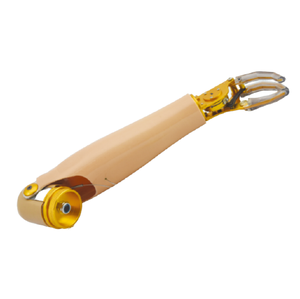
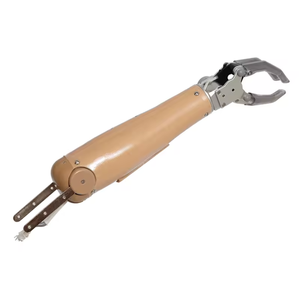
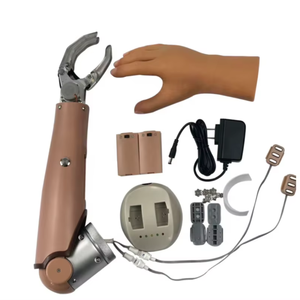
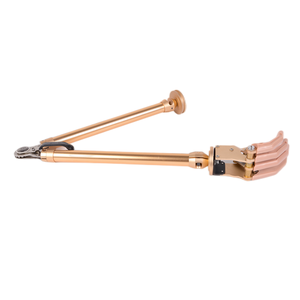
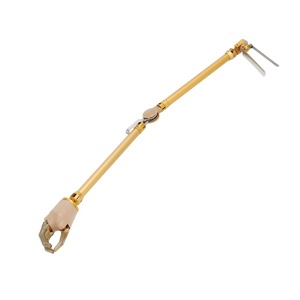
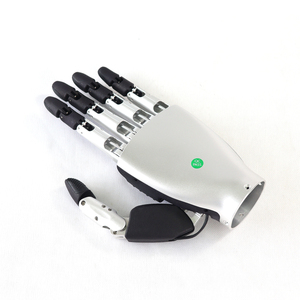
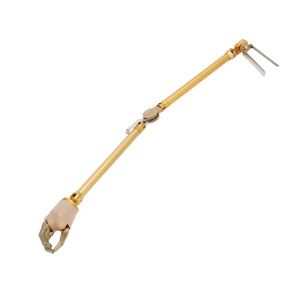
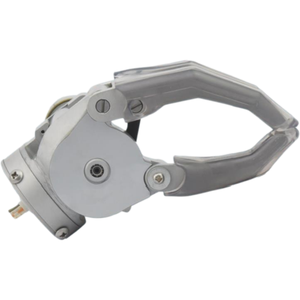
As a established prosthetic limb manufacturer and exporter operating from Pune, India, Singar Rehab (Lynncare Medical) specializes in the precision engineering, custom fabrication, and international distribution of advanced prosthetic limbs and orthotic devices.
Our manufacturing complex integrates high-precision CNC tooling, vacuum resin lamination bays, and biological signal testing laboratories. We provide global medical distributors, hospital networks, and orthopedic centers with custom OEM/ODM solutions tailored to distinct demographic anatomy, clinical fitting protocols, and tender specifications.
Whether producing mechanical cable-controlled upper arm assemblies or multi-channel micro-processor-driven myoelectric prostheses, our engineering team adheres strictly to international quality management guidelines to guarantee clinical safety, durability, and biological compatibility.
An in-depth analysis of emerging technologies transforming prosthetic design, surface myoelectric processing, and human-machine kinematic integration.
Traditional dual-channel EMG systems rely on direct threshold switching. Advanced myoelectric development is shifting toward multi-array pattern recognition algorithms. By processing microvolt muscle contractions via machine learning onboard microcontrollers, patients gain fluid control over complex multi-articulating grip patterns with significantly reduced cognitive load.
The convergence of clinical prosthetics and humanoid robotics has birthed modular bionic hands utilizing RS485 and CAN bus industrial telemetry protocols. Featuring open-source SDK architecture, these systems allow clinical researchers and biomechanical engineers to customize PWM motor frequencies, grasp velocity profiles, and feedback sensor loops in real time.
Traditional plaster casting is rapidly evolving into 3D structured-light optical scanning paired with selective laser sintering (SLS) dynamic sockets. Concurrently, internal structural rods are migrating from heavy stainless steel to vacuum-treated gold-anodized aluminum and medical titanium alloys, providing exceptional structural modulus without sacrificing patient mobility.
When selecting upper-limb prostheses for global institutional procurement, supply chain officers must balance mechanical harness durability against myoelectric functional versatility. Body-powered cable systems utilize gross shoulder movement transmitted via bowden cables to actuate split hooks or mechanical hands—offering tactile sensory feedback and environmental resilience. Conversely, double-electrode myoelectric systems amplify residual muscle belly depolarization signals (microvolts), driving low-noise DC servo-motors for effortless voluntary opening/closing without strenuous harness friction.
Strategic purchasing recommendations for medical device importers, government health ministries, and rehabilitation procurement directors.
Global logistics bottlenecks are driving international medical distributors to move away from fully finished prosthetic limbs. The prevailing procurement model relies on semi-knocked-down (SKD) component kits—importing modular joint units, titanium pylon rods, double-electrode modules, and quick-release wrist adapters for localized socket lamination and fitting.
Regulatory bodies across the EU (MDR), US (FDA), and Asia-Pacific are enforcing stricter non-cytotoxic certification for skin-contacting socket resins and silicone cosmetics. Procurement strategies must prioritize manufacturers possessing comprehensive ISO 10993 material toxicity clearances and ISO 13485 quality system verifications.
Comparative technical parameters for clinical evaluation and procurement specification matching.
| Prosthetic Category | Control Mechanism | Degrees of Freedom | Primary Component Material | Power Supply | Clinical Indication |
|---|---|---|---|---|---|
| Cable-Controlled Upper Arm | Body-powered traction harness | 1 - 2 DoF (Elbow + Hand) | Stainless steel & Resin socket | N/A (Passive mechanical) | High-durability heavy work & remote settings |
| Dual-Channel Myoelectric Arm | Surface EMG (Agonist/Antagonist) | 1 - 2 DoF (Active flexion) | Laminated carbon fiber / Polypropylene | 7.4V Li-ion rechargeable battery | Functional daily living & moderate manual task |
| Cosmetic Passive Upper Limb | Static anatomical positioning | Passive joint friction | Titanium skeleton rod & Silicone glove | N/A | Aesthetic restoration & light weight balance |
| Industrial Terminal Device | Wrist friction ball joint / cable | Multi-angle locking wrist | Gold-anodized work hook alloy | N/A | Agricultural, heavy industrial work environments |
| Bionic Humanoid Robotic Hand | RS485 Telemetry / Myoelectric SDK | Aerospace Aluminum & Servo Actuators | 12V DC External / Battery pack | Advanced rehabilitation research & AI robotics |
Essential guidance for international buyers, tender officers, and medical device distributors looking to partner with Singar Rehab.
For standardized mechanical terminal devices, modular joints, and myoelectric electrode modules, our standard MOQ starts at 5 units per item. For full-scale custom OEM socket lamination or custom color silicone cosmetic production, MOQ is adaptable based on contract volume and annual tender commitments.
All polymer resins, silicone skin coverings, and thermoplastic socket sheets used in our manufacturing process comply with ISO 10993 cytotoxicity, skin irritation, and sensitization standards. Complete material safety data sheets (MSDS) are provided with every batch shipment.
Yes. Our double-channel electrode systems feature adjustable micro-potentiometer gain sensitivity controls (ranging from 10µV to 100µV signal threshold settings), enabling prosthetists to calibrate the hand for patients with severe residual muscle scarring or faint electromyographic impulses.
Absolutely. Our upper limb components, split hooks, and wrist units utilize standard international 1/2-20 UNF threaded studs and quick-disconnect wrist insert geometry, ensuring 100% cross-compatibility with global orthotic and prosthetic hardware systems.
Every export shipment from Singar Rehab includes a Commercial Invoice, Detailed Packing List, Certificate of Origin (COO), ISO Quality Inspection Compliance Certificate, CE Declaration of Conformity (where applicable), and Airway Bill / Bill of Lading.
Yes. The RS485 Bionic Humanoid Hand is supplied with comprehensive API documentation, sample C++/Python code libraries, baud rate configuration software, and pinout diagrams for seamless integration into medical research setups or custom robotic controllers.
To guarantee patient safety under dynamic loading, our prosthetic limb components undergo rigorous structural cyclic fatigue testing aligned with ISO 10328 guidelines. Structural integrity is verified up to 3 million load cycles, ensuring long-term resilience against structural shear, axial load stress, and environmental thermal fluctuation.
Expand your medical supply portfolio with certified high-performance artificial limbs, myoelectric arms, and orthotic solutions. Contact our B2B export department today for bulk pricing, tender specifications, and custom OEM manufacturing evaluations.
