Explore China’s top clinical-grade prosthetic arms, wrist braces, dynamic myoelectric systems, and anatomical restoration components engineered for global export.
Uncompromising engineering standards, modern polymer chemistry, and automated robotic assembly deliver superior cost-efficiency for international procurement networks.
Utilizing high-grade aircraft aluminum, titanium alloys, and medical polypropylene (PPCP), our manufacturing partners produce components with micro-level tolerances and structural reliability.
All exported orthotic wrist supports, dynamic braces, and upper limb prosthetics adhere strictly to ISO 9001, ISO 13485 medical standardizations, CE safety markings, and FDA registration requirements.
Pioneering integration of surface electromyography (sEMG) multi-channel sensors and RS485 robotic communication protocols for responsive bionic dexterity and rehabilitation.
The global orthopedic brace and prosthetic manufacturing ecosystem has experienced a fundamental technology evolution over the past decade. China has transformed from a high-volume component producer into a tier-1 innovation hub for advanced upper-extremity rehabilitative technology. For B2B buyers—including medical equipment importers, clinical supply chains, government healthcare agencies, and orthotic clinic chains—evaluating top Chinese wrist brace factories and exporters requires a deep technical understanding of biomechanical design, material composition, and sensor integration.
Modern wrist braces, immobilization splints, and prosthetic arm sockets manufactured in top-tier Chinese facilities rely heavily on medical-grade Polypropylene Copolymer (PPCP), low-density polyethylene (LDPE), carbon fiber composites, and breathable neoprene-substitutes. The selection of materials directly impacts dynamic support, thermal management, skin-biocompatibility, and structural endurance.
Key Engineering Metric: High-end wrist splints and prosthetic frames manufactured for export must pass rigorous stress testing, maintaining a flexural modulus exceeding 1.2 GPa while resisting chemical degradation from sweat and topical antiseptics.
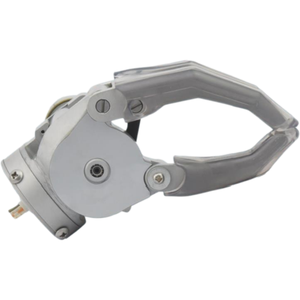
In structural load-bearing components—such as ball joints, split hook terminals, and mechanical rod skeletons—high-grade anodized aluminum alloys (6061-T6 and 7075-T6) and 316L stainless steel are deployed. For premium bionic products, carbon fiber reinforced laminates are cured via high-pressure autoclave processes, achieving maximum rigidity at a fraction of standard mechanical weight.
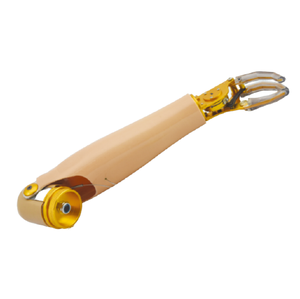
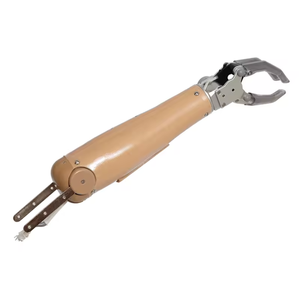
Upper limb prosthetic systems produced by leading Chinese exporters are categorized into two primary mechanical paradigms: mechanical body-powered (cable control) systems and electromechanical (myoelectric) systems.
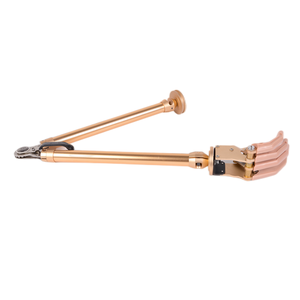
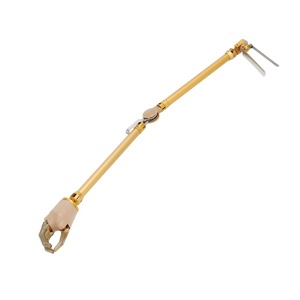
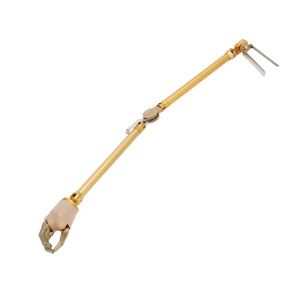
Cable Control Systems: Engineered with stainless steel aircraft-grade cables, high-tensile Dacron harnesses, and mechanical ball-joint wrists. These devices utilize residual shoulder and back muscle movements to actuate split hooks or mechanical fingers. They are universally specified for high-durability, harsh environment applications due to zero battery dependence and water resistance.
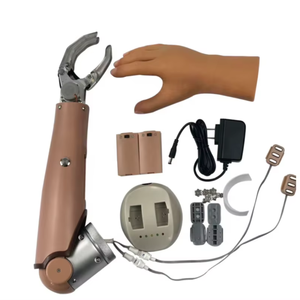
Myoelectric Systems: Powered by miniature DC coreless motors, planetary gearboxes, and surface electromyographic (sEMG) sensors placed against the amputee's residual limb skin. Dual-channel (double electrode) processing modules capture microvolt electrical signals generated during muscular contraction, translating them into proportional grip speed and wrist articulation.
| System Architecture | Actuation Technology | Primary Indication | Durability Grade | Target Procurement User |
|---|---|---|---|---|
| Standard Rigid Wrist Brace | Passive Compression & Aluminum Stays | CTS, Post-Op Fracture, Sprains | High (Washable Fabric) | Retail Pharmacy, Hospital Orthopedics |
| Cable-Controlled Arm System | Dacron Harness & Stainless Steel Cables | Transradial / Transhumeral Amputation | Extreme (Heavy Industrial Duty) | Government Rehab, Non-Profit Procurement |
| Myoelectric Arm (1-2 DOF) | sEMG Sensors & Micro DC Planetary Motors | Upper Extremity Functional Recovery | Moderate to High (Precision Electronic) | Specialized Prosthetic Clinics & Hospitals |
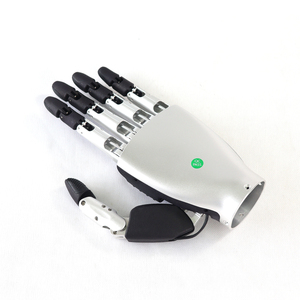
| Humanoid Bionic Robotic Hand | RS485 Bus & Multi-Actuator Digital Code | Advanced Bionic Rehab & Robotics Research | High-Tech Research Grade | University Labs, Modern Rehabilitation Centers |
The global orthotics and upper limb prosthetics supply chain is shifting toward digitized manufacturing, smart sensor integration, and rapid OEM/ODM customization. Sourcing managers must align their procurement models with these critical macro trends to maintain a competitive market edge.
Next-generation wrist braces and myoelectric artificial limbs are progressively integrating IoT sensors and microcontrollers capable of digital signal processing (DSP). By employing machine learning algorithms, modern double-channel myoelectric systems automatically recalibrate sensor thresholds based on patient muscle fatigue levels, reducing control latency to under 50 milliseconds.
Leading Chinese exporters are replacing traditional plaster casting with 3D structured-light optical scanning and selective laser sintering (SLS) 3D printing. This technology allows orthotists to transmit patient 3D volumetric data directly to Chinese factories, enabling custom wrist-hand orthoses (WHO) and prosthetic sockets to be manufactured and dispatched within 48 to 72 hours.
B2B importers are increasingly favoring modular component purchasing over fully assembled non-adjustable units. Sourcing standardized ball joints, quick-disconnect wrist units, multi-channel electrodes, and split-hook terminals allows regional clinics to assemble custom-tailored prostheses locally, lowering customs tariffs and inventory holding costs.
Procurement Recommendation: When establishing OEM contracts with Chinese manufacturers, request full compliance documentation under MDR 2017/745 (EU) and 21 CFR Part 820 (US FDA QSR) to ensure seamless customs clearance and clinical safety certification.
Expert guidance addressing common questions encountered by global healthcare buyers sourcing upper limb prosthetics and wrist braces from China.
For standardized orthotic wrist braces and splints, standard factory MOQs range from 500 to 1,000 units per size/color. For complex functional prosthetic arms (myoelectric or cable-controlled) and bionic hands, factories accommodate low-volume orders starting at 1 to 5 units for clinical trials and specialized procurement.
Top manufacturers perform ISO 10993 cytotoxicity, sensitization, and intracutaneous reactivity testing on all skin-contact materials (plastics, silicone liners, fabrics). Certificates of Analysis (COA) along with CE markings, ISO 13485 audit reports, and FDA registration numbers are provided with export documentation.
Yes. Exporters provide customizable lithium-ion battery modules (typically 7.4V rechargeable packs) complete with UN38.3, MSDS, and CE safety certifications. Chargers are supplied with interchangeable global plug adapters (US, EU, UK, AU standards).
Standard component orders ship within 10–15 business days. Custom OEM orders requiring specialized molds or custom branding take approximately 25–35 days. Express air freight delivers within 5–7 days globally, while sea shipping takes 20–35 days depending on destination port.
Yes, specialized bionic robotic arms (such as RS485 communication models) come with SDKs, open-source C++/Python sample code, and comprehensive pinout diagrams to support research institutions and rehabilitation engineering centers.
Most manufacturers offer a 1-year to 2-year warranty on core mechanical and electronic components (motors, sensors, internal skeletons). Extra wear-and-tear items such as Dacron cables, silicone cosmetic gloves, and straps can be ordered as spare parts kits.
