Featured Prosthetic & Ankle Orthotic Solutions
Explore high-performance biomechanical orthoses, myoelectric arms, and structural prosthetic components directly manufactured in Tier-1 certified facilities.
Cable-Driven Mechanical
Arm Prosthesis Cable Control Style Prosthetic Hand & Elbow Arm
Get a Quote
Bionic Myoelectric
Dual-Degree Freedom Myoelectric Prosthetic Arm & Elbow System
Get a Quote
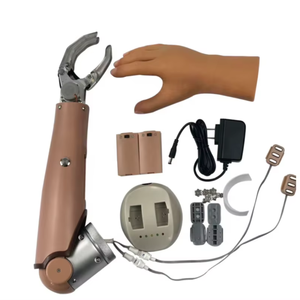
Class I Medical
Myoelectric Prosthetic Arm for Rehabilitation (1-Year Warranty)
Get a Quote
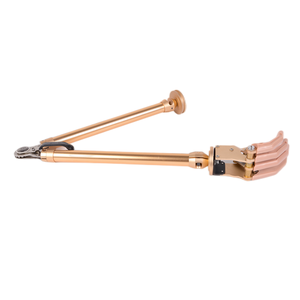
Cosmetic Skeleton
Cosmetic Upper Arm Prosthesis with Internal Mechanical Rod
Get a Quote
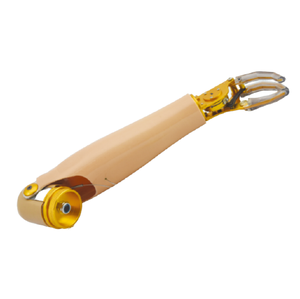
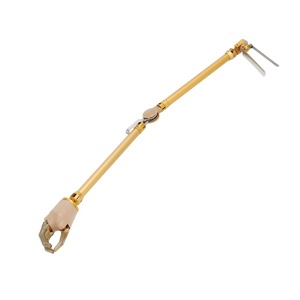
Precision Hardware
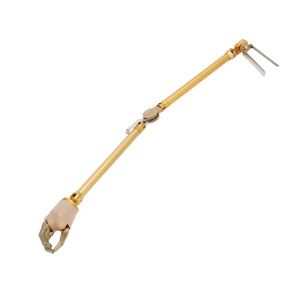
Gold-Tone Upper Limb Component with Ball Joint & Split Hook
Get a Quote
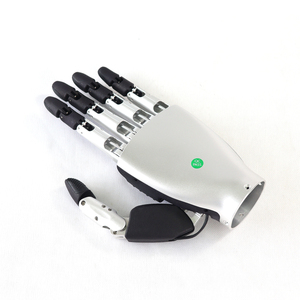
RS485 Robotics
Humanoid Robotic Bionic Hand with Open Source RS485 Interface
Get a Quote
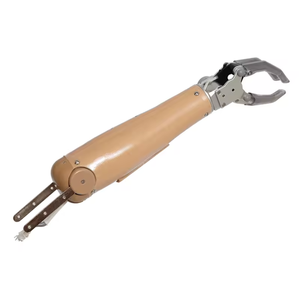
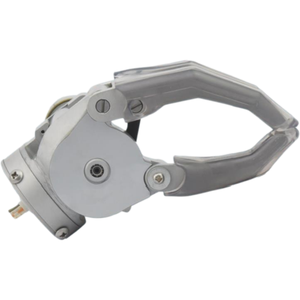
Adult Rehabilitation
Adult Above Elbow Prosthetic Arm with High-Grip Hook Hand
Get a Quote
Dual Electrode
ASSJQ12B-M Double Channel Myoelectric Arm Prosthesis
Get a Quote
1,200,000+
Annual AFO Units Produced
ISO 13485
Certified Medical Manufacturing
65+
Global Export Destinations
< 48 Hours
OEM Rapid Prototyping Turnaround
Executive Overview: China’s Dominance in Ankle Orthosis Manufacturing
The global medical orthotics and prosthetics (O&P) market is undergoing a seismic paradigm shift. As healthcare providers, orthopedic clinics, and rehabilitation equipment distributors seek optimal balances between clinical efficacy, mechanical durability, and unit cost efficiency, China has established itself as the world's premier manufacturing ecosystem for Ankle-Foot Orthoses (AFO), Caliper Orthoses, and dynamic lower-limb stabilization devices.
Modern Ankle-Foot Orthoses are specialized external biomechanical appliances designed to control position and motion of the ankle, compensate for muscular weakness (such as foot drop caused by stroke, traumatic brain injury, cerebral palsy, or multiple sclerosis), and provide structural alignment during the gait cycle. Today's top Chinese manufacturers have evolved far beyond basic low-cost injection molding; they operate state-of-the-art facilities equipped with computerized autoclaves, 3D additive manufacturing centers, digital motion-capture alignment labs, and automated CNC tooling.
Strategic Buyer Insight: Sourcing directly from certified OEM/ODM factories in China allows international importers to achieve cost reductions of 35% to 55% compared to Western manufacturers, while accessing high-grade materials including prepreg carbon fiber, medical-grade Polypropylene Copolymer (PPCP), aircraft-grade 7075 aluminum alloys, and custom thermoplastic elastomers (TPE).
Tier-1 Factory Infrastructure & Quality Engineering
When evaluating suppliers under Google's E-E-A-T (Experience, Expertise, Authoritativeness, and Trustworthiness) standards, global buyers must assess factory operational capabilities. Top-tier Chinese ankle orthosis suppliers differentiate themselves through four foundational engineering pillars:
1. Material Biocompatibility & Polymers
Utilizing medical-grade Polypropylene Copolymer (PPCP) engineered for high fatigue strength, flexibility, and zero skin-irritation under ISO 10993 testing. Modified resin matrices guarantee over 2 million dorsiflexion cycles without micro-fracturing.
2. Autoclaved Carbon Fiber Prepreg
Advanced dynamic response AFOs utilize aerospace-grade 3K carbon fiber woven prepreg. High-pressure autoclave curing yields ultra-lightweight designs (under 160g) offering exceptional energy return during foot-off phase.
3. Digital 3D Scanning & Rapid CAD/CAM
Integration of structured-light 3D scanners allows clinical partners to transmit DICOM/STL files directly to Chinese factory production floors, enabling custom 1:1 patient-matched orthotic carving within 24 hours.
4. Regulatory & Quality Audit Matrix
Full compliance with ISO 13485:2016 quality management systems for medical devices. Finished orthoses are CE marked, registered with the US FDA (Class I/II medical devices), and compliant with EU MDR regulations.
Technical Comparison: Ankle Orthosis Material Engineering
Selecting the correct material substrate is crucial for clinical efficacy and procurement budgeting. The matrix below compares the mechanical properties and targeted applications of key materials processed in leading Chinese factories:
| Orthotic Category |
Primary Material Substrate |
Flexural Modulus (GPa) |
Average Unit Weight |
Fatigue Resistance Life |
Target Clinical Indication |
| Rigid Static AFO |
Injection Molded PPCP |
1.4 – 1.8 GPa |
280g – 350g |
> 1,500,000 Cycles |
Severe Plantarflexion Spasticity, Post-Op Ankle Immobilization |
| Dynamic Energy-Return AFO |
3K Autoclaved Carbon Fiber |
120 – 150 GPa |
120g – 180g |
> 3,000,000 Cycles |
Flaccid Foot Drop, Active Gait Rehabilitation, Post-Stroke |
| Hinged Articulated AFO |
PP Shell + Stainless Steel Joint |
2.1 – 3.5 GPa |
380g – 480g |
> 2,000,000 Cycles |
Medial/Lateral Instability, Controlled Dorsiflexion Assistance |
| Leaf Spring Flexible AFO |
Low-Density Polyethylene (LDPE) |
0.8 – 1.2 GPa |
210g – 260g |
> 1,000,000 Cycles |
Mild Peroneal Nerve Palsy, Lightweight Daily Walking Support |
| Hybrid Smart Bionic AFO |
Carbon Fiber Shell + Servo Motor |
Composite System |
650g – 850g |
> 5,000,000 Cycles |
Active Neuro-Rehabilitation, Powered Dorsiflexion/Plantarflexion |
Future Trends: Technological & Procurement Evolution (2025–2030)
As the orthopedic industry adopts smart technology and sustainable manufacturing practices, Chinese production hubs are spearheading innovations that will redefine ankle orthosis procurement over the next decade:
1. Smart Wearable Sensor Integration
Next-generation AFOs feature embedded inertial measurement units (IMUs) and flexible plantar pressure sensors. These micro-sensors stream real-time gait telemetry to clinicians via cloud dashboards, tracking heel-strike force, cadence, and inversion/eversion angles.
2. Bio-Based Circular Polymers
Environmental sustainability mandates are driving the development of bio-polyolefins derived from castor oil and recycled thermoplastic elastomers (TPE). Chinese suppliers are leading the transition toward zero-carbon manufacturing without compromising tensile yield strength.
3. Direct Additive SLS Printing
Industrial Selective Laser Sintering (SLS) with Polyamide 12 (PA12) allows tool-less, zero-waste manufacturing. This empowers distributors to place low-volume, highly variable custom orders without incurring high injection-mold tooling fees.
B2B Procurement Framework: Strategic Supplier Selection
Navigating the supply chain in China requires a structured audit and procurement strategy. Global medical buyers should implement the following checklist during supplier evaluation:
Step 1 Verification of Regulatory Compliance
Verify that the factory holds valid ISO 13485 certification, FDA Device Registration (FEI number), and EU MDR Declaration of Conformity. Request independent third-party lab test reports (e.g., SGS or TÜV Rheinland) for skin cytotoxicity and dynamic mechanical fatigue.
Step 2 Tooling Ownership & Custom OEM Terms
When commissioning custom injection molds for standardized S/M/L/XL sizing, establish explicit contractual ownership of the mold dies. Clarify prototype production turnaround times, mold lifespan guarantees (typically 500,000 shots), and modification clauses.
Step 3 MOQ & Layered Tiered Pricing
Standard off-the-shelf AFO models usually carry MOQs of 50 to 100 units per size, whereas custom-branded OEM colorways and custom packaging may require 500+ units. Negotiate volume rebate structures and sample evaluation protocols prior to signing master service agreements.
Step 4 Logistics & Tariff Classification
Ensure accurate customs clearance using international Harmonized System (HS) codes. Ankle-Foot Orthoses and prosthetic limb parts are typically categorized under HS Code 9021.10 (Orthopedic or fracture appliances) or 9021.39 (Artificial limb parts), which benefit from preferential tariff rates in many jurisdictions.
Frequently Asked Questions (FAQ) for Global Importers
1
What are the essential certifications required when importing Ankle Orthoses from China?
To import medical-grade Ankle-Foot Orthoses legally, suppliers must provide an ISO 13485:2016 certified Quality Management System. For US distribution, factories must be registered with the FDA as a Medical Device Establishment. For European Union markets, products must comply with EU MDR 2017/745 Class I medical device regulations, accompanied by a formal CE Declaration of Conformity and technical documentation file.
2
What is the standard production lead time for OEM custom-branded orthotic orders?
For standard prefabricated AFOs in stock colors, production lead time is typically 10 to 15 business days. For customized OEM orders involving custom logo embossing, specialized padding colors, and private-label packaging, production requires 25 to 35 days after final artwork approval. New custom injection mold creation adds approximately 30 to 40 days for die machining and initial sample sign-off.
3
How do Chinese factories ensure structural durability for high-impact carbon fiber dynamic AFOs?
High-end factories utilize vacuum-assisted prepreg carbon fiber lamination cured in high-pressure autoclaves at temperatures exceeding 120°C. Finished carbon footplates undergo automated cyclical loading test rigs that simulate over 2,000,000 gait cycles under peak forces of 1,200 Newtons, guaranteeing structural resistance against delamination, micro-cracking, and fatigue failure.
4
Can Chinese manufacturers produce 1:1 patient-customized AFOs directly from 3D scan data?
Yes. Leading tier-1 suppliers operate digital CAD/CAM departments capable of processing 3D surface scans (.STL, .OBJ, or .DICOM format) sent digitally by orthotists worldwide. Factory robotic carvers produce custom polyurethane molds, around which PPCP or carbon fiber sheets are thermoformed, delivering patient-specific custom orthoses within tight turnarounds.
5
What are the minimum order quantity (MOQ) requirements for wholesale procurement?
Minimum order quantities depend on customization levels. Standard prefabricated polypropylene ankle orthoses typically start at an MOQ of 50 units across mixed sizes (S, M, L, XL). High-end carbon fiber dynamic splints often have lower MOQs of 10 to 20 units. Fully custom OEM orders requiring private label printing or unique colorways generally carry an MOQ of 300 to 500 units.
6
How are quality defects and warranty replacements handled under international B2B contracts?
Reputable Chinese suppliers offer a 1-year to 3-year structural warranty on major orthotic shells and metallic joints. Standard B2B warranty terms include free replacement of any unit exhibiting material flaws or structural failure under normal clinical usage. Suppliers typically include a 1% to 2% spare components allowance with bulk shipments to handle immediate local service requests.
7
What padding materials are used to prevent skin breakdown in long-term AFO wearers?
Modern orthoses incorporate closed-cell EVA (Ethylene-Vinyl Acetate) foam, high-density memory foam, or breathable mesh liners coated with antibacterial agents. Closed-cell foams are waterproof, non-absorbent, easy to sanitize, and chemically inert, making them ideal for preventing pressure ulcers and skin maceration in long-term wearers.
8
What packaging options are available to protect delicate orthoses during international sea/air freight?
Products are individually packed in sealed anti-humidity polybags or custom printed retail window boxes, then placed into heavy-duty 5-ply double-wall corrugated master cartons. For fragile carbon fiber dynamic orthoses or electronic bionic limbs, custom molded EVA foam trays or protective bubble inserts are utilized to prevent crush damage during transit.
Initiate Your OEM/ODM Ankle Orthosis Sourcing Today
Partner with certified Chinese ankle orthosis manufacturers to access world-class biomechanical engineering, ISO 13485 quality control, competitive OEM factory pricing, and dependable international delivery. Speak with our technical sourcing specialists to request product samples, factory audit reports, or custom quotations.