Explore China’s premier medical-grade rehabilitation equipment portfolio. Designed for clinical neuro-rehabilitation, stroke recovery, and upper-limb amputation support, these devices integrate multi-channel surface electromyography (sEMG), high-precision actuators, and ergonomic mechanical skeletons.
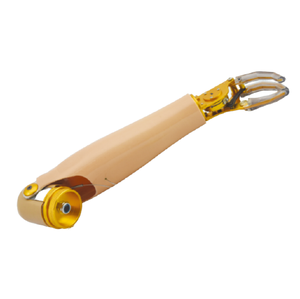
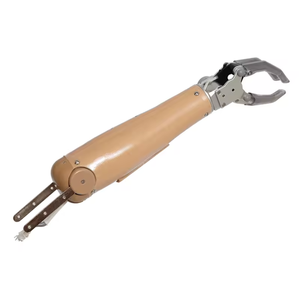
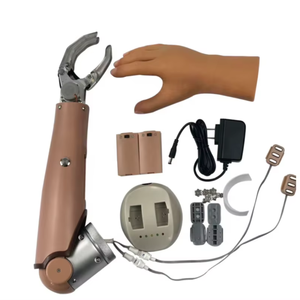
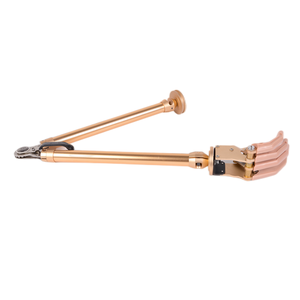
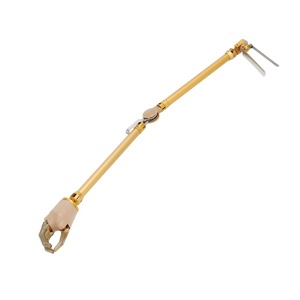
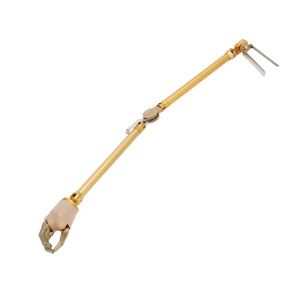
Arm Prosthesis Cable Control Style Prosthetic Hand and Mechanical Above Elbow Arm
Executive Summary: China's Role in Next-Gen Rehabilitation Robotics
The global rehabilitation robotics landscape is undergoing a monumental paradigm shift driven by demographic aging, an increasing incidence of neurological disorders (such as stroke, traumatic brain injury, and spinal cord injury), and technological breakthroughs in wearable electromechanical devices. As a premier hub for high-precision manufacturing, micro-electronics, and artificial intelligence, **China has emerged as the definitive global powerhouse for the R&D, manufacturing, and export of advanced rehabilitation robotics and bionic prosthetics.**
Modern medical robotics move far beyond static orthopedic supports. Today’s state-of-the-art rehabilitation robots incorporate **surface electromyography (sEMG) biofeedback, closed-loop neural rehabilitation algorithms, multi-degree-of-freedom (DoF) actuated joints, and brain-computer interface (BCI) compatibility**. For international healthcare systems, orthopedic hospitals, rehabilitation clinics, and medical equipment importers, sourcing directly from top-tier Chinese manufacturers yields an unbeatable combination of clinical efficacy, robust supply chain stability, and total cost of ownership (TCO) efficiency.
Information Gain Insight: Sourcing upper-limb dynamic prosthetics and robot-assisted rehabilitation devices from certified Chinese manufacturers delivers up to a 45% reduction in initial capital equipment expenditure while fulfilling rigorous international safety standards including CE MDD/MDR, FDA Class I/II listings, and ISO 13485 quality systems.
Technological Trends Shaping the Future of Rehabilitation Robotics
Rehabilitation robotics combine biomedical engineering, mechanical robotics, neuromuscular physiology, and embedded software computing. Below are the key technological vectors defining modern manufacturing and procurement trends:
Multi-Channel sEMG Signal Processing
Advanced myoelectric prosthetics now employ high-density surface electromyography sensors with active noise filtering. By capturing micro-volt muscular signals from residual limbs, proprietary algorithms translate intent into sub-15-millisecond mechanical responses for fluid hand, wrist, and elbow movements.
Open-Source RS485 & CAN-Bus Integration
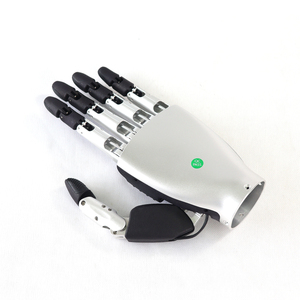
The shift toward open robotics platforms—exemplified by RS485 and Controller Area Network (CAN) bus protocols—allows research institutions and advanced clinical centers to program customized grip patterns, trajectory paths, and force-feedback metrics directly into humanoid bionic hands.
Adaptive Force Feedback & Compliance Control
Safety is paramount in robotic rehabilitation. Modern actuators feature variable impedance and compliance control mechanisms, ensuring that if a patient experiences muscle spasms or sudden resistance during passive movement exercises, the robot instantly relaxes to prevent tissue injury.
Technical Comparison: Myoelectric vs. Body-Powered Upper-Limb Systems
When selecting rehabilitation and prosthetic equipment for institutional procurement, understanding the operational boundaries of different mechanical architectures is vital for clinical success:
Feature Parameter
Myoelectric Bionic Prosthetics
Cable-Controlled Mechanical Arms
Open-Source Bionic Robotic Hands
Primary Actuation
Brushless DC Micro-Motors
Body Tension & Stainless Cable
Servo-Driven Actuators / RS485
Control Interface
Dual/Multi-Channel sEMG Electrodes
Shoulder Harness Motion
UART / RS485 / CAN / BCI SDK
Degrees of Freedom (DoF)
1 to 2 DoF (Active)
1 DoF (Passive Lock Elbow)
5 to 6 DoF Individual Digit Control
Clinical Application
Daily Active Functional Amputees
Heavy-Duty Work & Rugged Environments
Neuro-rehabilitation & Robotics R&D
Maintenance Profile
Battery Recharge & Sensor Calibration
Cable Tension Adjustment
Firmware Updates & Gear Inspection
Strategic B2B Procurement Trends (2025–2030)
Healthcare procurement officers, medical equipment distributors, and government tender buyers must navigate changing technological and economic dynamics when acquiring rehabilitation robotics from China. Key market projections include:
1. Modular Hardware Architectures
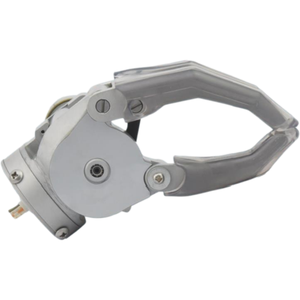
Procurement strategies are moving away from monolithic, single-purpose machinery toward modular ecosystems. Modular elbow joints, interchangeable split-hook terminals, and universal myoelectric sockets allow clinics to repair, upgrade, or reconfigure devices without replacing entire systems.
2. AI-Assisted Patient Tele-Rehabilitation
Exoskeletons and bionic upper-limb devices are increasingly equipped with Bluetooth and Wi-Fi telemetric modules. Clinicians can remotely monitor patient range-of-motion progress, muscle signal strength degradation, and daily active usage metrics in real time.
3. Rigorous Regulatory Harmonization
Leading Chinese exporters now routinely maintain comprehensive ISO 13485 quality management systems, CE certification under EU MDR regulations, and full biocompatibility testing for all patient-skin contacting materials (e.g., silicone sleeves and thermoplastic sockets).
Why Partner with China’s Leading Rehabilitation Exporters?
When evaluating international manufacturing partners for rehabilitation robotics and specialized prosthetics, our manufacturing infrastructure stands out across several key operational pillars:
End-to-End Precision OEM/ODM Capabilities: From initial CAD structural design to SMT circuit board assembly and CNC mechanical arm machining, we control 100% of the production cycle.
Strict Quality Assurance & Load Testing: Every myoelectric elbow, mechanical skeleton rod, and bionic hand undergoes 100,000-cycle stress testing and sEMG signal stability verification before export packaging.
Global Logistics & Regulatory Support: Full assistance with customs documentation, CE compliance declaration, FDA registration guidance, and expedited air/sea freight logistics to over 85 countries worldwide.
Frequently Asked Questions (FAQ) for Global Buyers
Q1: What are the primary advantages of Myoelectric Prostheses over traditional Cable-Controlled Arms?
Myoelectric prostheses utilize surface electromyography (sEMG) sensors placed against the user's residual limb skin to detect electrical muscle impulses. This allows intuitive, low-effort control of motor-driven joints without requiring complex shoulder movement or heavy harness systems. Cable-controlled arms, however, remain ideal for rugged work environments where extreme durability and zero-battery independence are required.
Q2: Can your Humanoid Bionic Hands be customized for academic research or BCI integration?
Yes. Our bionic robotic hands feature open-source communication protocols over RS485 and CAN-bus interfaces. We provide software development kits (SDKs) and sample C++/Python code to enable university laboratories, robotic developers, and clinical researchers to interface the hand with custom Brain-Computer Interfaces (BCI) or novel gesture-recognition algorithms.
Q3: What medical device certifications do your rehabilitation robotics hold?
Our manufacturing facilities operate under the ISO 13485 Quality Management System for Medical Devices. Most upper-limb prosthetic components and rehabilitation units hold CE compliance marks under European medical device guidelines and are Class I / Class II medical device compliant. We provide complete technical documentation files for regional registration.
Q4: What is the standard minimum order quantity (MOQ) and production lead time for international buyers?
For standard evaluation units and standard prosthetic components, the MOQ is 1 piece/set. For customized OEM/ODM orders with specific branding, socket dimensions, or specialized color finishes, MOQ typically starts at 10 units. Standard production lead times range from 7 to 15 business days depending on order volume and customization complexity.
Q5: How do you handle warranty support and spare parts replacement internationally?
All electronic and motorized prosthetic products come with a standard 1-Year Manufacturer Warranty. In the rare event of a component failure, we ship replacement actuators, electrodes, cables, or control PCBA boards via express international courier. We also offer comprehensive online technical training for clinical orthotists and technicians.
Q6: Are the materials used in your prosthetic arms skin-safe and biocompatible?
Absolutely. All direct-contact components—including inner silicone liners, socket plastics, and harness straps—undergo strict biocompatibility testing for cytotoxicity, skin irritation, and sensitization. They meet international clinical standards for long-duration skin contact.
Connect directly with our senior biomedical engineers and export sales director. We provide fast quotes, custom OEM designs, and comprehensive clinical documentation for global distributors and medical facilities.