B2B Manufacturing Industry Whitepaper

China Best Cranial Orthosis Manufacturers & Factories

An In-Depth Engineering & Global Procurement Guide to Craniofacial Remodeling Helmets, Cervical Stabilization Orthoses, and Advanced Medical Materials

Featured Medical Orthoses & Cranial Systems

Explore high-precision orthotic braces, cranial stabilization equipment, and clinical models engineered to international ISO 13485 and CE standards.
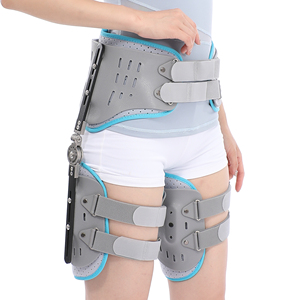
Double Hip Joint Orthosis Brace Fixed Knee Support for Adult Labral Tear Rehabilitation Class I XRBK XK605-3 CE/ISO13485
CE / ISO13485 Class I

Double Hip Joint Orthosis Brace Fixed Knee Support

Get Catalog
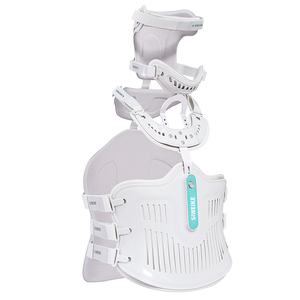
Orthopedic Head Cervical Thoracic Orthosis for Traction Treatment
Orthopedic Grade Cervical Traction

Orthopedic Head Cervical Thoracic Orthosis (CTO)

Get Catalog
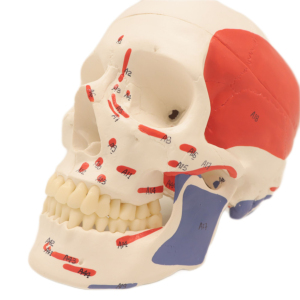
High Reproduction Accuracy PVC Material CE ISO Certified Medical Teaching Models Human Muscular Skull Orthotics Physical Therapy
High Accuracy PVC Clinical Model

Human Muscular Skull Orthotics Physical Therapy Model

Get Catalog
Medical Cervical Spine External Fixation Orthosis Adjustable Orthopedic Immobilizer Brace Stabilization
Adjustable Fit Spine Immobilization

Medical Cervical Spine External Fixation Orthosis

Get Catalog
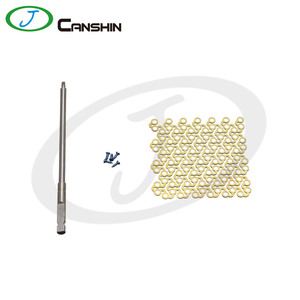
Pet orthopedic instruments, cranial frontal titanium mesh, animal skull
Titanium Grade 4 Surgical Implant

Cranial Frontal Titanium Mesh Reconstruction System

Get Catalog
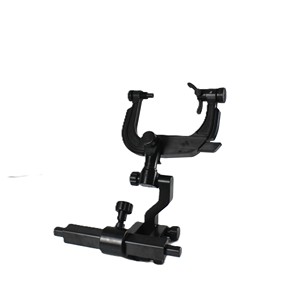
PEEK5600CF30 Skull Retractor CRANIAL STABILIZATION & RETRACTOR SYSTEMS Radiolucent Headrest System
PEEK CF30 Radiolucent

PEEK5600CF30 Cranial Stabilization Retractor System

Get Catalog
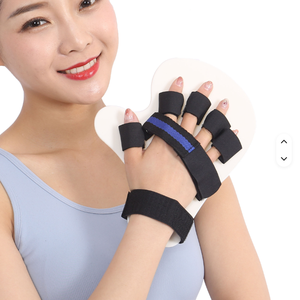
Durable Outdoor Home Orthotic Board Parkinson's Patients Hand Splint Finger Stabilization Cranial Rehabilitation Equipment CE
CE Approved Neuro-Rehab

Cranial & Neurological Hand Splint Stabilization Equipment

Get Catalog
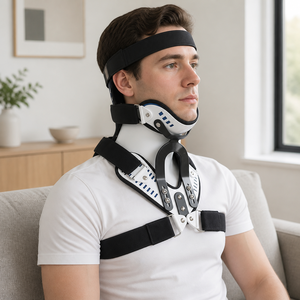
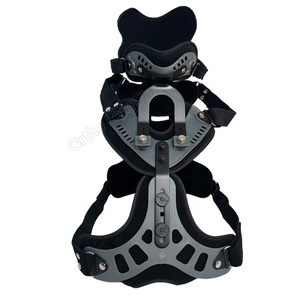
Adjustable Medical Orthopedic Head Neck Chest Medical Cervical Thoracic Orthosis for Traction Treatment Posture Suitable
Postural Control Adjustable CTO

Adjustable Head Neck Chest Cervical Thoracic Orthosis

Get Catalog
ISO 13485
Certified Quality System
99.4%
3D Scan Fit Accuracy
65+
Global Export Markets
0.05 mm
CNC Fabrication Tolerance

Biomechanical Principles of Modern Cranial Orthoses & Head Remodeling

Cranial Remodeling Orthoses (CROs)—commonly known as cranial helmets or dynamic orthotic bands—represent a critical specialized sector in pediatric orthopedics and neurosurgical post-operative rehabilitation. Primarily prescribed to correct positional non-synostotic plagiocephaly, brachycephaly, and scaphocephaly in infants aged 3 to 18 months, these medical devices function on controlled hydrostatic compression and pathways of directed growth. The biomechanical objective is not to apply active compressive force against the cranial bones, but rather to create a rigid, highly customized outer barrier that selectively restrains prominent cranial areas while leaving strategically engineered relief zones over flattened regions.

In China, top-tier medical device manufacturers have evolved beyond traditional plaster casting methods toward digital CAD/CAM workflows. By integrating high-resolution 3D surface photogrammetry and structured-light optical scanners, manufacturers capture sub-millimeter cranial topographies within seconds. This digital volumetric data is processed through proprietary biomechanical modeling software, allowing clinical orthotists and factory engineers to design rigid outer shells—typically constructed from medical-grade co-polymer polypropylene (PPCP), high-density polyethylene (HDPE), or carbon-reinforced polymers—lined with hypoallergenic, closed-cell polyethylene foams (such as Plastazote® or AliPlast®).

Clinical Efficacy Benchmark: Modern Chinese cranial orthosis production leverages finite element analysis (FEA) to simulate cranial growth vector distribution. This ensures dynamic headwear maintains structural rigidity under daily physical impact while reducing overall device mass to under 180 grams, minimizing cervical strain on infant patients.

Furthermore, in adult neurosurgery and cranioplasty applications, cranial stabilization extends to external cervical-thoracic orthoses (CTO) and carbon-fiber PEEK retractor systems. Devices such as radiolucent PEEK5600CF30 stabilizers ensure intraoperative artifacts are eliminated during computed tomography (CT) and magnetic resonance imaging (MRI) procedures, reflecting China's rapid manufacturing scaling into high-end surgical instrumentation.

Global B2B Procurement Trends & Technological Innovations

The global market for cranial and orthopedic orthoses is undergoing a structural paradigm shift driven by digital health integration, shifting international supply chain strategies, and advanced material science. Overseas medical equipment buyers, hospital procurement syndicates, and rehabilitation distributors are increasingly evaluating Chinese OEMs not just on unit cost efficiency, but on regulatory compliance, digital workflow compatibility, and mass-customization turnaround speed.

Key technological trends defining the next decade of cranial orthotic manufacturing include:

Technology Vector Traditional Manufacturing Next-Gen Chinese Factory Standard Clinical & B2B Procurement Benefit
Cranial Impression Plaster Gyp-ona Bandaging Non-contact 3D Optical Photogrammetry Zero patient discomfort, scan time < 3 seconds, instant cloud-to-factory transmission.
Shell Fabrication Vacuum Thermoforming over Plaster Additive Manufacturing (SLS / MJF 3D Printing) Complex lattice structures, 35% weight reduction, optimized airflow, zero waste material.
Material Composition Standard PVC / EVA Foams Antibacterial PEEK CF30 & Bio-PE Polyethylene Biocompatible (ISO 10993), radiolucent under MRI, superior fatigue resistance.
B2B Delivery Cycle 21–30 Business Days 5–7 Business Days via Cloud-CAD Integration Drastically reduced lead times for time-sensitive pediatric cranial growth windows.

As international healthcare systems prioritize value-based care, the demand for customizable OEM/ODM solutions has surged. Leading Chinese manufacturers now offer white-label digital platforms where hospital orthotists can upload anonymized STL or OBJ scan files directly to factory CNC milling centers or 3D printers, streamlining cross-border orthotic production.

Enterprise Core Competencies & Manufacturing Strengths

Why Tier-1 medical buyers and global orthopedic brands partner with accredited Chinese manufacturers for specialized cranial orthoses.

ISO 13485 & Cleanroom Quality Control

Production lines operate under ISO 13485 medical device quality management systems. Cleanroom injection moulding and thermoforming ensure medical-grade cleanliness, free from plasticizer contamination and heavy metals.

End-to-End Precision Machining

Equipped with 5-axis CNC routers, high-speed laser cutters, and industrial MJF 3D printers. We achieve tight tolerances (±0.05mm) on complex cranial topography curves and anatomical skull models.

Global Regulatory Support & Export

Full technical documentation support for FDA 510(k), CE MDR Class I compliance, REACH, and RoHS certification. Exporting seamlessly to over 65 countries with DDP/FOB supply chain logistics.

Frequently Asked Questions (FAQ) for Global B2B Sourcing

What are the primary regulatory requirements for importing cranial orthoses from China?
Cranial remodeling helmets and cervical orthoses are classified as Class I or Class II medical devices depending on the destination market. For the European Union, compliance with CE MDR (Medical Device Regulation 2017/745) is mandatory. For the US market, FDA 510(k) clearance or Class I registration is required. Reputable Chinese manufacturers hold ISO 13485 quality certificates and provide full Device Master Files (DMF) along with ISO 10993 biocompatibility testing reports for skin-contact materials.
How are custom cranial helmets fabricated from digital 3D scans?
The fabrication process begins when an orthotist uploads an STL/OBJ scan file captured via a 3D optical scanner. Factory engineers import the file into specialized CAD software (e.g., Rodin4D, Vorum, or 3D Systems) to create a digital positive mold. The mold is either carved on a 5-axis CNC milling machine or directly additive-manufactured via Selective Laser Sintering (SLS). A high-density liner foam is thermoformed over the mold, followed by the rigid outer shell (polypropylene or carbon composite), trimmed, fitted with adjustable closure straps, and quality-tested.
What is the standard Minimum Order Quantity (MOQ) for OEM/ODM orders?
For standardized off-the-shelf orthopedic braces (such as cervical thoracic orthoses or knee immobilizers), typical factory MOQs range from 50 to 200 units. However, for patient-specific custom cranial orthoses manufactured from individual 3D scan data, leading factories offer a 1-piece MOQ under specialized B2B clinical fulfillment contracts.
Why is PEEK material increasingly utilized in cranial stabilization and surgical retractors?
Polyetheretherketone (PEEK), specifically carbon-fiber reinforced variants like PEEK5600CF30, offers exceptional mechanical strength comparable to titanium, while being completely radiolucent. In cranial stabilization and headrest retractor systems, radiolucency allows neurosurgeons to obtain clear, artifact-free intraoperative X-ray, CT, and MRI imaging without removing the head frame.
What is the typical production lead time for bulk and customized shipments?
Custom patient-specific cranial helmets are produced within 3 to 5 business days upon digital scan approval, plus 2 to 4 days for express air freight delivery (DHL/FedEx). Bulk orders of modular cervical-thoracic orthoses or physical therapy anatomical models generally require 15 to 25 calendar days depending on production volume and customization requirements.
How do factories ensure biocompatibility and skin safety for pediatric patients?
Pediatric cranial orthoses remain in direct contact with sensitive infant skin for up to 23 hours a day. Certified Chinese factories utilize medical-grade, closed-cell polyethylene foams that are latex-free, non-cytotoxic, and non-sensitizing. Raw materials undergo rigorous testing according to ISO 10993-5 (Cytotoxicity) and ISO 10993-10 (Irritation and Skin Sensitization) standards.
Can Chinese manufacturers assist with OEM custom branding and packaging?
Yes. Tier-1 manufacturers provide full OEM services including custom strap logo printing, shell color/pattern hydro-dipping, customized instruction manuals (IFU), specialized retail or clinical packaging, and localized labeling compliant with UDI (Unique Device Identification) standards.

Request Product Catalogs & OEM Sourcing Quotations

Connect directly with our engineering and international business team to request technical specifications, wholesale price lists, or initiate custom CAD/CAM workflow integration.