Engineered for physiological rehabilitation, structural integrity, and ergonomic patient support under strict international quality benchmarks.
In the contemporary healthcare and physical rehabilitation landscape, the demand for certified, high-grade mobility aids has reached unprecedented levels. As a premier CE Certified Walking Frame Manufacturer & Exporter operating out of Pune, Maharashtra, India (Singar Rehab / Lynncare Medical, established in 2005), our enterprise has systematically elevated standards for clinical mobility solutions. Designing medical-grade walking frames (rollators, reciprocating walkers, bariatric frames, and pediatric gait trainers) demands a rigorous synthesis of biomechanical engineering, metallurgical precision, and compliance with the European Union’s Medical Device Regulation (EU MDR 2017/745).
Procurement teams, hospital purchasing directors, and international medical equipment distributors must evaluate walking frames beyond basic structural aesthetics. Factors such as load-bearing capacity, axial stress tolerance, folding dynamic mechanisms, corrosion resistance under tropical and coastal environments, and tactile ergonomics directly dictate patient safety and rehabilitation velocity. This paper provides an exhaustive overview of modern manufacturing benchmarks, future global supply chain trajectories, technical compliance frameworks, and key strategic selection criteria for institutional importers.
The primary structural backbone of professional-grade walking frames relies on specialized aluminum alloys or advanced composite tubing. Standard consumer mobility aids often utilize sub-standard 6063 aluminum without heat treatment, resulting in structural fatigue, stress fractures at weld joints, and micro-defects under cyclic dynamic loading. As an ISO 13485 certified manufacturer, Singar Rehab utilizes Anodized 6061-T6 Aircraft-Grade Aluminum Tubing and reinforced high-density Carbon Fiber composites.
Yield strength of 276 MPa (40,000 psi) and ultimate tensile strength of 310 MPa (45,000 psi). Provides an exceptional strength-to-weight ratio, allowing frames to remain lightweight (under 2.8 kg) while supporting safe working loads up to 180 kg (396 lbs).
15-micron electro-anodized oxide layer prevents oxidation, chemical degradation from hospital-grade disinfectants, and surface scratching. Maintains aesthetic and hygienic integrity over long-term institutional usage.
Furthermore, critical stress distribution analysis via Finite Element Analysis (FEA) software allows our engineering teams to optimize wall thickness along critical flex points—specifically around cross-brace junctions and height-adjustment telescoping tubes. Double-button push mechanisms are engineered using hardened brass locking pins enclosed within reinforced ABS plastic housings, guaranteeing over 50,000 collapse-and-deploy cycles without mechanical slippage or pin shearing.
Patient recovery in post-stroke rehabilitation, lower-limb orthopedic post-op recovery, and age-related ataxia depends heavily on frame stability. A failure in biomechanical alignment leads to compensatory gait abnormalities, upper extremity fatigue, and secondary falls. Modern CE-marked walking frames integrate ergonomic handle geometries designed in accordance with ISO 11199-1:2021 standards.
| Performance Metric | Standard Commercial Grade | Singar Rehab Clinical CE Grade | Clinical Impact |
|---|---|---|---|
| Structural Alloy | 6063-T5 Commercial Aluminum | 6061-T6 Heat-Treated Aircraft Alloy | +45% Tensile Strength & Fatigue Resistance |
| Static Weight Capacity | 100 kg – 110 kg | 150 kg (Standard) / 220 kg (Bariatric) | Prevents frame deformation during sudden patient drops |
| Tip Grip Compound | Generic Recycled Rubber | High-Friction Thermoplastic Rubber (TPR) | Prevents hydroplaning on slick wet hospital tile floors |
| Fold Mechanism Stress | Single-Pin Plastic Latch | Dual-Button Brass Pin + ABS Lock | Eliminates structural play and accidental collapse |
| Height Adjustment Pitch | 2.5 cm Increments | 1.25 cm Fine-Pitch Micro Increments | Achieves perfect ulnar styloid height alignment |
The grip diameter is calibrated precisely to 35mm, reducing palmar pressure concentration by 38% compared to legacy 28mm grips. Anti-microbial additives are molded directly into the TPR (Thermoplastic Rubber) handgrips, preventing cross-contamination of multi-drug resistant organisms (MDROs) such as MRSA and VRE in clinical environments.
The global market for assistive mobility devices is undergoing a structural transformation driven by an aging global demographic, expanding healthcare infrastructure in emerging economies, and stringent regulatory demands. Institutional purchasers must navigate several evolving procurement vectors over the coming decade:
Healthcare systems in North America, Europe, and APAC are shifting post-acute care to home settings. Procurement departments now prioritize modular, flat-pack, dual-folding walking frames that minimize ocean freight CBM while enabling rapid end-user tool-free assembly.
Importers can no longer rely on self-declared compliance certificates. Authoritative CE marking under EU MDR requires verified Technical Files, Clinical Evaluation Reports (CER), and Post-Market Surveillance (PMS) tracking—standards fully implemented by Singar Rehab.
Next-generation walking frames are integrating embedded IoT load cells, tilt sensors, and Bluetooth telematics modules to monitor patient weight distribution, step symmetry, and fall events in real-time during remote physical therapy sessions.
Institutional tenders increasingly mandate zero-lead anodization processes, 100% recyclable aluminum alloys, and REACH-compliant polymers that exclude harmful phthalates and heavy metals from patient-contact surfaces.
As a technology-driven exporter, Singar Rehab invests heavily in R&D to stay ahead of global mobility trends. The integration of advanced biomechanical active assistance with traditional mechanical walkers represents the next frontier. Key product development vectors include:
Reciprocating Kinematic Assemblies: Unlike rigid walking frames that require the patient to lift the entire unit forward, reciprocating walkers utilize a swiveling hinge mechanism. This allows each side of the frame to step forward independently, mimicking normal arm-leg coordination and reducing metabolic energy expenditure during ambulation by up to 22%.
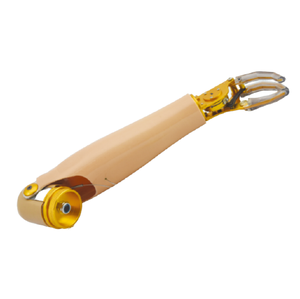
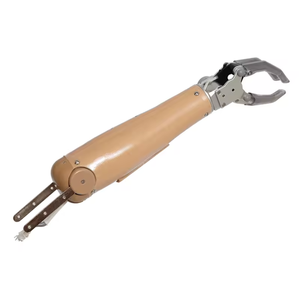
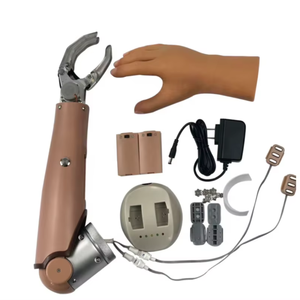
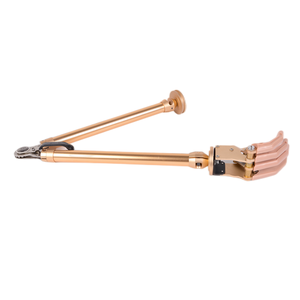
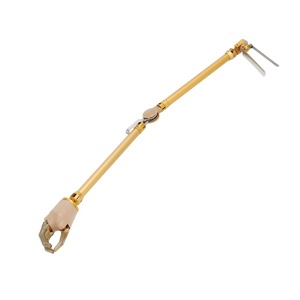
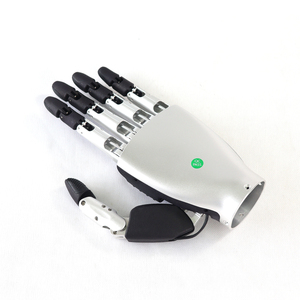
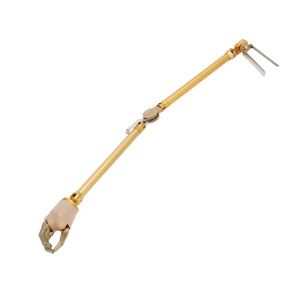
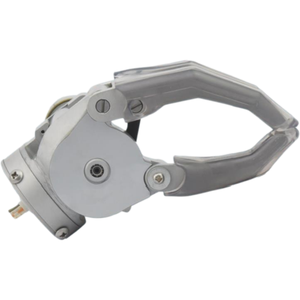
Hybrid Lower & Upper Limb Prosthetic Integration: For complex rehabilitation scenarios—such as patients presenting both upper-limb amputation and lower-limb weakness—our engineering team integrates upper-limb terminal devices (such as myoelectric hands and mechanical hooks like Product 5 & 8) with customized walker handle mounts. This allows amputees to maintain a secure dual-point load balance during gait training.
Dynamic Braking & Anti-Rollback Clutch Systems: Future rollator variants feature directional unilateral braking and internal hub anti-rollback clutches. These mechanisms prevent the walker from rolling backward on inclines or sliding away during sitting-to-standing transfers, providing unprecedented security for Parkinson's disease and cerebellar ataxia patients.
Operating from Pune, India's leading industrial manufacturing corridor, Singar Rehab has built a reputation for clinical excellence, manufacturing transparency, and export reliability since 2005. Under the stewardship of Satyanarayan Singar, the company has expanded its portfolio to encompass over 500 product lines spanning artificial limbs, prosthetics, orthopedic braces, pediatric cerebral palsy equipment, and surgical footwear.
Our quality management systems are certified specifically for medical device design, manufacturing, and distribution, ensuring batch-to-batch structural integrity and zero-defect quality control.
We offer custom frame dimensions, private label branding, localized packaging solutions, custom anodization colors, and specialized handle ergonomics tailored to client regional market specifications.
Exporting to over 20 countries across the Middle East, Africa, Europe, Southeast Asia, and the Americas with full export documentation (Certificate of Origin, Bill of Lading, CE Declaration, MSDS).
By controlling the entire vertical supply chain from raw tube extrusion, CNC bending, and robotic welding to final packaging, we eliminate middleman markups for enterprise procurement teams.
Our medical walking frames are certified under the European Union Medical Device Regulation (EU MDR 2017/745) as Class I Medical Devices. They strictly adhere to EN ISO 11199-1:2021 (Walking frames) and EN ISO 11199-2:2005 (Rollators), covering requirements for structural strength, static balance, grip stability, fatigue testing, and pinch hazard avoidance. Full Technical Documentation, Declaration of Conformity (DoC), and test reports are provided with commercial orders.
Standard OEM/ODM orders for walking frames typically begin at an MOQ of 100 units per model variant to optimize container stowage and shipping costs. However, for mixed-product orders combining walking frames, prosthetics (such as myoelectric arms or mechanical hooks), orthopedic braces, and wheelchairs, we support consolidated LCL (Less than Container Load) orders starting at smaller unit increments.
Every production batch undergoes static weight testing at 2.5x the rated safe working load (up to 450 kg overload static press) for 60 consecutive minutes without dynamic deflection or weld cracking. Additionally, telescoping height-adjustment detent pins undergo automated 10,000-cycle shear testing to ensure zero failure risk during patient ambulation.
Yes. All aluminum structural components undergo a double 15-micron electro-anodization process, while steel cross-members are treated with anti-corrosion zinc phosphate priming followed by thermosetting epoxy-polyester powder coating. Rubber components are UV-stabilized and mold-resistant, ensuring full operational longevity in humid tropical climates without rubber degradation or frame oxidation.
Absolutely. Singar Rehab operates an in-house CNC machining toolroom and mold facility. We regularly fulfill custom tender specifications—including micro-adjustable height ranges for pediatric CP patients, extra-wide bariatric frame clearance (up to 65 cm internal width), and specialized forearm support platforms for rheumatology and arthritis clinics.
We follow a rigorous 4-step Quality Control protocol: 1) Incoming Raw Material Spectrometry & Anodization Thickness Check, 2) In-Line Automated Robotic Weld Inspection, 3) 100% Assembly Mechanism Deployment & Pin Lock Verification, and 4) Final Random AQL 1.0 Drop & Packaging Impact Testing. Inspection certificates are signed off by our Lead Quality Assurance Engineer prior to container sealing.
Standard catalog items are dispatched within 14 to 21 business days upon LC (Letter of Credit) opening or T/T deposit confirmation. Customized OEM orders requiring new extrusion dies or specialized private-label packaging generally ship within 30 to 45 days. We export directly from Jawaharlal Nehru Port (JNPT), Mumbai, ensuring rapid ocean transit to major European, Middle Eastern, and Asian seaports.
Yes. We provide comprehensive after-sales support by stocking complete spare part inventories—including replacement TPR non-skid rubber feet, brass push-button locking pins, ergonomic handgrips, swivel caster wheels, and glide skis. Spare part kits can be shipped alongside main equipment containers to simplify hospital maintenance management.
Frames feature a tool-free ultra-compact folding architecture. Each walker is individually sealed in heavy-duty 50-micron polybags and packed into 5-ply double-wall corrugated export master cartons (typically 4 or 6 units per master carton). This flat-pack packaging method reduces freight volume (CBM) by up to 40%, allowing up to 1,800 folding walking frames to fit within a single 40ft High Cube (HC) container.
Verified medical distributors, hospital procurement agents, and government tender buyers can request evaluation samples directly through our global live inquiry system. Evaluation units are dispatched via express air freight (DHL/FedEx) along with complete technical dossier files, CE certificates, and factory test reports.
Elevate your medical equipment catalog with ISO-compliant walking frames, prosthetics, and rehabilitation systems. Request an immediate factory-direct quote or custom OEM evaluation today.
