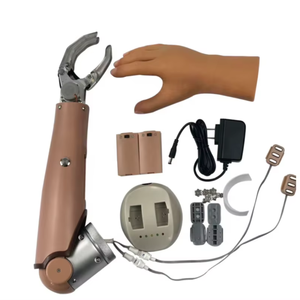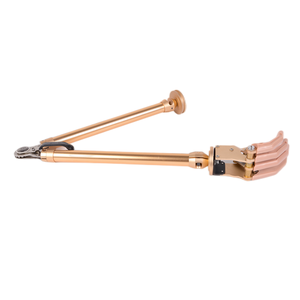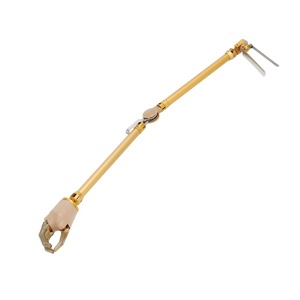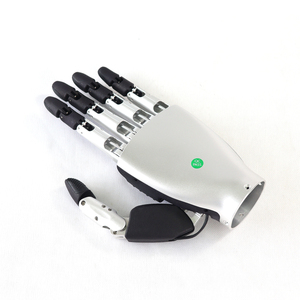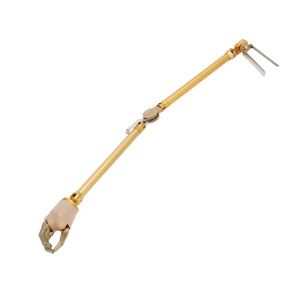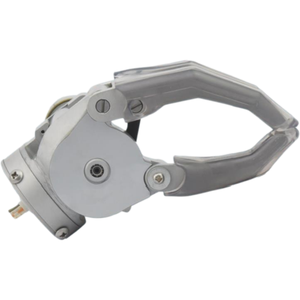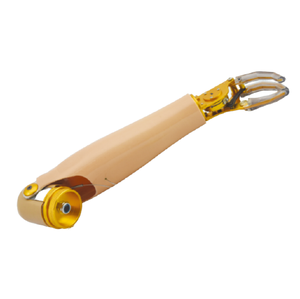
Arm Prosthesis Cable Control Mechanical Hand & Above Elbow System
- Control Mechanism: Heavy-Duty Cable
- Amputation Level: Transhumeral
- Material Specs: Titanium Rod Structure
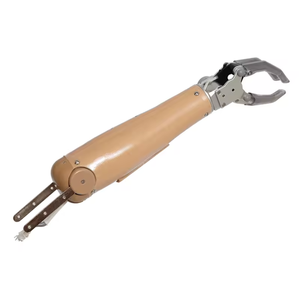
Engineered for global medical equipment distributors, hospital procurement groups, and specialized orthotic-prosthetic centers.
Combining automated robot welding, strict European CE compliance standards, and modular OEM/ODM engineering capabilities for global healthcare buyers.
All power wheelchairs and rehabilitation systems strictly comply with EU Medical Device Regulation (MDR 2017/745) and EN 12184 dynamic stability and brake performance guidelines.
Utilizing high-tensile 6061-T6 and 7075 aircraft-grade aluminum frame architectures, yielding lightweight structures (under 26kg) capable of dynamic dynamic loads up to 150kg.
Integrated dual-brushless DC motors (250W–500W) powered by safe LiFePO4 battery modules equipped with UN38.3 air-transport certified Smart Battery Management Systems.
From custom seat width adjustments (16" to 22"), specialized posture support, to branded control units and customized chassis colorways, we deliver tailored bulk orders.
Every single unit undergoes 100% automated bench testing, dynamic incline braking validation, electromagnetic compatibility (EMC) testing, and endurance fatigue cycling.
Established export channels across North America, the European Union, the Middle East, and Asia Pacific with streamlined customs documentation, CE declarations, and fast lead times.
An in-depth whitepaper report on materials science, drive motor innovations, regulatory shifts, and intelligent control architecture in modern power mobility manufacturing.
The global power wheelchair industry is undergoing a fundamental structural transition from traditional brushed DC motor systems with heavy worm gearboxes toward ultra-efficient Brushless DC (BLDC) hub motors and direct-drive gearless powertrains. Traditional gearboxes suffer from mechanical backlash, high friction losses (reducing thermal efficiency to under 65%), and elevated acoustic noise.
In contrast, integrated BLDC hub motors eliminate mechanical gear friction, pushing power efficiency beyond 88% and extending single-charge battery range by up to 35%. Furthermore, direct-drive hub motors integrate electromagnetic regenerative braking systems (EABS), which immediately lock the drive wheels when the joystick returns to neutral—preventing vehicle slippage on inclines up to 12 degrees.
Battery technology represents a critical vector of innovation for commercial power wheelchair factories. Historically, Sealed Lead-Acid (SLA) and AGM batteries dominated market share due to low upfront manufacturing costs. However, their heavy weight-to-energy ratio (approx. 30Wh/kg) severely limits vehicle portability.
Modern CE-certified manufacturing prioritizes Lithium Iron Phosphate (LiFePO4) chemistry, offering key structural advantages:
The convergence of power wheelchairs and bionic rehabilitation equipment (such as myoelectric prosthetic limbs) is driven by standardized digital bus protocols. Modern high-end power wheelchairs incorporate CAN-bus (Controller Area Network) communications, allowing real-time telemetry exchanges between the master joystick unit, motor controller, electronic differential lock, and battery management system (BMS).
Furthermore, leading manufacturing facilities are embedding ultrasonic sensor arrays, LiDAR obstacle detection, and AI-assisted slope torque adjustment. This architecture lays the foundation for indoor autonomous mapping and tele-diagnostic remote monitoring—allowing healthcare operators to monitor motor thermal load, battery health, and maintenance cycles in real time via cloud platforms.
The table below highlights the engineering evolution between legacy power wheelchairs and modern CE-compliant OEM manufacturing platforms:
| Engineering Spec | Legacy Power Wheelchair Standards | Next-Gen CE Certified Platform | Clinical & B2B Procurement Advantage |
|---|---|---|---|
| Chassis Material | Heavy Carbon Steel Frame | 6061-T6 Aircraft Aluminum / Carbon Fiber | Reduces frame weight by 45%, increases corrosion resistance |
| Motor Technology | 24V 250W Brushed Motor + Worm Gearbox | 24V 250W BLDC Hub Motor with Regenerative EABS | Zero gearbox wear, silent operation, extended motor lifespan |
| Battery Chemistry | 24V 20Ah Sealed Lead Acid (SLA) | 24V 12Ah / 20Ah LiFePO4 with Smart BMS | Fast charging (2-3 hrs), 5x longer cycle life, flight-approved |
| Control Interface | Analog Microcontroller Joystick | 32-bit Digital CAN-Bus Processor with LCD display | Precision speed control, customizable acceleration profiles |
| Safety Compliance | Basic ISO 7176 Testing | EN 12184, ISO 7176, IEC 60601-1-2 EMC Certified | Full compliance with EU MDR 2017/745 for hospital usage |
| Foldability Mechanism | Manual Multi-Step Disassembly | One-Touch Automatic / Quick-Fold Lock System | Folds within 3 seconds; compact trunk storage for users |
Key drivers shaping global procurement decisions for hospital chains, government tenders, and mobility distributors.
Global healthcare buyers are increasingly seeking manufacturers who offer integrated product ecosystems. Combining power wheelchairs with upper-limb prosthetic components and lower-limb orthoses allows unified purchasing, lower freight costs, and standardized spare-part inventory management across regional distribution hubs.
With the full implementation of EU MDR 2017/745 and updated FDA 510(k) clearance requirements, buyers require factories to provide comprehensive Technical Documentation Files (TDF), Risk Management Plans (ISO 14971), and continuous post-market surveillance (PMS) data. Purchasing from verified CE-certified factories reduces compliance liability.
ESG (Environmental, Social, and Governance) requirements are now standard in public healthcare tenders. Modern manufacturing plants utilize lead-free powder coating processes, 100% recyclable aluminum components, and eco-friendly battery recycling protocols to satisfy international environmental standards.
Addressing essential technical, certification, OEM customization, and shipping queries for international power wheelchair purchasing.
Our manufacturing facility operates under ISO 13485:2016 quality management systems. Our electric power wheelchairs are CE marked, complying with European Medical Device Regulations (MDR 2017/745) and EN 12184 safety standards. Additionally, our lithium batteries hold UN38.3, MSDS, and IEC 62133 flight safety certificates.
Yes. As a direct manufacturer, we offer complete OEM/ODM solutions. We can customize chassis frame colors, seat cushion materials, control joystick algorithms, packaging design, and brand logo placement. We also accommodate engineering modifications such as heavy-duty weight capacity upgrades or specialized controller programming.
For standard models, lead time is 15 to 25 calendar days for a 20ft container (approx. 120–150 power wheelchairs depending on foldability). Customized OEM orders typically require 30 to 40 days for initial production, raw material validation, and final 100% bench quality testing.
We provide a 2-year factory warranty on structural frames and a 1-year warranty on electronic components, controllers, and motors. For bulk orders, we provide a 1% to 2% complimentary spare-part kit (joysticks, wear tires, cables, control boards) along with complete technical repair manuals and remote video training.
Every wheelchair undergoes rigorous dynamic testing per ISO 7176 standards, including dynamic slope climbing (up to 12°), static stability testing, electromagnetic compatibility (EMC) testing, dynamic brake distance validation on wet/dry surfaces, and a 100,000-cycle drum fatigue stress test.
Yes. Models equipped with our 24V 6Ah or 24V 10Ah lithium battery modules fall under the 300Wh capacity limit specified by IATA. The batteries feature a quick-release mechanism allowing users to detach the pack and carry it onboard as cabin luggage, while the compact folded frame is safely stowed in cargo.
Connect with our engineering and export team today to receive detailed technical datasheets, factory pricing tiers, and OEM production lead times for CE-certified power wheelchairs and bionic rehabilitation devices.