
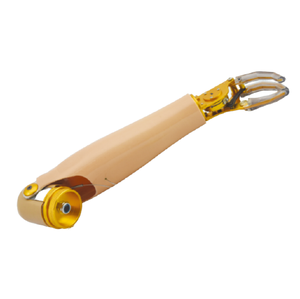
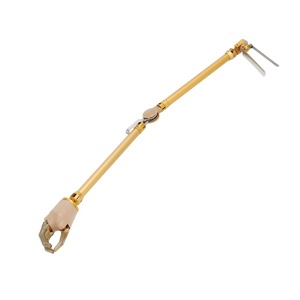
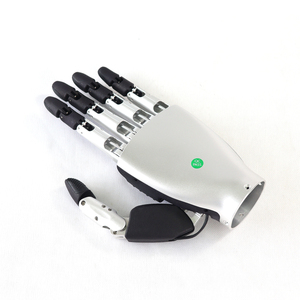
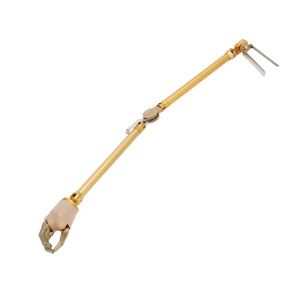
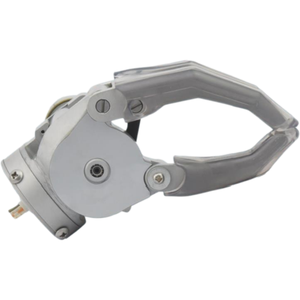
Arm Prosthesis Cable Control Style Prosthetic Hand
High-tensile skeletal rods | Cable traction tensioner
Contact Us
Engineered for maximum patient compliance, anatomical correction, and long-term durability. Direct factory supply for global healthcare distributors, orthopedic hospitals, and clinical partners.
In modern orthopedic rehabilitation and occupational health, postural deviation—manifesting as upper thoracic kyphosis, forward head posture (FHP), clavicular misalignment, and lumbar lordosis strain—represents one of the fastest-growing global musculoskeletal pathologies. As a premium CE Certified Posture Corrector Manufacturer & Supplier established in 2005 in Pune, India (Singar Rehab / Lynncare Medical enterprise complex), our engineering philosophy bridges the gap between passive structural immobilization and dynamic neurological re-education.
Commercial posture supports often suffer from low clinical compliance due to axillary nerve impingement, tissue ischemia, and poor material breathability. Modern medical-grade posture correctors demand a multi-vector force distribution system that targets the thoracic-lumbar junction while maintaining ergonomic compliance under CE Medical Device Regulation (MDR 2017/745) Class I parameters.
Procuring medical orthoses requires stringent regulatory verification to prevent product recalls and ensure patient safety. Our manufacturing ecosystem operates strictly under ISO 13485:2016 Quality Management Systems, ensuring every batch of posture correctors meets international clinical requirements.
Postural braces and spinal support orthoses intended for prevention, monitoring, or alleviation of human posture deformity are categorized as Class I non-invasive medical devices. CE certification requires exhaustive technical documentation, including:
| Compliance Parameter | Standard & Test Method | Medical-Grade CE Certified Corrector | Non-Certified Retail Braces |
|---|---|---|---|
| Cytotoxicity & Skin Irritation | ISO 10993-5 / ISO 10993-10 | Zero skin reactivity, hypoallergenic biocompatible fabrics | Unverified synthetic dyes, risk of contact dermatitis |
| Tensile & Seam Integrity | ASTM D5034 Grab Test | Strap pull force > 450 N without seam tear or deformation | Seam failure at < 180 N under continuous tension |
| Stay Flexural Rigidity | ISO 178 Bending Test | High-memory tempered steel / resilient fiberglass stays | Soft PVC strips that permanently deform after 3 days |
| REACH & RoHS Compliance | EU Directive 2011/65/EU | Free from Phthalates, Lead, Polybrominated Biphenyls | Contains toxic plasticizers and heavy metal residues |
As a specialized original equipment manufacturer (OEM), our production lines support diverse anatomical configurations tailored for adult rehabilitation, pediatric scoliosis management, and ergonomic occupational safety.
Designed for severe postural Kyphosis and post-surgical spinal stabilization. Features dual vertical contoured stays that align along the paravertebral musculature, complemented by an abdominal compression belt to increase intra-abdominal pressure and reduce L4-L5 intervertebral disc stress.
Targeted shoulder retraction and upper thoracic alignment. Ideal for office workers suffering from Computer Posture Syndrome. Compact, discreet profile suitable for under-garment wear without profile visibility.
| Specification Model | Target Pathology | Primary Material Composition | Available Sizes | Custom OEM Options |
|---|---|---|---|---|
| Model PC-PRO-01 | Clavicle Fractures, Round Shoulders | Neoprene, EVA Foam, Nylon Webbing | S, M, L, XL, XXL | Logo silkscreen, colorways, retail box |
| Model TLSO-MED-05 | Thoracic Kyphosis, LSO Stabilization | 3D Air Mesh, Aluminum Stays, PU Leather | M, L, XL, 3XL | Custom stay curvature, private label |
| Model SMART-BIO-09 | Forward Head Posture, Habitual Slouching | Elastane, ABS Enclosure, Silicon Sensors | Universal Adjustable | App UI localization, custom firmware |
Insights for institutional buyers, medical distributors, and retail brand managers navigating evolving market demands and technological shifts.
The posture support industry is transitioning rapidly from purely passive structural restraints to hybrid dynamic feedback systems. Next-generation posture correctors feature embedded 9-axis MEMS gyroscopes and accelerometer sensors that monitor spine deflection angles in real-time. When a user strays past a pre-set threshold (e.g., >15° forward tilt for more than 20 seconds), a silent haptic vibration motor triggers, signaling the user to actively engage their postural muscles. Institutional buyers should prepare for smart orthosis lines that integrate Bluetooth Low Energy (BLE) for clinical remote patient monitoring (RPM).
With Western European and North American buyers imposing stricter ESG (Environmental, Social, and Governance) purchasing guidelines, traditional petroleum-based synthetic neoprenes are facing regulatory scrutiny. Procurement trends lean toward recycled polyethylene terephthalate (rPET) yarns, bio-based closed-cell foams derived from sugarcane, and solvent-free water-based polyurethane coatings. Manufacturers certified under Global Recycled Standard (GRS) offer significant competitive advantages in international tender bidding.
Prolonged screen interaction via tablets and smartphones has dramatically increased the incidence of juvenile postural spinal misalignment. The demand for pediatric posture correctors engineered specifically for developing skeletons—featuring soft dynamic resistance and non-restrictive thoracic expansion—is growing at a CAGR of 11.4% globally. B2B importers are increasingly adding pediatric-specific SKU lines to cater to school health programs and specialized pediatric rehabilitation centers.
E-commerce brand aggregators and healthcare chains require rapid product customization cycles. Modern manufacturers must provide end-to-end OEM services including custom mold development for ergonomic buckles, personalized colorways, custom barcode labeling, and DDP (Delivered Duty Paid) fulfillment directly to international fulfillment hubs. Flexibility in Minimum Order Quantities (MOQs) for specialized clinical variants is becoming a crucial selection metric for procurement directors.
Essential guidance for purchasing agents, medical supply distributors, and hospital procurement officers evaluating CE-certified posture corrector manufacturers.
Every shipment of our CE-marked posture supports is accompanied by an official EU Declaration of Conformity (DoC), ISO 13485 Quality Certificate, Technical File documentation according to EU MDR 2017/745, and material biocompatibility test reports (ISO 10993-5/10) from accredited third-party laboratories.
For standard stocked models under our factory brand, the MOQ starts at 100 units. For custom OEM private label orders (featuring custom logo printing, specialized color packaging, and custom sizing), the standard MOQ is 500 to 1,000 units per style, depending on fabric dye requirements.
We utilize multi-needle computer-controlled automated stitching machines running high-tenacity bonded nylon threads (T-70 grade). Seams undergo rigorous computerized tensile force testing to ensure they withstand pulls up to 500 N without structural tear or unraveling.
Yes. Our engineering department works directly with orthotists and clinical specialists to produce customized spinal orthoses featuring rigid or semi-rigid aluminum/fiberglass stays tailored to specific spinal curvature radii (Cobb angle support).
Sample evaluation units are dispatched within 3 to 5 business days. Standard production orders of 5,000 to 10,000 units are completed within 18 to 25 calendar days. Express air freight and sea container shipping solutions are managed through our integrated logistics partners.
Absolutely. We strictly enforce OEKO-TEX Standard 100 and ISO 10993 compliance across all raw materials. Our fabrics, foam liners, and elastic bands are free of toxic vulcanization agents, latex allergens, and heavy metal dyes, ensuring zero skin irritation during prolonged wear.
We enforce a strict 4-stage Quality Inspection protocol: Raw Material Receiving Inspection (IQC), In-Line Sewing Inspection (IPQC), 100% Finished Product Inspection (FQC), and Pre-Shipment Audit (OQC) maintaining an AQL of 1.0. Any manufacturing defect is replaced 1-for-1 free of charge.
Yes. Our electronics R&D division provides white-label SDKs and API integration for our BLE smart posture sensors, allowing healthcare providers and retail brands to launch custom iOS and Android posture tracking apps under their own brand identity.
Operating since 2005 out of Jagtap Nagar, Pune, Maharashtra, India (Singar Rehab / Lynncare Medical), our enterprise brings over two decades of specialized orthopedic and prosthetic manufacturing heritage. Unlike trading agents, our direct manufacturing model guarantees full operational transparency and cost advantages.
Eliminate middleman markups. Direct factory sourcing delivers up to 30% cost savings on high-volume procurement, allowing competitive margin structures for distributors and retailers.
Our facility houses CAD/CAM 3D prototyping, textile lamination lines, metal stay bending equipment, and cleanroom assembly cells for bio-electronic sensors under one roof.
Serving over 20 countries across North America, Europe, the Middle East, and Southeast Asia with verified TrustSEAL status and fully insured global shipping protocols.
Connect directly with our engineering and international export team. We provide rapid sample dispatch, complete CE MDR technical files, and customized pricing structures within 24 hours.