
Executive Overview & Enterprise Manufacturing Capabilities
In the modern clinical supply chain, hospital systems, trauma response units, and orthopedic distributors require medical splint solutions that combine uncompromising anatomical immobilisation with stringent regulatory compliance. As a leading specialized manufacturer of medical devices, our production facilities integrate bio-compatible polymer processing, precision alloy stamping, and automated textile assembly to deliver CE-certified medical splints designed for immediate emergency trauma care and extended post-operative rehabilitation.
Under strict adherence to ISO 13485 quality systems and the European Union Medical Device Regulation (EU MDR 2017/745), our manufacturing matrix guarantees complete batch traceability, rigorous bio-burden controls, and non-cytotoxic material validation (ISO 10993). Whether supplying emergency flexible roll splints for pre-hospital trauma response or rigid adjustable lower-limb orthoses for post-surgical correction, our engineering pipeline optimizes both patient recovery outcomes and B2B procurement efficiency.
Enterprise Core Competencies & Quality Assurance
Our OEM/ODM manufacturing capability spans over 25,000 square meters of cleanroom assembly space, utilizing high-precision ultrasonic welding, computer-controlled foam lamination, and automated alloy tempering. We maintain dedicated testing laboratories to evaluate tensile stress resilience, radiolucency permeability, and skin irritation parameters across every production run.
Material Science
Sourcing medical-grade IXPE closed-cell foam, 6061-T6 annealed aluminum alloys, and breathable hypoallergenic PPCP plastics to ensure ultra-lightweight, skin-safe durability.
OEM & ODM Scaling
Rapid tooling, custom color matching, private-label packaging, and tailored dimensional specifications supported by in-house CAD/CAM rapid prototyping teams.
Supply Chain Resilience
High-volume manufacturing capacity backed by buffer stock inventory programs, direct export logistics, and guaranteed lead-time SLAs for emergency relief orders.
Biomechanical Taxonomy & Clinical Application Matrix
Medical splints fulfill distinct clinical objectives depending on anatomical positioning, acute versus chronic pathology, and the stage of patient recovery. Our comprehensive product portfolio is structurally engineered across three core medical categories:
1 Upper Extremity Fixation & Carpal Stabilisation Orthoses
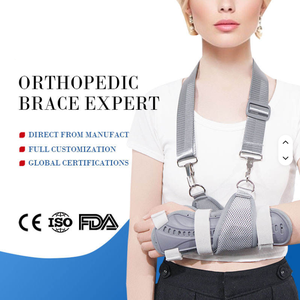
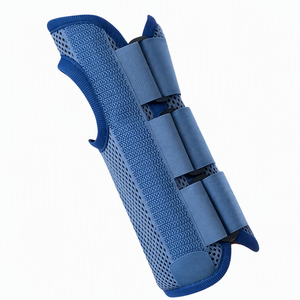
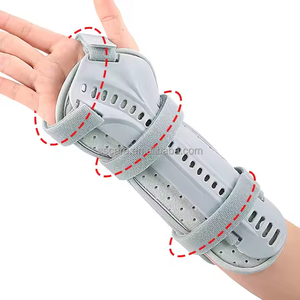
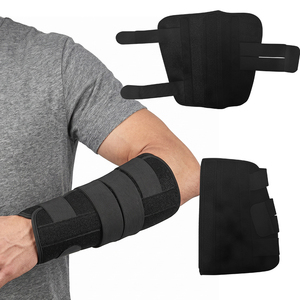
Injuries to the wrist, forearm, and phalanges demand rigid motion restriction while preserving tactile dexterity in uninvolved digits. Products such as our Adjustable Orthopedic Hand Palm Support Brace and Medical Grade Adjustable Wrist External Fixation Orthosis feature contoured, malleable metal stays that encapsulate the radiocarpal joint. By placing the wrist in a neutral anatomical position, tendon sheath pressure within the carpal tunnel is minimized, accelerating healing during acute tendinitis or distal radius fractures.
2 Lower Extremity & Gait Corrective Splinting Systems
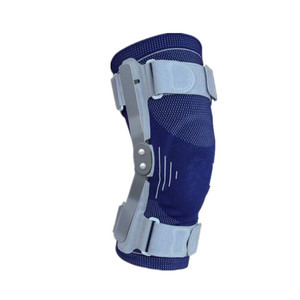
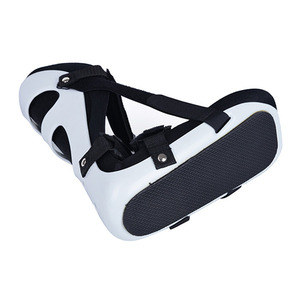
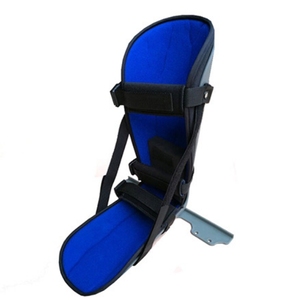
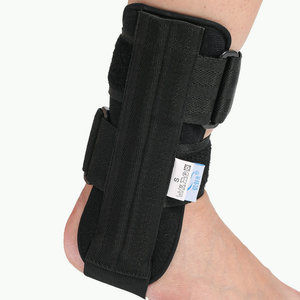
Lower limb orthoses must manage substantial ground reaction forces while maintaining rotational and planar stability. Our Orthopedic Rigid Splint Corrective Knee Foot Orthosis and Orthopedic AFO Drop Foot Splints utilize semi-rigid polypropylene splints combined with dynamic dorsiflexion tension bands. For nocturnal rehabilitation, the OL-NS001 Plantar Fasciitis Night Splint applies continuous passive stretch to the plantar aponeurosis and Achilles tendon, preventing morning micro-tearing and persistent heel pain.
3 Emergency Pre-Hospital & Trauma Roll Splints
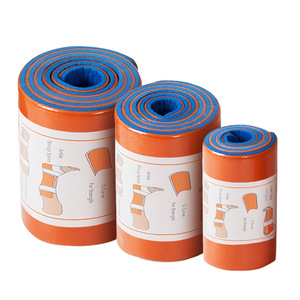
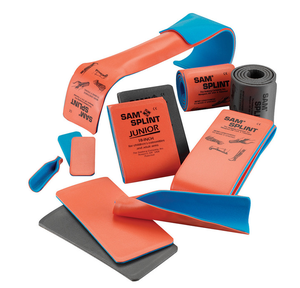
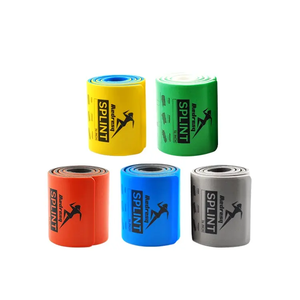
First responders, military medics, and disaster relief organizations require ultra-compact, moldable immobilizers. Manufactured from a thin aluminum alloy core sandwiched between non-toxic IXPE foam layers, our Medical Immobilization Flexible Roll Splints and Medresq Emergency Splints are completely radiolucent, waterproof, and reusable. They can be bent into structural curves (such as C-curve or Reverse C-curve geometry) to support any fractured extremity before transport to a clinical facility.
| Splint Category | Core Materials | Clinical Intent | Radiolucency | Compliance Standard |
|---|---|---|---|---|
| Wrist & Hand Orthoses | Breathable Neoprene / Aluminum Stays | Carpal Tunnel, Scaphoid Fracture, Post-Cast | Stays Removable for X-Ray | CE MDR Class I |
| Lower Limb AFO Systems | High-Density PPCP / Foam Padding | Drop Foot, Post-Stroke Gait Correction | 100% Radiolucent Shell | CE MDR Class I |
| Emergency Roll Splints | IXPE Foam / 6061-T6 Aluminum Core | Pre-Hospital Fracture Immobilization | Fully X-Ray & CT Scan Permeable | CE MDR Class I |
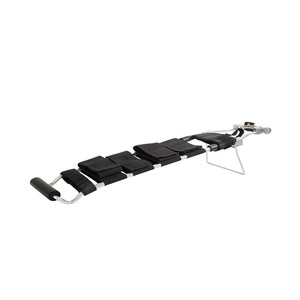
| Leg Traction Devices | Carbon Fiber / High-Tensile Steel Ratchet | Femur Fracture Mechanical Traction | Partial (Metal Joints) | CE MDR Class I |
| Plantar Fasciitis Night Splints | Injection Molded ABS / Velvet Cushion | Nocturnal Dorsiflexion Stretching | Fully Radiolucent | CE MDR Class I |
Global Regulatory Frameworks & Compliance Standards
Navigating the global regulatory landscape for medical devices requires absolute fidelity to manufacturing and quality control standards. As an established factory direct supplier, our production facility maintains complete technical documentation to streamline international customs clearance and hospital procurement audits.
CE Marking & EU MDR 2017/745
Our medical splints are fully registered as Class I Medical Devices under European Union legislation, backed by Technical Files, Risk Management Assessments (ISO 14971), and EU Declaration of Conformity.
ISO 13485 Quality Management
Certified quality control protocols govern every stage of manufacturing—from raw material verification and inline automated stitching to cleanroom packaging and batch sterilization.
Biocompatibility & Safety
All patient-contact fabrics and foam linings undergo rigorous testing in according to ISO 10993-5 (Cytotoxicity) and ISO 10993-10 (Irritation and Skin Sensitization) to prevent contact dermatitis.
Future Procurement Trends & Manufacturing Innovations (2025–2030)
The global orthotic and fracture management market is undergoing significant technological advancement driven by smart materials, patient-centric customization, and environmental sustainability. Forward-thinking healthcare buyers must align with manufacturers that actively invest in next-generation production methodologies.
1. Sensor-Integrated Smart Orthoses
Future iterations of rigid splints and AFO braces are incorporating ultra-thin flexible pressure sensors and inertial measurement units (IMUs). These integrated sensors allow clinicians to monitor joint angle compliance, gait symmetry, and localized pressure distributions in real time, alerting caregivers to potential skin breakdown or poor patient compliance.
2. Eco-Friendly Bio-Polymers & Circular Manufacturing
In response to international sustainability mandates, our R&D division is pioneering the use of bio-based, recyclable thermoplastics and ocean-bound recycled polymer textiles. By transitioning from traditional petrochemical foams to bio-derived IXPE matrices, medical distributors can significantly lower their carbon footprint without sacrificing structural integrity or biocompatibility.
3. Hybrid 3D-Printed Anatomical Customization
While mass-manufactured standard splints remain the backbone of acute trauma care, post-surgical recovery is shifting toward hybrid fabrication. Combining standardized modular metallic joints with custom 3D-scanned and printed shell frameworks enables rapid creation of patient-matched orthoses directly within hospital supply chains.
Manufacturing Workflow & Comprehensive Quality Assurance Protocols
To deliver flawless products across high-volume OEM production orders, our factory operates an end-to-end quality assurance pipeline designed to eliminate defect risks before products leave our export facility.
Standard Operating Procedure (SOP) Manufacturing Stages:
- Raw Material Inspection (IQC): Spectrographic analysis of aluminum alloy purity, foam density testing, and tensile strength validation of industrial-grade hook-and-loop fasteners.
- Automated CNC Stamping & Shaping: Precision cutting of aluminum stays and polymer shells to guarantee sub-millimeter dimensional uniformity.
- Ultrasonic & Sewing Lamination: Reinforced multi-needle stitching paired with high-frequency ultrasonic edge bonding to prevent fabric fraying during repeated washing cycles.
- In-Line Assembly Inspection (IPQC): 100% manual check of strap tension retention, buckle locking integrity, and metal stay contour accuracy.
- Final Packaging & Cleanroom Sealing (FQC): Dust-free blister packaging, barcode serialization, and humidity-controlled Master Carton packing compliant with EN ISO 11607 standards.
Frequently Asked Questions (B2B Procurement FAQ)
What is the Minimum Order Quantity (MOQ) for custom OEM medical splint manufacturing?
Are your emergency roll splints and wrist orthoses completely radiolucent for X-ray imaging?
What regulatory documentation do you provide for European and North American customs clearance?
How do you ensure product durability and washability in long-term patient recovery products?
What is the typical production lead time for bulk export orders?
Can we request custom molding or anatomical size adjustments for specialized clinical trials?
Partner with an Industry-Leading Medical Splint Manufacturer
Streamline your medical procurement with CE-certified quality, competitive factory-direct pricing, and reliable global supply chain logistics. Request a custom quote or technical consultation today.