CE MDR & ISO 13485 CERTIFIED MANUFACTURING FACILITY

CE Certified Manual Wheelchair Factory & Exporters

Global B2B Sourcing Architecture, Clinical Engineering Benchmarks & Integrated Mobility Solutions for International Healthcare Suppliers

Featured Assistive Limbs & Rehabilitation Systems

Direct factory distribution of CE-marked prosthetics, orthotic dynamic systems, and specialized mobility hardware for global institutional procurement.
Arm Prosthesis Cable Control Style Prosthetic Hand

Arm Prosthesis Cable Control Style Prosthetic Hand & Above Elbow Arm

Get a Quote
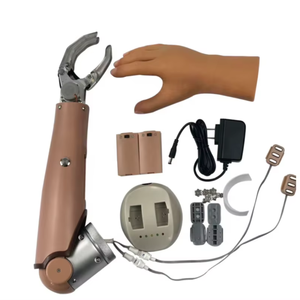
Prosthetic Arm Dual-degree Myoelectric Prosthesis

Prosthetic Arm with 2 Degrees of Freedom & Dual-Degree Myoelectric Elbow

Get a Quote
Myoelectric Prosthetic Arm Class I

Myoelectric Prosthetic Arm with Two Degrees of Freedom (Class I Medical Device)

Get a Quote
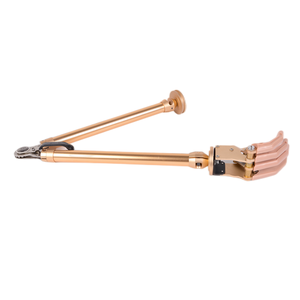
Cosmetic Upper Arm Prosthesis Mechanical Skeleton

Cosmetic Upper Arm Prosthesis with Mechanical Skeleton Rod System

Get a Quote
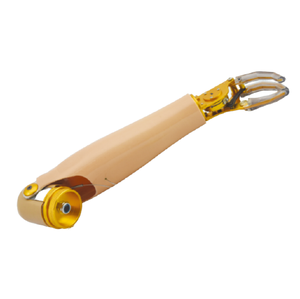
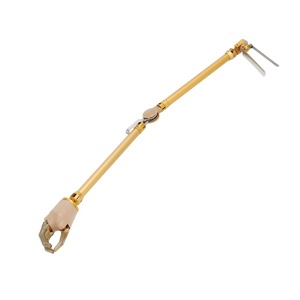
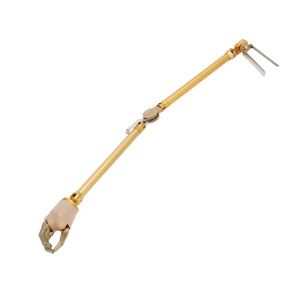
Gold-Tone Upper Limb Prosthetic Component

Gold-Tone Upper Limb Prosthetic Arm Component with Ball Joint & Split Hook

Get a Quote
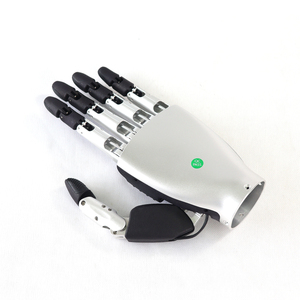
Humanoid Robot Bionic Hand RS485

Humanoid Robot Bionic Hand Prosthetic Artificial Arm (RS485 Bus Control)

Get a Quote
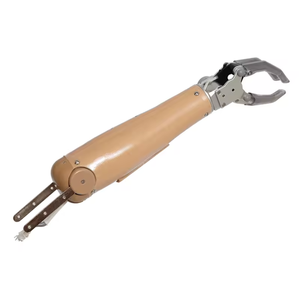
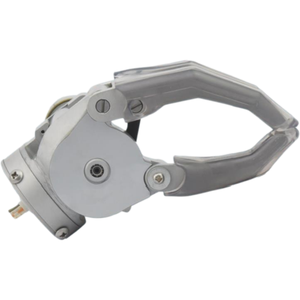
Adult Above Elbow Prosthetic Arm Hook Hand

Adult Above Elbow Prosthetic Arm with Hook Terminal for Rehabilitation

Get a Quote
Myoelectric Arm Prosthesis Double Channels

ASSJQ12B-M Myoelectric Arm Prosthesis 1 DOF Double Channel System

Get a Quote
20+
Years Manufacturing Excellence
500+
Active Clinical Product Lines
ISO 13485
Quality Certified Factory
20+
Global Export Markets

B2B Procurement Trends in Manual Wheelchairs & Assistive Hardware (2025–2030)

The global medical mobility device market is undergoing a paradigm shift driven by demographic aging, evolving healthcare regulations, and rising demand for ergonomic, custom-configurable mobility solutions. For B2B procurement directors, hospital supply chain executives, and regional medical distributors, sourcing CE Certified Manual Wheelchairs directly from certified OEM factories has transformed from a simple purchasing decision into a strategic risk-mitigation model.

As European and North American healthcare systems enforce strict compliance parameters under the EU Medical Device Regulation (MDR 2017/745) and FDA 510(k) clearances, factory-level traceability and mechanical reliability are paramount. Modern buyers are shifting away from generic carbon-steel manual chairs toward high-strength aluminum alloy and ultra-lightweight titanium models engineered to deliver superior structural stability, low rolling resistance, and modular adaptability.

Key Market Insight (Information Gain): Modern institutional tenders increasingly require double-cross-brace structural frames tested to withstand dynamic fatigue loads up to 200,000 cycles under ISO 7176-8 benchmarks, combined with flame-retardant, antimicrobial upholstery for infection control.

Lightweight Metallurgy

Transition from heavy mild steel to aerospace-grade 6061-T6 aluminum alloys reduces overall weight by 35% without sacrificing frame rigidity or user payload capacity (up to 150 kg standard rating).

Ergonomic Biomechanics

Multi-position center-of-gravity adjustments, quick-release pneumatic rear wheels, and adjustable backrest angles minimize upper-extremity repetitive strain injuries during long-term manual self-propulsion.

Infection Control Standards

Integration of high-density PU foam seating wrapped in waterproof, anti-fungal, and flame-retardant synthetic upholstery conforming to EN 1021-1/2 fire safety standards for intensive hospital usage.

Technical Engineering Benchmarks & Product Material Matrix

Evaluating manual wheelchair factories requires a rigorous comparison of structural mechanics, metal treatment protocols, and dynamic testing compliance. The technical table below outlines the material parameters engineered into our manufacturing lines, ensuring seamless compliance across global procurement specifications.

Performance Standard / Specification Standard Institutional Manual Wheelchair Lightweight Active Aluminum Series Ultra-Light Bariatric / Custom Series
Primary Frame Construction Chromed / Powder-Coated Steel Frame 6061-T6 Heat-Treated Aluminum Alloy Reinforced Dual-Cross Brace Hydroformed Alloy
Maximum Payload Capacity 100 kg (220 lbs) 125 kg to 135 kg 180 kg to 250 kg (Bariatric Grade)
Unit Tare Weight 16.5 kg – 18.5 kg 11.2 kg – 13.0 kg 14.0 kg – 16.0 kg
ISO 7176 Static & Dynamic Testing Passed 100,000 Cycle Drop Test Passed 200,000 Cycle Fatigue Test Passed Heavy-Duty Dynamic Impact (ISO 7176-8)
Wheel & Caster Configuration 8" Solid PVC Front, 24" MAG Rear 6" Soft-Roll PU Front, 24" Quick-Release Spoke 8" Reinforced Aluminum Caster Fork, Heavy MAG
Braking & Safety Mechanics Toggle Push-to-Lock Wheel Brakes Ergonomic Aluminum Scissors Brakes Attendant Drum Brakes + User Dual Locks
International Certification CE Mark (MDR EU 2017/745), ISO 9001 CE Mark, ISO 13485, FDA Cleared CE Mark, ISO 13485, Crash Tested (ISO 7176-19)

Factory Quality Control Protocols (QA/QC)

Every manual wheelchair unit leaving our export facility undergoes systematic non-destructive testing (NDT), weld integrity inspections via automated robotic welding systems, salt spray corrosion tests (ASTM B117 standard > 96 hours), and impact resistance validation for caster assemblies. This guarantees zero-defect deliveries for high-volume overseas shipments.

Enterprise Sourcing Advantages & Global OEM/ODM Synergies

Building upon decades of medical device manufacturing experience—originating through specialized production lineages such as Singar Rehab and expanded globally via advanced supply chains like Lynncare Medical—our enterprise offers unparalleled operational infrastructure for OEM and ODM clients worldwide.

1. Complete Vertical Integration

From aluminum tube hydroforming, CNC precision machining, laser cutting, and automatic powder-coating lines to final clinical assembly, full end-to-end control keeps costs competitive and lead times predictable.

2. Private Labeling & Custom Tooling

We support full OEM branding including customized frame powder-coating shades, laser-engraved corporate logos, bespoke upholstery stitching, and specialized packaging boxes engineered for e-commerce or retail drop-shipping.

3. High-Density Shipping Logistics

Our engineered CKD (Completely Knocked Down) and SKD (Semi-Knocked Down) packaging protocols maximize container loading efficiency, fitting up to 320 standard units in a 40ft High Cube container to cut ocean freight costs per unit.

Frequently Asked Questions (B2B Sourcing & Export FAQ)

Detailed answers addressing technical compliance, MOQ parameters, OEM customization, and global delivery frameworks for procurement professionals.
1. What international regulatory certifications do your manual wheelchairs hold?
Our manual wheelchairs and rehabilitation devices hold comprehensive CE marking under the European Union Medical Device Regulation (EU MDR 2017/745) Class I Medical Devices. Furthermore, our manufacturing plants operate strictly under ISO 13485:2016 Medical Devices Quality Management System standards, ensuring full audit compliance for EU, Middle Eastern, South American, and Asian import authorities.
2. What is your Minimum Order Quantity (MOQ) for OEM/ODM and bulk procurement?
For standard catalog models, our base MOQ starts at 50 units. For full custom OEM requests (including custom frame painting, branded upholstery, and customized user manual printing), the standard MOQ is 100 units or 1x20ft FCL container. Mixed-model container loads are fully supported for long-term distributor partners.
3. Can you provide custom frame dimensions and clinical seating configurations?
Yes. We offer fully customizable seat widths ranging from 14-inch (pediatric/slim adult) to 22-inch (bariatric), seat-to-floor heights, swing-away or elevating leg rests, and specialized anti-tippers. Our R&D engineering team can work directly from your clinical CAD specifications.
4. How do you guarantee the quality and durability of wheelchair structural welds?
Our production facility utilizes automated robotic MIG/TIG welding cells for precise joint penetration and visual consistency. Every batch undergoes random destructive stress tests, drop impact tests (ISO 7176-8), and multi-axis dynamic fatigue testing to guarantee structural integrity up to 5 years of daily use.
5. What are the typical lead times for mass production and global shipping?
Standard production turnaround for a 40ft container order (approx. 250-320 units) is 25 to 35 calendar days from artwork approval and deposit confirmation. Express sample production and pre-shipment prototype inspections can be completed within 7 to 10 days.
6. What warranty coverage and spare parts replacement policies are provided?
We provide a standard 3-year factory structural warranty on manual wheelchair frames and cross-braces, alongside a 1-year limited warranty on wearable parts (casters, solid tires, brake pads, and armrest pads). We supply 2% free wearable spare parts with every full container shipment.
7. How do your products handle harsh coastal or high-humidity tropical climates?
Our aluminum alloy frames feature anodic oxidation treatment, while carbon steel variants undergo multi-stage electro-phoretic dipping combined with high-grade outdoor epoxy powder coating. This prevents oxidation, pitting, and rusting even under high-salinity coastal environmental conditions.
8. What payment terms and international trade terms (Incoterms) do you support?
We support standard FOB, CIF, CFR, DDP, and EXW shipping terms. Payment options include Telegraphic Transfer (T/T 30% deposit, 70% against Bill of Lading), Irrevocable Letter of Credit at sight (L/C), and structured trade financing for established government supply contractors.

Partner with a Certified Manual Wheelchair & Assistive Device Manufacturer

Streamline your medical equipment supply chain with direct factory pricing, ISO 13485 quality assurance, and CE compliant manufacturing. Contact our international B2B engineering team today for instant quotes and technical specifications.