Expert articles, patient care guides, and technical innovations in artificial limbs and orthotics.
Explore ArticlesUnderstanding gait correction, foot-drop rehabilitation, and custom AFO orthoses technology.
Read ArticleErgonomic designs and powered mobility solutions empowering patient independence worldwide.
Read ArticleComprehensive guides on amputation level solutions, socket fitting, and bio-mechanical alignment.
Read ArticleClinical approaches to post-operative recovery, diabetic foot care, and orthopaedic footwear.
Read ArticleAdvanced structural stabilization and full-body postural rehabilitation methods.
Read ArticleChoosing among China’s top 10 Silicone Foot Prosthesis manufacturers requires more than comparing product photos or advertised prices. A realistic evaluation considers clinical experience, material quality, fitting support, production consistency, and communication after delivery. A well-made prosthetic foot should feel stable during walking, look natural inside a shoe, and remain comfortable against sensitive skin. Small details matter, including edge thickness, toe flexibility, surface texture, and the way the socket connects to the user’s residual limb.
This guide introduces manufacturers that may serve clinics, distributors, rehabilitation centers, and individual users. It focuses on customization options, silicone formulation, molding accuracy, quality management, and international service capability. Certifications such as ISO 13485 can support credibility, but they should not replace practical verification. Buyers should request samples, technical specifications, test records, and clear warranty terms before making a decision. Direct feedback from prosthetists and users can reveal problems that brochures often hide.
Public information is not always complete. That matters. Therefore, this list should be treated as a carefully researched starting point, not a final clinical recommendation. Manufacturer rankings may change as technology, service teams, and production standards develop. A responsible buyer should confirm current certifications, lead times, return policies, and fitting procedures directly with each supplier. The best choice is rarely the cheapest one. It is the manufacturer that combines dependable craftsmanship with responsive support and a prosthetic solution suited to real daily movement.
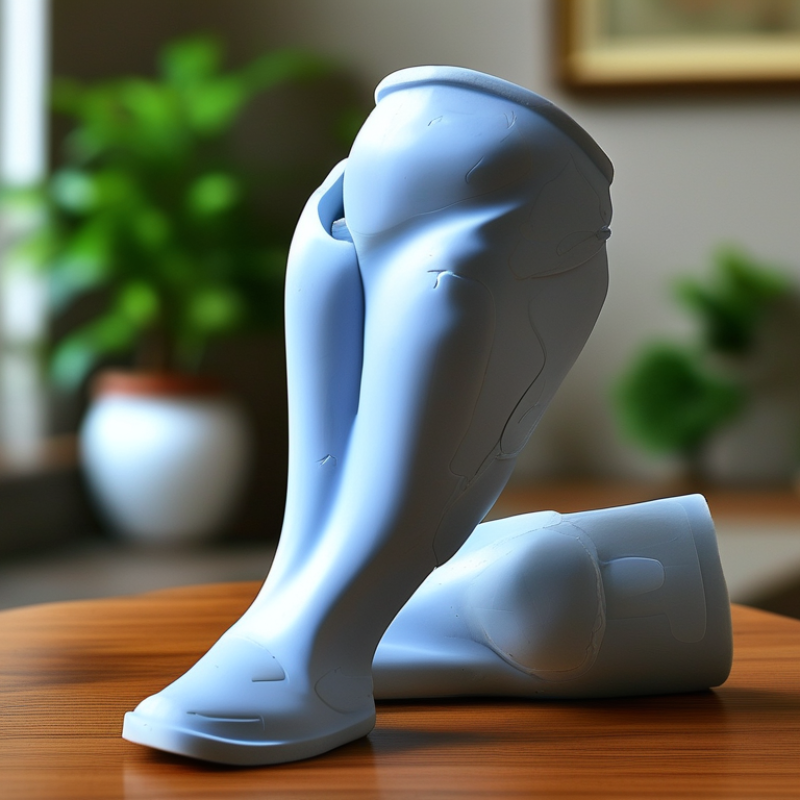
Silicone foot prostheses are custom-made devices that replace a missing toe, forefoot, or entire foot section. Medical-grade silicone forms a soft interface against the skin. It can imitate natural contours, nail shapes, and skin tones. The result is often lighter and less rigid than a traditional prosthetic structure.
Clinicians use these prostheses for cosmetic restoration, limited protection, and improved shoe fit. A partial-foot user may wear the device inside an everyday shoe. A prosthetist checks pressure points, walking balance, skin condition, and suspension. These details matter. A beautiful fit can still fail after several hours of walking. Silicone also needs regular cleaning, drying, and inspection for tears or odor.
The WHO and UNICEF Global Report on Assistive Technology (2022) estimates that more than 2.5 billion people need assistive products worldwide. This number may exceed 3.5 billion by 2050. That wider demand increases attention on affordable, personalized prosthetic care. However, global figures do not show how many users need silicone foot prostheses specifically. That gap deserves more careful reporting. Manufacturing evaluations should examine material safety, dimensional accuracy, durability, and clinical fitting support. ISO 10993-based biocompatibility assessment can help evaluate patient-contact materials, while ISO 10328 provides structural testing principles for lower-limb prosthetic components. Even then, laboratory performance cannot replace real walking trials.
Selecting a Chinese silicone foot prosthesis manufacturer requires more than checking a “Top 10” list. Evaluate practical experience, technical control, and patient-focused service. Ask how long the factory has produced lower-limb prostheses and which silicone grades it uses. Medical-grade silicone should have traceable material documents and stable softness. Request test reports for tensile strength, tear resistance, skin contact safety, and aging performance.
Study the manufacturing process closely. A reliable supplier should explain mold design, pigment mixing, curing temperature, and dimensional inspection. Ask for a sample with measured ankle movement, edge thickness, and surface texture. The foot should feel flexible, but not weak. Check whether the manufacturer can match gait needs, skin tone, shoe size, and residual-limb anatomy. Some suppliers show impressive samples, yet their mass production may differ. That gap deserves attention.
Tips: Request factory videos, inspection records, and a sample before placing a large order. Verify whether quality staff inspect every piece or only random units. Clear drawings and written specifications reduce misunderstandings. Also discuss packaging, replacement policies, delivery schedules, and communication after shipment. An on-site or independent audit can reveal cleanliness, equipment condition, and worker training. Do not rely only on polished websites or low prices. A cheaper foot may create fitting problems, extra adjustments, and delayed patient use. Keep a written evaluation record, and revise your supplier criteria after real fitting feedback.
China’s top 10 silicone foot prosthesis manufacturers are often assessed through more than catalog photos. Material quality, clinical communication, and fitting accuracy matter greatly. Experienced suppliers usually use medical-grade silicone with controlled hardness and tear resistance. The best products should feel flexible during walking, yet remain stable inside the shoe.
A careful evaluation examines the mold process, skin-tone options, ventilation, and connection design. It also checks whether technicians can adjust shape, thickness, and toe alignment. Reliable manufacturers provide documented material testing and follow applicable medical-device requirements. They should explain production limits clearly. That honesty is valuable.
Fit remains the difficult part. A realistic appearance cannot compensate for pressure, slipping, or poor balance. Buyers should request sample measurements, gait-related guidance, and after-sales adjustment policies. Communication with prosthetists is essential, especially for users with sensitive skin or changing residual anatomy. Some suppliers offer impressive customization, but their delivery estimates may be optimistic. This deserves verification.
Inspection records, batch consistency, and technician experience can reveal more than marketing language. A responsible manufacturer protects personal data and handles user measurements carefully. Buyers may also compare curing quality, surface texture, odor, and edge finishing. Small defects become obvious after hours of walking. Practical testing matters.
Comparing the top 10 silicone foot prosthesis manufacturers requires more than checking catalogs. The WHO and UNICEF Global Report on Assistive Technology estimates that 2.5 billion people need assistive products worldwide. Demand is growing, but manufacturing quality remains uneven. Experienced buyers should review silicone grade, tear strength, Shore hardness, pigment stability, and documented biocompatibility testing. ISO 10993-based evaluations can provide useful evidence, although certification alone does not guarantee comfort.
Design quality appears in small details. A realistic toe profile, flexible forefoot, stable heel, and accurate skin-tone matching affect daily confidence. Some manufacturers offer digital scanning and hand finishing. Others rely on fixed molds, which may reduce customization. Service is equally important. The strongest suppliers provide fitting guidance, sample approval, repair policies, and replacement timelines. In practice, communication delays can matter more than a small price difference. I have found that impressive product images sometimes hide limited after-sales support.
Tips: Ask for test reports, sample photos, and a written warranty. Confirm whether adjustments are available after delivery. Compare response times before ordering. Do not judge durability from softness alone. A softer silicone may feel natural, yet it can tear faster under repeated walking. Market reports often present broad growth figures, not real-world failure rates. That gap deserves careful attention.
| Rank | Anonymous Manufacturer Profile | Material & Skin Finish | Customization Capability | Design & Realism | Quality-Control Focus | Compliance Evidence to Request | Typical Service Model | Best Fit |
|---|---|---|---|---|---|---|---|---|
| 1 | Manufacturer Profile 01 | Medical-grade silicone Multi-layer pigmentation and detailed skin texture |
High; digital scanning, color matching, and individualized shaping | Excellent Strong anatomical detailing and natural transitions |
Lot traceability, dimensional inspection, and final visual inspection | ISO 13485 certificate, material documentation, and applicable market registration | Dedicated technical contact with fitting and revision support | Complex cases and premium custom prostheses |
| 2 | Manufacturer Profile 02 | Medical-grade silicone Soft-touch surface with reinforced load areas |
High; custom dimensions, pigmentation, and interface adjustments | Very strong Consistent proportions and realistic pigmentation |
Batch records, hardness checks, curing control, and packaging inspection | ISO 13485, risk-management records, and test reports where applicable | Pre-order consultation and structured after-sales communication | Clinics requiring repeatable custom production |
| 3 | Manufacturer Profile 03 | Medical-grade silicone Flexible formulation with textured external finish |
High; size, shape, color, and selected functional features | Very strong Good detail balance between realism and durability |
Incoming-material checks, mold inspection, and finished-product review | Quality manual, certificate validity, and product-specific technical file | Responsive quotation process with sample approval before production | Hospitals and distributors seeking flexible specifications |
| 4 | Manufacturer Profile 04 | Medical-grade silicone Natural matte finish and moderate elasticity |
Medium to high; standard patterns can be modified | Very strong Good color blending and contour accuracy |
Visual inspection, weight checks, curing-time control, and batch identification | ISO 9001 or ISO 13485 status should be independently verified | Factory-direct support with standard warranty terms | Routine lower-limb prosthetic applications |
| 5 | Manufacturer Profile 05 | Silicone elastomer Comfort-oriented formulation with durable surface coating |
Medium; custom sizing and selected color options | Strong Clean contours and practical cosmetic detailing |
Hardness testing, adhesion checks, and packaging controls | Material safety information, production controls, and market-specific documents | Distributor support and replacement-part coordination | Cost-conscious clinical and wholesale programs |
| 6 | Manufacturer Profile 06 | Silicone elastomer Balanced softness and tear resistance |
Medium; standard catalog sizes with limited customization | Strong Good overall appearance with fewer micro-details |
Basic incoming inspection, curing checks, and final appearance review | Request current certificates, test reports, and device classification details | Email-based support with defined production lead times | Standardized orders and private-label sourcing |
| 7 | Manufacturer Profile 07 | Silicone-based compound Firm structure designed for everyday wear |
Medium; dimensional adaptation available for selected models | Good Functional appearance with moderate cosmetic detail |
Basic dimensional checks, surface inspection, and shipment inspection | Verify manufacturing site, material grade, and applicable export documents | Standard quotations and remote order follow-up | Bulk purchasing and common-size requirements |
| 8 | Manufacturer Profile 08 | Flexible silicone Comfortable finish with standard pigmentation options |
Medium; shape and size adjustments subject to tooling limits | Good Acceptable realism for general-purpose use |
Supplier material checks, visual inspection, and order sampling | Ask for certificate scope, batch records, and product-level test evidence | Competitive pricing with limited clinical consultation | Entry-level procurement and non-complex cases |
| 9 | Manufacturer Profile 09 | Silicone compound Durable surface intended for regular handling |
Low to medium; mostly catalog-based production | Good Simple contours and standardized appearance |
Basic process inspection and finished-goods sampling | Verify carefully Confirm certification authenticity and intended-use documentation |
Order-based support with limited modification capability | Standard products where customization is not critical |
| 10 | Manufacturer Profile 10 | Silicone-based material Basic finish with limited texture variation |
Low; primarily standard sizes and preset designs | Acceptable Functional design with basic cosmetic realism |
Final visual checks and packaging inspection; audit depth varies | Verify carefully Request current quality certificates and independent product evidence |
Price-focused service with limited post-delivery adjustments | Trial orders and budget-sensitive applications |
Note: The profiles above are anonymized comparison categories rather than company identities. Certification, medical-device status, material grade, clinical claims, lead time, and warranty terms should be verified directly with each supplier before purchase.
Choosing a Chinese silicone foot prosthesis manufacturer requires more than comparing catalog prices. The World Health Organization estimates that 1.3 billion people experience significant disability worldwide. This demand makes quality control especially important. Request material certificates, batch records, and testing evidence for skin contact safety. ISO 10993 testing can help evaluate biological risks, but it does not replace a complete product assessment.
A reliable supplier should explain silicone hardness, reinforcement methods, foot alignment, and expected service life in practical terms. Ask for a sample with a documented production history. Inspect its edges, surface finish, flexibility, and attachment points. According to Grand View Research, the global prosthetics and orthotics market continues to expand, increasing pressure on manufacturers to improve customization and delivery capacity. However, market growth alone proves nothing. A factory audit is still necessary.
Check whether engineers can adjust designs from patient measurements, gait needs, and footwear habits. Review quality records, complaint handling, and replacement procedures. Confirm export documentation and the medical-device requirements of your destination market. Factory videos are useful, but limited. An in-person or independent audit is stronger. One uncomfortable lesson is that low prices may reflect efficient production, or simply omitted testing. The difference appears later, often after fitting problems emerge. Ask difficult questions early, and record every answer.
Recommended evaluation weight for comparing the top 10 shortlisted manufacturers
This buyer-focused scoring framework prioritizes clinical safety, material biocompatibility, customization capability, quality-system verification, and long-term service. Use it as a practical checklist when requesting samples, certificates, test reports, and quotations from Chinese manufacturers.
It is a custom-made device replacing a missing toe, forefoot, or foot section. Medical-grade silicone rests softly against the skin.
They can improve appearance, provide limited protection, and help shoes fit better. A partial-foot user may wear one inside an everyday shoe.
A prosthetist checks pressure points, walking balance, skin condition, and suspension. Toe alignment and edge thickness may also need adjustment.
No. A natural-looking device can still slip, press against the skin, or disturb balance. Walking trials reveal problems that photographs cannot show.
Clean it regularly, dry it completely, and inspect it for tears or odor. Small surface defects may become painful after several hours.
Review silicone hardness, tear resistance, pigment stability, mold accuracy, and material-safety documents. Ask for sample measurements and fitting photographs.
Residual anatomy can change, and the first fitting may need adjustment. Confirm repair options, replacement timing, and written warranty terms before ordering.
No. Biocompatibility and structural tests provide useful evidence, but they cannot replace real walking trials. This distinction is easy to overlook.
Not necessarily. Softer silicone may feel natural but tear faster during repeated walking. I would avoid judging durability from softness alone.
Share skin sensitivity, walking habits, shoe style, measurements, and previous pressure problems. Accurate details improve customization, though results may still need refinement.
This article provides a practical guide to China’s silicone foot prosthesis industry. It explains what a Silicone Foot Prosthesis is, how it can support mobility, balance, comfort, and appearance, and the different factors users may consider when selecting one. The discussion also introduces ten notable types of Chinese manufacturers based on production capability, customization options, material quality, technical expertise, and customer support, without focusing on individual brand names.
Readers will learn how to evaluate manufacturers through product certifications, manufacturing processes, fitting assistance, durability testing, design flexibility, delivery capacity, and after-sales communication. The comparison highlights how suppliers may differ in quality control, anatomical design, skin-tone matching, comfort, and service responsiveness. Finally, the article offers a structured approach to choosing the right manufacturer according to medical requirements, lifestyle, budget, customization needs, and long-term support expectations.