0%

For global buyers, choosing Speech Trainer Equipment requires more than comparing prices, screen sizes, or shipping promises. The right system should support clear articulation, controlled breathing, vocal timing, and measurable practice. It should also fit real rooms, real users, and real clinical routines. A busy clinic may need portable sensors, while a training center may require larger displays, multiple microphones, and shared user profiles.

Speech-language pathologist Dr. Caroline Bowen states, “Speech is the verbal means of communicating.” That simple observation matters when evaluating equipment. A device should improve communication, not merely produce impressive data. Buyers should examine microphone sensitivity, feedback delay, calibration methods, software language options, replacement parts, and technical support. Independent clinical evidence is more valuable than polished advertising. Product manuals should be readable. Training should be practical.

This 2026 guide examines Speech Trainer Equipment for distributors, clinics, educators, and professional users across different markets. It considers durability, accessibility, cybersecurity, warranty coverage, and compatibility with local electrical requirements. Regulatory expectations can vary, so buyers should confirm current requirements with qualified local professionals before purchase. No device is perfect. Some systems may offer excellent visual feedback but limited portability. Others may be affordable yet difficult to maintain. That trade-off deserves attention. We will also question common assumptions, including the belief that more sensors always mean better training. Reliable equipment should provide useful feedback, consistent performance, and a realistic path toward better speech practice.
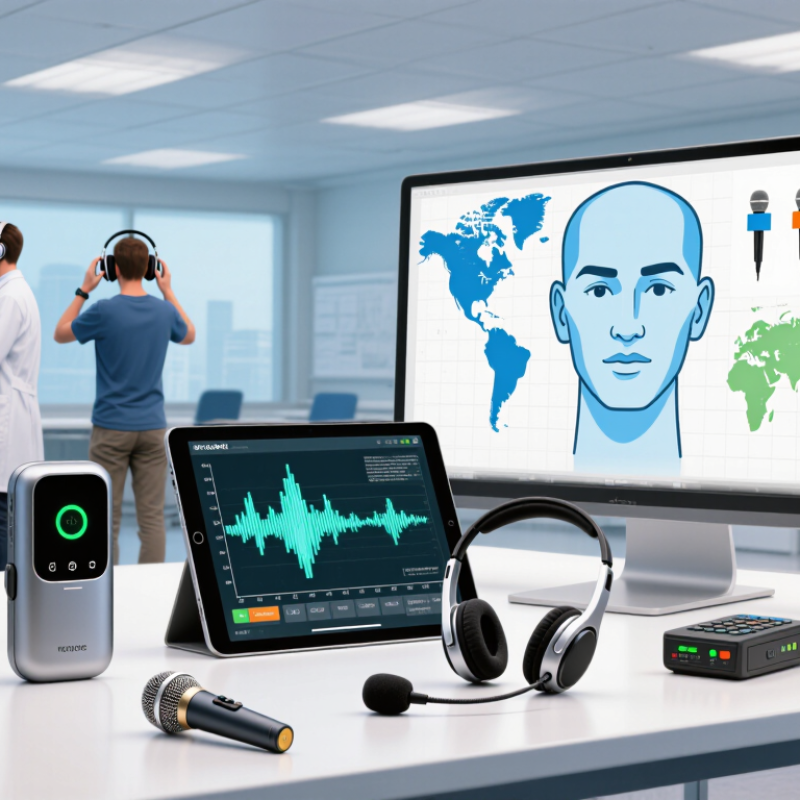
2026 Best Speech Trainer Equipment for Global Buyers

What Speech Trainer Equipment Is and How It Supports Voice Development

2026 Best Speech Trainer Equipment for Global Buyers

Speech trainer equipment includes practical tools for breathing, articulation, resonance, and vocal monitoring. It supports voice development through repeated, controlled practice.

Breathing resistance devices
Resonance tubes
Articulation mirrors
Posture aids
Portable audio recorders

In coaching sessions, I have seen learners improve when feedback becomes visible or audible. A mirror can reveal jaw tension. A recorder can expose rushed endings and uneven volume.

Simple tools often work well. Expensive equipment does not guarantee better training. Practice quality matters more.

Good equipment should feel comfortable, durable, and easy to clean. Buyers should check material safety, user instructions, warranty terms, and electrical compatibility.

Digital devices also need clear data policies and reliable battery performance. For international use, translated manuals and accessible customer support are valuable.

A trainer should match the tool to the learner’s goal. Breathing equipment may support airflow awareness, while resonance tools can encourage gentler vocal focus.

These tools do not replace qualified assessment for persistent speech or voice difficulties.

I once assumed stronger resistance meant faster progress. It did not. Excessive resistance created tension and reduced practice time.

Careful adjustment remains essential.

Key Equipment Categories for Speech Training in 2026

2026 Best Speech Trainer Equipment for Global Buyers

Key Equipment Categories for Speech Training in 2026

Effective speech training begins with accurate sound capture. A directional microphone can reduce room noise and reveal unclear consonants. A stable stand keeps recording distance consistent. Closed-back headphones help learners notice breath, pacing, and unwanted mouth sounds. For classrooms, ceiling microphones and compact audio recorders can support group practice without complicated wiring.

Acoustic treatment is equally important. Portable panels can soften echoes around hard walls and windows. Adjustable lighting and a clear display also improve posture and visual feedback. Training software may measure pitch, volume, speaking rate, and pauses. However, automatic scores are not perfect. A coach should check the recording and consider accent, age, hearing ability, and learning goals. Privacy settings matter when recordings include students or clients.

Tips: Test equipment from the learner’s normal speaking position. Keep the microphone 15–20 centimeters away. Record a short passage before every session. Clean shared headphones regularly. Choose replaceable cables and accessible controls for long-term use. Do not buy the most advanced system automatically. A simple setup may produce better practice when feedback is clear, repeatable, and easy to understand.

2026 Best Speech Trainer Equipment for Global Buyers

Key Equipment Categories for Speech Training in 2026

The chart compares representative usable frequency-response ranges for major speech-training equipment categories. Speech-focused systems should cover the core speech range of approximately 300–3,400 Hz, while wider bandwidth can support clearer consonants, recording, monitoring, and advanced voice analysis. Values are typical technical ranges for equipment classes and do not represent any company or brand.

How to Compare Speech Trainer Features, Quality, and Performance

2026 Best Speech Trainer Equipment for Global Buyers

How to Compare Speech Trainer Features, Quality, and Performance

Global buyers should compare speech trainer equipment by training goals, not feature counts. A clear microphone captures pronunciation details more reliably. Low-latency feedback helps users hear mistakes immediately. Not every feature matters.

During product evaluations, I check microphone sensitivity, speaker clarity, volume stability, and control layout. Buttons should work without distracting the speaker. A bright screen may look modern, but simple controls often support better practice. Test the equipment in a quiet room and near ordinary background noise. This reveals whether feedback remains useful beyond a showroom setting.

Build quality also affects long-term value. Inspect cable connections, casing strength, battery performance, and replaceable parts. Materials should feel solid without making the device uncomfortable. For international purchasing, confirm voltage compatibility, charging standards, manuals, and service procedures. Quality certificates can support trust, but they do not replace hands-on testing. My comparisons are not perfect; user accents, room acoustics, and learning habits can change results. Record short sessions and compare clarity, response speed, and comfort after repeated use. A device that performs well for ten minutes may become tiring after an hour. Consider trial data, warranty terms, and documented test methods before approving a larger purchase.

Safety, Certification, and Regional Compliance for Global Buyers

For global buyers, speech trainer equipment must meet safety and regional compliance requirements before shipment. A reliable unit should include clear electrical ratings, user instructions, and traceable test documentation. Check voltage, plug type, insulation, overheating protection, and electromagnetic compatibility. Requirements vary by market. CE may support European sales, while FCC rules often apply to electronic devices in the United States. Other regions may require local registration or approved markings.

A certificate alone is not enough. Ask for the declaration of conformity, test reports, material information, and production-control details. For devices touching the mouth or skin, review biocompatibility guidance and cleaning instructions. In procurement reviews, I have found that missing translations cause avoidable delays. A small label problem can stop warehouse receiving. That detail is easy to underestimate.

Tips: Match every model number with its certificate. Confirm the destination voltage before ordering. Request samples for acoustic testing, charging safety, and daily cleaning. Keep regional documents together. Do not assume one approval covers every country. Products can perform well in demonstrations yet fail during repeated use. A practical trial may reveal weak buttons, unclear voice prompts, or fragile cables. That is not a minor issue. It affects training quality, user confidence, and long-term ownership cost.

2026 Best Speech Trainer Equipment for Global Buyers - Safety, Certification, and Regional Compliance for Global Buyers

Compliance requirements can vary by product configuration, intended use, radio function, mains voltage, and destination country. Buyers should confirm the current local requirements before import or sale.
Equipment category Typical application Recommended technical data Primary safety or performance standards Regional compliance checkpoints Buyer verification documents
Speech-training microphone Voice projection, pronunciation practice, classroom drills, and recorded feedback. Frequency response, sensitivity, maximum sound-pressure level, connector type, cable length, and power requirement. IEC 62368-1 may apply to audio/video equipment; IEC 60268-4 is relevant to microphone performance testing. EU/EEA: EMC and RoHS obligations may apply. United States: FCC Part 15 may apply to digital electronics. Wireless versions require additional radio approval. Electrical safety report, EMC test report, declaration of conformity, user manual, and connector or power-supply specifications.
Portable voice amplifier Outdoor instruction, group speech practice, guided tours, and users with reduced vocal endurance. Rated output power, battery chemistry, operating time, charging time, maximum output level, weight, and feedback-control function. IEC 62368-1 for many audio/electronic products; IEC 62133-2 for portable lithium secondary cells and batteries when applicable. EU/EEA battery obligations and RoHS may apply. Air shipments containing lithium batteries must follow applicable UN 38.3 transport testing and carrier rules. Battery test summary, UN 38.3 test summary, charger specifications, thermal test results, and transport classification.
Wireless headset or lapel system Hands-free articulation training, presentations, language laboratories, and remote coaching. Operating frequency, RF output power, channel bandwidth, latency, battery life, microphone sensitivity, and maximum acoustic output. IEC 62368-1; applicable radio-spectrum and electromagnetic-compatibility requirements; IEC 62479 may be relevant to human exposure assessment for low-power radio equipment. EU/EEA: Radio Equipment Directive 2014/53/EU may apply. United States: FCC authorization may apply. Canada, Japan, Australia, and other markets have separate radio approval routes. Radio test report, RF exposure assessment, antenna information, frequency declaration, regional user instructions, and conformity marking records.
Acoustic treatment panels Reducing reverberation and reflections in speech-training rooms, studios, and classrooms. Sound absorption coefficient, weighted absorption rating, panel thickness, fire classification, mounting method, and cleanability. ISO 354 for measurement of sound absorption in a reverberation room; ISO 11654 for rating sound absorption; local construction fire rules may apply. Construction-product rules and fire classifications differ by market. Do not treat an acoustic test report as a fire-safety approval. Laboratory absorption report, fire classification report, installation instructions, material safety information, and maintenance guidance.
Sound-level meter Checking classroom levels, amplifier output, room noise, and listener exposure during training. Measurement range, frequency weighting, time weighting, accuracy class, data logging, calibration interval, and microphone type. IEC 61672-1 defines sound-level-meter performance classes; IEC 61672-3 covers periodic tests. For occupational or legal measurements, the required accuracy class and national metrology rules must be confirmed before purchase. Type-test information, calibration certificate, serial-number traceability, periodic-test procedure, and software documentation.
Acoustic calibrator Field verification of measurement microphones and sound-level meters before and after training sessions. Reference sound-pressure level, calibration frequency, compatible microphone diameters, stability, battery type, and operating temperature. IEC 60942 specifies electroacoustic sound calibrators and their performance classes. Accredited calibration and legal metrology requirements may be necessary when measurements support workplace or regulatory records. Calibration certificate, uncertainty statement, reference standard traceability, and recommended recalibration interval.
Headphones or monitoring headset Listening to recorded speech, phoneme comparison, pronunciation playback, and instructor monitoring. Impedance, sensitivity, frequency response, maximum input, leakage, clamping force, replaceable parts, and volume-limiting function. IEC 60268-7 is relevant to headphone electroacoustic performance; general electronic safety requirements may also apply. If supplied with active electronics or wireless features, EMC, radio, battery, and product-substance rules may apply in addition to acoustic requirements. Acoustic test data, electrical safety documentation, volume-limit settings, cleaning instructions, and replacement-part information.
Hearing protection for high-output sessions Protecting users and instructors during amplified voice drills or group sessions with elevated sound levels. Attenuation values, octave-band data, fit type, size range, hygiene method, replacement schedule, and compatibility with other equipment. ISO 4869-1 covers subjective measurement of hearing-protector attenuation; regional PPE standards may specify product conformity requirements. EU/EEA: PPE Regulation (EU) 2016/425 may apply. United States and other markets use different hearing-protection testing and labeling systems. Conformity certificate, attenuation test report, fitting instructions, batch or lot traceability, and user information in the destination language.
USB audio interface Connecting microphones to computers for waveform analysis, recording, and online speech coaching. Input noise, dynamic range, sampling rates, bit depth, phantom-power availability, driver support, latency, and operating-system compatibility. IEC 62368-1 may apply; EMC testing is important for equipment connected to computers and powered through USB or an external adapter. EU/EEA EMC and RoHS requirements may apply. United States digital-device emissions may require FCC authorization. External power adapters may have separate approvals. EMC report, electrical safety report, power-adapter documentation, software support policy, and cybersecurity or update information where applicable.
Speech-analysis software and tablet kit Visualizing pitch, intensity, timing, articulation, and recorded speech progress. Supported operating systems, sampling rate, data-export formats, offline capability, user accounts, update policy, and accessibility functions. Software itself may not require an electrical product certification, but the tablet, charger, microphone, and connected equipment may require separate compliance. Privacy and data-protection obligations depend on the users and destination market. Biometric or health-related speech data may require additional safeguards. Privacy notice, data-processing terms, security documentation, accessibility statement, software license, update policy, and hardware conformity records.
Global buying note: Select equipment according to the intended use, sound exposure, electrical system, radio spectrum, battery transport conditions, language requirements, and whether the product is marketed as consumer, professional, educational, personal-protective, or medical equipment. A CE, FCC, or similar mark alone does not automatically prove compliance in every destination market.

How to Select Suppliers, Manage Costs, and Plan International Purchasing

2026 Best Speech Trainer Equipment for Global Buyers

Selecting speech trainer equipment requires more than comparing microphone prices. Define the training setting first: a quiet clinic, a classroom, or a mobile language lab. Each environment needs different acoustic treatment, recording quality, and maintenance support. The speech recognition market is projected to grow at a 14.6% compound annual rate from 2024 to 2030, according to Grand View Research. Demand is rising, but technical claims still need verification.

Ask suppliers for measured specifications, sample recordings, warranty terms, and replacement-part availability. Check microphone sensitivity, frequency response, noise reduction, software compatibility, and user data controls. A low price may hide expensive calibration or unavailable cables. We learned this the hard way. Our first forecast was too neat. Request a landed-cost quotation covering equipment, packaging, insurance, customs duties, taxes, and inland delivery. The World Bank’s 2023 Logistics Performance Index shows major differences in customs efficiency and shipment reliability between markets.

International purchasing also needs documented quality procedures. Require batch inspection photos, serial-number records, and a pre-shipment functional test. For connected equipment, review electrical safety documentation and local import requirements before payment. UNCTAD reports that maritime shipping carries over 80% of global merchandise trade by volume, so port delays can affect training schedules. Build buffer stock for essential cables and headsets. Not everything goes smoothly. A small pilot order can reveal language, software, and after-sales problems before a larger contract.

FAQS

What is speech trainer equipment?

It includes tools for breathing, articulation, resonance, posture, and vocal monitoring. Examples include resistance devices, resonance tubes, mirrors, and audio recorders. Simple tools can be effective.

How can these tools support voice development?

They create repeated, controlled practice. A mirror may reveal jaw tension. A recorder can expose rushed endings or uneven volume.

How should buyers match equipment to training goals?

Choose breathing tools for airflow awareness. Select resonance tools for gentler vocal focus. Use recording equipment when progress needs audible comparison.

Does expensive equipment produce better results?

Not always. Practice quality matters more than price. A costly device may still have weak buttons, unclear prompts, or fragile cables.

What safety details should international buyers check?

Confirm voltage, plug type, insulation, overheating protection, and electrical compatibility. Check cleaning instructions for mouth or skin contact. Keep all documents together.

Is a certificate enough for regional compliance?

No. Request test reports, conformity documents, material information, and production-control details. Match every model number with its supporting paperwork.

What should buyers ask suppliers before ordering?

Request measured specifications, sample recordings, warranty terms, and replacement-part availability. Check microphone sensitivity, frequency response, software compatibility, and user data controls.

How can buyers control international purchasing costs?

Request a landed-cost quotation. Include packaging, insurance, duties, taxes, and inland delivery. A low purchase price may hide costly calibration or missing cables.

Why is a pilot order useful?

A small trial can expose language, software, cleaning, and after-sales problems. It may also reveal poor battery performance or confusing instructions. Plans change.

Can speech trainer equipment replace professional assessment?

No. These tools support practice but do not replace qualified assessment. Persistent voice or speech difficulties need careful evaluation. Resistance is not automatically better.

Conclusion

Speech Trainer Equipment includes the tools and systems used to support clearer pronunciation, stronger vocal control, improved articulation, and more effective communication. In 2026, global buyers can choose from categories such as vocal exercise devices, breathing and resonance trainers, pronunciation practice tools, digital feedback systems, and professional evaluation equipment. When comparing options, buyers should assess functionality, material quality, durability, user comfort, measurement accuracy, ease of maintenance, and performance consistency.

Safety and compliance are also essential for international purchasing. Products should use appropriate materials, include clear instructions, and meet the certification, labeling, electrical, and import requirements of the destination market. Buyers should evaluate suppliers through product documentation, quality-control procedures, communication capability, production capacity, warranty terms, and after-sales support. Careful cost planning should include unit price, customization, packaging, shipping, taxes, testing, and ongoing maintenance. By balancing performance, reliability, compliance, and total ownership cost, organizations can select Speech Trainer Equipment that supports long-term voice development and efficient global procurement.

Oliver

Oliver

Oliver is a dedicated marketing professional with a strong understanding of the company’s products, services, and long-term business goals. With extensive experience in market research, content strategy, and customer communication, he transforms complex product information into clear, practical,......