0%

Choosing a Cerebral Palsy Chair in 2026 requires more than comparing prices, colors, or delivery times. Global buyers must consider posture, growth, pressure care, transport, maintenance, and daily participation. A chair that looks supportive in a showroom may feel restrictive after eight hours at school. Fit matters everywhere.

Dr. Rory Cooper, a leading wheelchair researcher and rehabilitation engineer, has said, “A wheelchair should be viewed as an extension of the person, not a limitation.” This principle remains highly relevant for children and adults with cerebral palsy. The right chair should support pelvic alignment, stable foot placement, comfortable upper-body control, and safer movement during real activities. Clinical assessment should guide the decision, not marketing language alone.

This guide examines the main Cerebral Palsy Chair types available to international buyers. It considers molded seating, tilt-in-space designs, adaptive strollers, pediatric growth systems, and powered options. Each type has useful strengths, but none suits every user. A lightweight frame may simplify air travel, yet provide fewer adjustment options. A highly adjustable model may improve posture, but require skilled fitting and regular review. Details matter.

Some recommendations remain imperfect. Product availability differs between countries. Import costs can change quickly. After-sales service may be overlooked. That mistake can become expensive. Buyers should involve a qualified physiotherapist, occupational therapist, or seating specialist whenever possible. Measurements should be checked in the user’s daily environment, including desks, bathroom spaces, vehicle transfers, and uneven outdoor paths. A well-chosen chair supports comfort, dignity, independence, and participation—not just sitting.
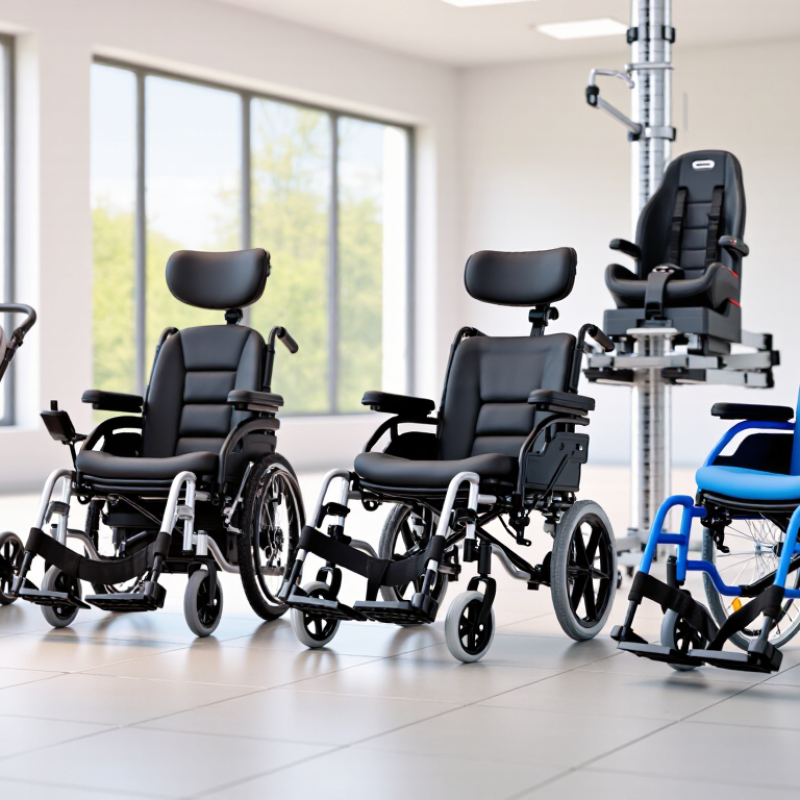
2026 Best Cerebral Palsy Chair Types for Global Buyers

Cerebral Palsy Seating Needs: 1 in 500 Children Worldwide (WHO)

Cerebral palsy affects movement, posture, and muscle coordination, making seating a daily clinical need. The often-cited figure of one in 500 children worldwide shows the scale of demand, but it requires caution. The World Health Organization does not establish one universal global rate. Prevalence varies by country, survival, diagnosis, and reporting quality. Recent Global Burden of Disease research estimates millions of people live with cerebral palsy worldwide.

For global buyers, chair selection should follow functional assessment, not age alone. Tilt-in-space wheelchairs can support pressure redistribution and safer head positioning. Adaptive positioning chairs offer adjustable pelvic supports, lateral guides, footrests, and harness options. High-low therapy chairs may help transfers and caregiver access. A 2023 Cochrane review found that supportive seating can improve posture and function, although evidence remains limited and study quality varies. That matters.

Fit is personal. Very personal. A chair should accommodate hip width, trunk control, growth, and daily routines. Clinicians should check skin, breathing, swallowing, and transfer safety after fitting. ISO 16840-1 provides a framework for wheelchair seating dimensions and testing, but standards cannot replace clinical judgment. In practice, buyers should request repair access, spare-part availability, cleaning guidance, and local training. A technically advanced chair may still fail if caregivers cannot adjust it correctly. The 1-in-500 message raises awareness, yet better regional data is still needed.

2026 Best Cerebral Palsy Chair Types for Global Buyers

Cerebral Palsy Seating Needs: 1 in 500 Children Worldwide

How the data informs chair selection

The chart compares selected published cerebral palsy prevalence estimates. The 1-in-500 benchmark equals approximately 2.0 cases per 1,000 children. Prevalence alone does not determine equipment needs: seating should be matched to posture, trunk and pelvic stability, mobility level, growth, pressure management, and caregiver handling requirements.

  • Adaptive stroller: portable supportive seating for children who need postural support during daily travel.
  • Positioning wheelchair: adjustable pelvic, trunk, head, and foot support for everyday mobility.
  • Tilt-in-space wheelchair: changes the seat-to-back angle to assist positioning, comfort, and pressure redistribution.
  • Standing wheelchair: supports supported standing when clinically appropriate and prescribed by a rehabilitation team.

Sources: World Health Organization, “Cerebral palsy” fact sheet; Centers for Disease Control and Prevention, Autism and Developmental Disabilities Monitoring Network, 2019 cerebral palsy surveillance; Surveillance of Cerebral Palsy in Europe prevalence reports. Values are population estimates, not chair-market shares or clinical recommendations.

Manual Wheelchairs: Lightweight Mobility for Users With Spastic CP (CDC: 80%)

For global buyers, manual wheelchairs can provide practical, lightweight mobility for users with spastic cerebral palsy. The CDC reports that about 80% of people with cerebral palsy have the spastic type. Muscle stiffness, involuntary movement, and limited trunk control can make ordinary chairs unsafe or tiring. A correctly fitted manual wheelchair should support pelvic alignment, foot positioning, and pressure distribution.

Rigid-frame chairs often deliver efficient propulsion and lower weight. Folding models offer easier storage and transport.

Tilt-in-space designs can improve posture changes for users with greater support needs, although they may add weight.

The choice should follow an assessment by a qualified therapist or seating professional. Seat width, back height, wheel position, and brake access matter more than appearance.

Small details matter. A caregiver may need to lift the chair into a vehicle. A user may need push rims within easy reach.

Lightweight is not always better. A very light frame can feel unstable during spasms or uneven outdoor travel.

This trade-off is often underestimated.

The WHO and UNICEF Global Report on Assistive Technology estimates that more than 2.5 billion people need assistive products worldwide, with demand expected to exceed 3.5 billion by 2050.

Buyers should verify local repair support, spare-part availability, safety testing, and fit before purchase. One measurement error can cause daily discomfort.

Tilt-in-Space Chairs: Pressure Relief Based on 15–30° Repositioning

2026 Best Cerebral Palsy Chair Types for Global Buyers

Tilt-in-space chairs can support safer sitting for people with cerebral palsy. They tilt the entire seating system, keeping the hips, trunk, and head aligned. A 15–30° adjustment may reduce continuous pressure on the sacrum and sitting bones. It can also help users rest without losing pelvic support. Small changes matter.

Clinical seating practice shows that 15° may suit short relief periods, while 20–30° can provide stronger repositioning. However, angle alone does not solve every problem.

A cushion, lateral supports, foot placement, and head support must work together. Caregivers should check skin color, breathing, comfort, and pelvic movement after each adjustment. Never rely only on the chair’s angle label.

A 20-degree setting is not automatically right. Body shape, muscle tone, spinal curvature, swallowing ability, and fatigue can change the result. This is often overlooked.

Observe the user for several minutes, then adjust slowly. If the head falls forward, breathing changes, or sliding increases, return to a safer position and request professional assessment.

Pressure relief also needs regular movement, not one long tilt. A written care plan can record useful angles, warning signs, and caregiver responses. That record supports more consistent use across homes, schools, and care settings.

Adaptive Strollers: Pediatric Postural Support for Early Mobility

For global buyers in 2026, adaptive strollers offer more than convenient transport. They provide pediatric postural support while children explore movement, family routines, and outdoor spaces. A child with cerebral palsy may need controlled pelvic positioning, trunk support, and adjustable head support. The right design can reduce sliding, uneven weight distribution, and fatigue during short trips. Small details matter.

A reliable assessment should begin with the child, not the product catalogue. A qualified pediatric physiotherapist or occupational therapist can review muscle tone, asymmetry, hip positioning, growth, and daily mobility goals. Adjustable seating depth, lateral supports, footplates, and a secure harness should work together without restricting breathing or natural movement. Caregivers also need clear instructions for transfers, cleaning, folding, and transport. Poor fit can create pressure points. It can also discourage independent movement.

Early mobility is not only about reaching a destination. It may involve turning toward a sound, touching leaves, or choosing a direction with a small push. Adaptive strollers can support these experiences when used at the right developmental stage. Buyers should check local safety requirements, service availability, spare parts, weight limits, and climate suitability before ordering internationally. A stroller may support posture well but still perform poorly on rough paths or crowded buses. No chair serves every child. Periodic reassessment remains necessary as the child grows, and some design choices may need revision sooner than expected.

Power Wheelchairs: Complex Rehab Options With 2026 Smart Controls

Power wheelchairs are the most adaptable cerebral palsy chair option for users who need powered mobility, postural support, and programmable assistance. The WHO and UNICEF Global Report on Assistive Technology estimates that 2.5 billion people need at least one assistive product worldwide. Access remains uneven, especially where clinical assessment and maintenance services are limited.

Complex rehab models use smart controls rather than a single joystick alone. A therapist and seating specialist may configure proportional driving, switch scanning, head controls, or chin controls. They can also adjust speed for narrow hallways and open outdoor paths. Seat elevation, tilt, recline, and leg elevation can support pressure management and transfers. Small changes matter. A thumb control may work indoors but fail when fatigue reduces hand precision.

Modern systems may provide obstacle alerts, drive-profile memory, fault notifications, and mobile diagnostics. These features can improve daily confidence, but they are not independent decision-makers. Sensors can miss low objects, wet surfaces, or crowded furniture. That part deserves more caution. The WHO and UNICEF report also stresses that assistive technology requires fitting, training, follow-up, and repair services, not only advanced hardware. Global buyers should request a documented clinical assessment, service coverage, battery guidance, and replacement-control access. A smart chair without local support can become an expensive stationary chair. Testing in a real home remains essential.

FAQS

Why do some children with cerebral palsy need specialized seating?

Cerebral palsy can affect movement, posture, muscle tone, and coordination. Specialized seating may improve alignment, comfort, and daily participation. Fit matters greatly.

Is one seating solution suitable for every child?

No. A child may need different pelvic, trunk, head, or foot support. Age alone cannot determine the correct chair. Needs change over time.

What features can support safe positioning?

Adjustable pelvic supports, lateral guides, footrests, head supports, and harnesses can help. These parts should support posture without restricting breathing or natural movement.

When might a tilt-in-space wheelchair be useful?

Tilt-in-space seating may help redistribute pressure and support safer head positioning. It can also assist children with limited trunk control. Clinical assessment remains necessary.

How should caregivers check whether the fit is safe?

Check hip width, trunk control, skin condition, breathing, swallowing, and transfer safety. Look for pressure points after use. Small changes can matter.

Can adaptive strollers support early mobility?

They can support movement during family routines and outdoor exploration. A child might turn toward a sound, touch leaves, or choose a direction. Not every stroller encourages independence equally.

What should families check before ordering internationally?

Check weight limits, spare parts, repair access, cleaning instructions, service availability, and local safety requirements. Consider rough paths, crowded buses, and the local climate.

How often should seating equipment be reassessed?

Reassessment should happen as the child grows or daily needs change. Hip position, support depth, and foot placement may need revision. Earlier than expected, sometimes.

Conclusion

Choosing the right Cerebral Palsy Chair can improve comfort, posture, mobility, and daily participation for children and adults with cerebral palsy. Since cerebral palsy affects approximately 1 in 500 children worldwide, seating should be selected according to individual muscle tone, balance, growth, and functional needs. Lightweight manual wheelchairs may support users with spastic cerebral palsy who can self-propel or benefit from assisted mobility, while tilt-in-space chairs provide adjustable positioning and may help with pressure management through regular 15–30° repositioning.

For younger children, adaptive strollers can offer practical postural support during early mobility, transportation, and family activities. Users with more complex rehabilitation needs may benefit from power wheelchairs equipped with advanced 2026 smart controls, such as customizable driving settings and alternative access methods. Across all categories, professional assessment, proper sizing, pelvic stability, trunk support, foot positioning, and future adjustability are essential. The best chair is not simply the most advanced option, but the one that safely matches the user’s abilities, environment, comfort, and long-term development.

Charlotte

Charlotte

Charlotte is a highly skilled marketing professional who combines strategic insight, clear communication, and a deep understanding of the company’s products. With extensive experience in market research, content planning, customer engagement, and digital communications, she transforms complex......